


![[Straight,1PC]](http://www.ievilenergy.com/cdn/shop/files/PTFE_8a56e0a8-fa07-4957-bc7c-4094b334e615_940x.jpg?v=1735209597)
![[Black,Without Bracket] black inline evil energy fuel filter with directional arrow and multiple AN fuel line fittings](http://www.ievilenergy.com/cdn/shop/files/EVIL-ENERGY-Inline-Fuel-Filter-with-6AN-8AN-10AN-Adapter-and-Bracket-Universal-10-30-40-100-Micron-_Copy_-EVIL-ENERGY-160069662_1160x.png?v=1781888749)

![[20FT] EVIL ENERGY PTFE Fuel Line Kit, complete black hose & fittings set, 180-day return](http://www.ievilenergy.com/cdn/shop/files/Test-2025-Evilenergy-125598065_940x.png?v=1742144807)
![[16FT] EVIL ENERGY PTFE Fuel Line Kit, black braided hose, fittings, free shipping & return](http://www.ievilenergy.com/cdn/shop/files/Test-2025-Evilenergy-125598171_940x.png?v=1742144807)
![[1 PC]](http://www.ievilenergy.com/cdn/shop/files/9_45b8f100-06af-40fc-9dee-57220283afa7_940x.png?v=1770173260)
![[2 PCS]](http://www.ievilenergy.com/cdn/shop/files/10_07d7f5f6-3461-495c-8929-5e69c4d8605a_940x.png?v=1770173260)
-
EVIL ENERGY Inline Fuel Filter with 6AN 8AN 10AN Adapter and Bracket Universal 10/30/40/100 Micron - Black
- $23.99
- $23.99
$24.99- Unit price
- per
-
Black
-
Silver Black
-
Blue
-
Red
-
EVIL ENERGY 6/8/10AN Billet Inline Fuel Filter 30 Micron Aluminum Black for Car EFI & Carb Fuel Systems---!@!start!@!---Specifications---!@!end!@!--- Brand EVIL ENERGY Color Black Type Inline Fuel Filter Size 6/8/10N Filter Element 30 Miron Width 2.07inch(52.6mm) Height 1.22inch(31mm) Material Aluminum Alloy,Stainless Steel Compatibility E85 Application various vehicles, including cars, motorcycles, and boats. Fuel Filter Series Fuel Filter 6/8/10AN Billet Fuel Filter...
- $19.99
- $19.99
$19.99- Unit price
- per
-
EVIL ENERGY 3.5Inch Inline Fuel Filter 100 Micron with 6AN 8AN 10AN Adapter 50MM Universal for Car, Motorcycle and Boats---!@!start!@!---Specifications---!@!end!@!--- Brand EVIL ENERGY ID 0.8inch OD 1.25inch Housing Width 1.97inch Housing Length 3.5 inch Material Black Filter Element Rating 100 Micron Adapters Included AN6, AN8, and AN10 to AN10 ORB adapters Seal Structure Durable rubber O-ring (leak-free seal) Vehicles Compatibility Cars, motorcycles, boats...
- $29.99
- $29.99
$39.99- Unit price
- per
-
EVIL ENERGY EFI Fuel Pump With Fuel Filter Kit External or Intank
- $15.99
- $15.99
$57.36- Unit price
- per
-
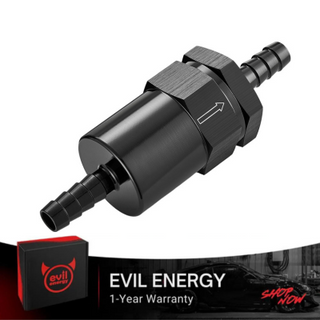
EVIL ENERGY 1/2inch,5/16inch,3/8inchBarb Billet Inline Fuel Filter 30 Micron Aluminum Black for Car EFI & Carb Fuel Systems---!@!start!@!---Specifications---!@!end!@!--- Brand EVIL ENERGY Color Black Type Inline Fuel Filter Size 1/2",5/16",3/8" Filter Element 30 Micron Width 2.07inch(52.6mm) Height 1.22inch(31mm) Material Aluminum Alloy,Stainless Steel Compatibility not compatible with E85 fuel Application various vehicles, including cars, motorcycles, and boats. Fuel Filter Series Fuel Filter...
- $19.99
- $19.99
$19.99- Unit price
- per
-
-
EVIL ENERGY Inline Fuel Filter with 6AN 8AN 10AN Adapter&Bracket Clamp 60,50MM Universal Kit---!@!start!@!---Specifications---!@!end!@!--- Brand EVIL ENERGY Product Grade Replacement Part Material Filter Element: Stainless Steel, Fuel Filter Can: Aluminum Style Modern Fuel Filter 10 Micron30 Micron40 Micron100 Micron OD 10 Micron: 1.25 inch30 Micron: 1.42 inch40 Micron: 1.42 inch 100 Micron: 1.25 inch ID 10 Micron:...
- $67.99
- $67.99
$19.99- Unit price
- per
-
EVIL ENERGY 10 Micron All-In-One Fuel Filter Kit with 6AN, 8AN, 10AN, 1/2-inch, 3/8-inch, 5/16-inch Barb Adapters, Universal Aluminum w/Extra Replacement Filter Element & 50MM Mounting Bracket---!@!start!@!---Specifications---!@!end!@!--- Product Details Specification Details Brand EVIL ENERGY Filter Micron Rating 10 Micron Filter Element Stainless Steel Mesh (Washable & Reusable) Filter Elements Included 2 (1 Installed, 1 Spare – Zero Downtime Service) Housing Material Precision Machined Aluminum Alloy (Corrosion Resistant) AN Adapters Included...
- $57.99
- $57.99
- Unit price
- per
![EVIL ENERGY 6/8/10AN Billet Inline Fuel Filter 30 Micron Aluminum Black for Car EFI & Carb Fuel Systems - EVILENERGY[6AN,1PCS]](http://www.ievilenergy.com/cdn/shop/files/1_4039e4e1-4bbc-4b27-839f-1fc675d17ca3_320x.png?v=1756798874)
![[2PCS]](http://www.ievilenergy.com/cdn/shop/files/image_1_Webp_ea5b6ca2-fc87-435f-a4ac-e3ca0b41fe44_1160x.webp?v=1781517486)
![[With Bracket]](http://www.ievilenergy.com/cdn/shop/files/1_24ba805e-fb5b-42fa-a398-eeba35f13f97_940x.png?v=1755586823)
![[Without Bracket]](http://www.ievilenergy.com/cdn/shop/files/2_eba7f71b-ad14-4cfa-9042-eb6eb06ad7d8_940x.png?v=1770796724)


![[1/2"]](http://www.ievilenergy.com/cdn/shop/files/EVIL-ENERGY-Inline-Fuel-Filter-30_100-Micron-with-6AN-8AN-10AN-Adapter_Bracket-Clamp-60_50MM-Universal-Kit-EVIL-ENERGY-163027120_1160x.jpg?v=1781888969)


![[With Bracket]](http://www.ievilenergy.com/cdn/shop/files/1_f974ce04-b7ba-4647-acc8-931fb98401a0_940x.png?v=1745477125)
![[Without Bracket]](http://www.ievilenergy.com/cdn/shop/files/2_5cf4d5d4-261d-4029-a614-6ecd228a7a03_940x.png?v=1745477125)


Subscribe now to get a gift with your first order!