



![[Straight,1PC]](http://www.ievilenergy.com/cdn/shop/files/PTFE_8a56e0a8-fa07-4957-bc7c-4094b334e615_940x.jpg?v=1735209597)
![[Black,Without Bracket] black inline evil energy fuel filter with directional arrow and multiple AN fuel line fittings](http://www.ievilenergy.com/cdn/shop/files/EVIL-ENERGY-Inline-Fuel-Filter-with-6AN-8AN-10AN-Adapter-and-Bracket-Universal-10-30-40-100-Micron-_Copy_-EVIL-ENERGY-160069662_1160x.png?v=1781888749)

![[20FT] EVIL ENERGY PTFE Fuel Line Kit, complete black hose & fittings set, 180-day return](http://www.ievilenergy.com/cdn/shop/files/Test-2025-Evilenergy-125598065_940x.png?v=1742144807)
![[16FT] EVIL ENERGY PTFE Fuel Line Kit, black braided hose, fittings, free shipping & return](http://www.ievilenergy.com/cdn/shop/files/Test-2025-Evilenergy-125598171_940x.png?v=1742144807)
![[1 PC]](http://www.ievilenergy.com/cdn/shop/files/9_45b8f100-06af-40fc-9dee-57220283afa7_940x.png?v=1770173260)
![[2 PCS]](http://www.ievilenergy.com/cdn/shop/files/10_07d7f5f6-3461-495c-8929-5e69c4d8605a_940x.png?v=1770173260)
-
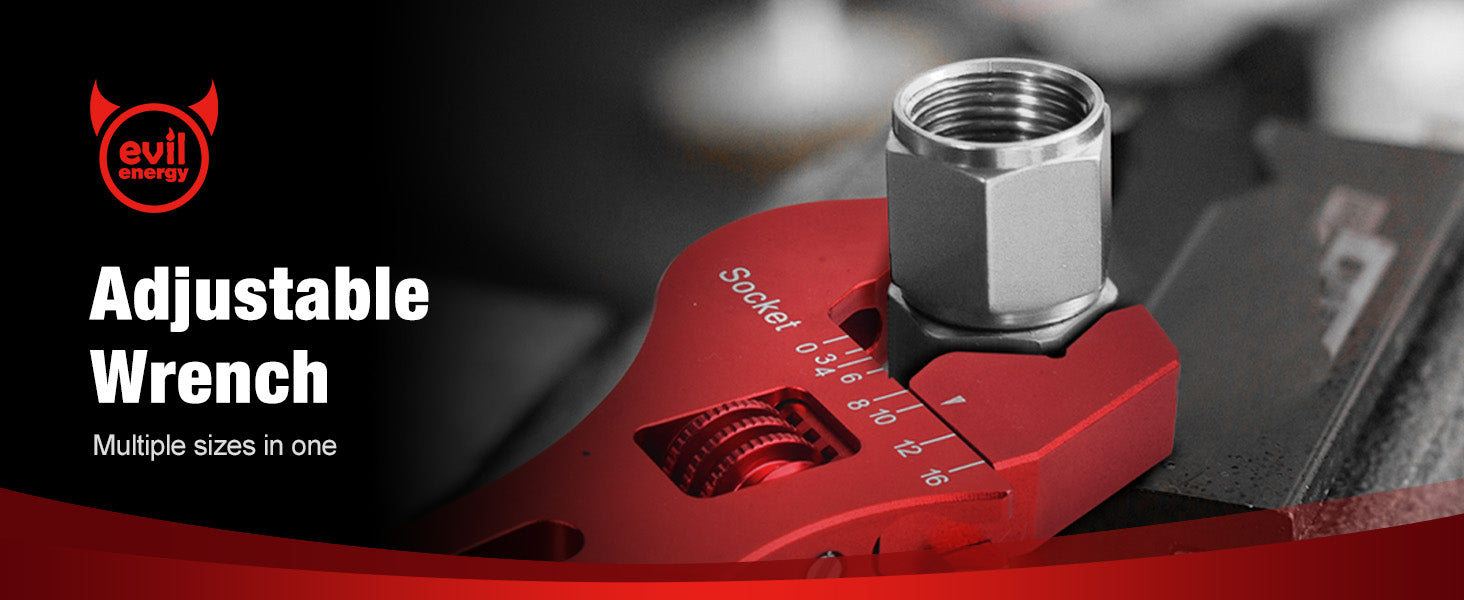
EVIL ENERGY Hose Fitting Adjustable Wrench 3AN-16AN Spanner Lightweight Aluminum - BlueProduct details Color Black/Blue/Red Brand EVIL ENERGY Material Aluminum Item Package Quantity 1 Finish Type Painted Lift Type Hydraulic Adjustable range:This wrench size can be adjusted to 3AN, 4AN, 6AN, 8AN, 10AN, 12AN, 14AN and 16AN. Advantage:Multisize in one /Contact of four opposite sides...
- $23.67
- $23.67
$0.00- Unit price
- per
-
Blue
-
Black
-
Red
-
EVIL ENERGY Non Marring Wrench Adjustable AN Fitting Wrench 3-16AN Spanner Aluminum - Black
- $32.99
- $32.99
- Unit price
- per
-
Black
-
Red
-
Blue
-
EVIL ENERGY AN 3-12 Wrench Spanner Fitting Tools Lightweight Adjustable Black - BlackProduct details Color Black Brand EVIL ENERGY Material Aluminum, Metal Item Weight 0.44 Pounds Item Package Quantity 1 Finish Type Polished 100% Brand New. Made of Lightweight Aluminum,high strength and good durability. Adjustable : AN3 AN4 AN6 AN8 AN10 AN12 Polished and anodized for...
- $22.21
- $22.21
- Unit price
- per
-
Black
-
EVIL ENERGY Pocket Wrench Adjustable AN Fitting Wrench 3AN-20AN Spanner Aluminum - BlackProduct Details Brand EVIL ENERGY Color Black/Red Material Aluminum Item Package Quantity 1 Adjustable Range 3-20AN Size Length: 5.79 inches/14.71 cm Width: 3.26 inches/8.29 cmThickness: 0.53 inches/1.35 cm About this item [Features]: The pocket-sized wrench is ideal for working in confined spaces and easy...
- $23.99
- $23.99
$23.99- Unit price
- per
-
Black
-
Red
-
EVIL ENERGY Eco-Friendly Wrench Adjustable 3-16AN Spanner Aluminum - Black
- $32.99
- $32.99
- Unit price
- per
-
Black
![[Blue]](http://www.ievilenergy.com/cdn/shop/files/Flash-Sale_Adjustable-Wrench-3AN-16AN-Spanner-Lightweight-Aluminum-EVIL-ENERGY-134157871_320x.jpg?v=1781886361)
![EVIL ENERGY Non Marring Wrench Adjustable AN Fitting Wrench 3-16AN Spanner Aluminum [Black]](http://www.ievilenergy.com/cdn/shop/files/EVIL-ENERGY-Eco-Friendly-Wrench-Adjustable-3-16AN-Spanner-Aluminum-EVIL-ENERGY-151924338_1160x.jpg?v=1781888326)


![EVIL ENERGY Non Marring Wrench Adjustable AN Fitting Wrench 3-16AN Spanner Aluminum[Black]](http://www.ievilenergy.com/cdn/shop/files/EVIL-ENERGY-Eco-Friendly-Wrench-Adjustable-3-16AN-Spanner-Aluminum-EVIL-ENERGY-151924648_1160x.jpg?v=1781888326)
Subscribe now to get a gift with your first order!