


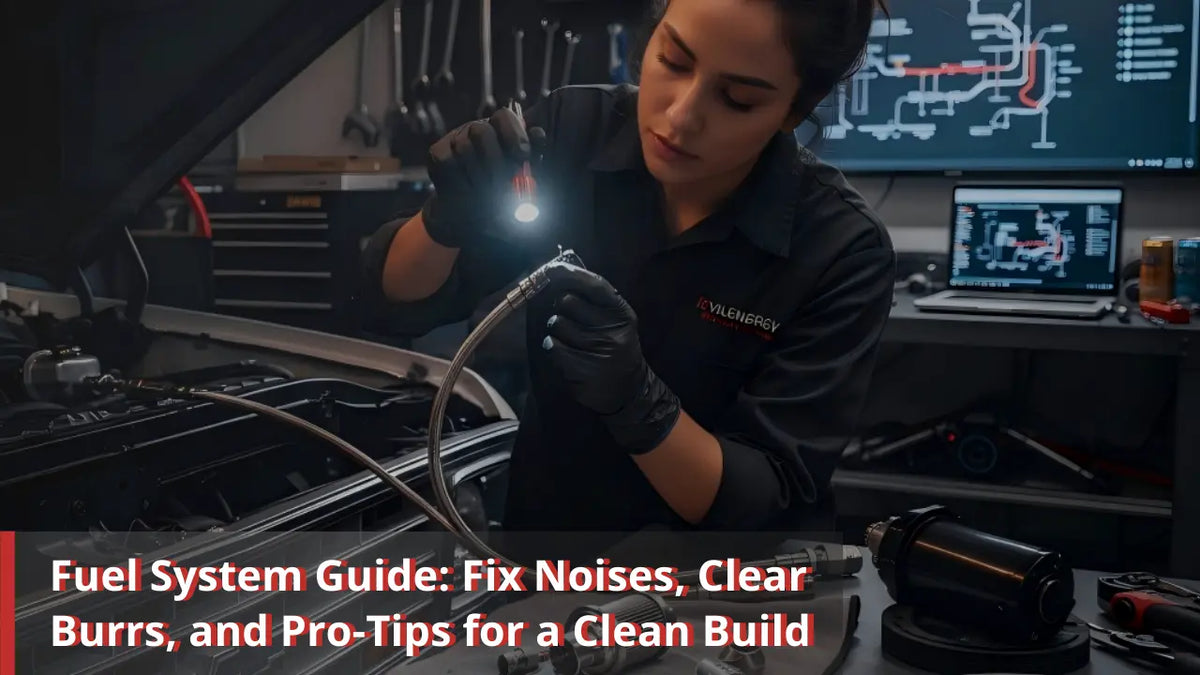
So, you’re working on an LS Swap fuel kit or upgrading your ride, and you picked up an Evil Energy fuel system. Smart move! It’s easily the best bang for your buck in the car world. But let's be real: when you save that much cash, you have to do a little extra 'homework' during the install to keep things running smooth.
If you’ve heard stories about loud pumps or tiny metal flakes, don't sweat it. We’re going to walk through some Evil Energy fuel system troubleshooting to make your budget build as reliable as a high-dollar race car.
Part 1: Is Your Fuel Pump Screaming? Let’s Quiet it Down
One common 'complaint' is the noise. If your external pump sounds like a swarm of bees, you need the best way to quiet the Evil Energy pump strategy.
-
Vibration dampening (The 'Pro' Fix): Most people bolt the pump straight to the car frame. Rookie mistake! That turns your car body into a giant speaker. Sandwich some thick rubber padding or a 'vibration isolator' between the pump and the frame.
-
Check Your Wiring: Sometimes a loud pump is just hungry for power. If it’s acting up, check your relay. You can find a quick fix here: Reset Fuel Pump Relay: Quick Tips.
Part 2: The 'Hidden Trash' Check: Watch Out for Metal Burrs
In the manufacturing world, sometimes tiny bits of metal (called burrs) get left inside the fittings. If these reach your injectors, it’s game over for your engine.
-
The 5-Minute Clean: Before you hook anything up, take a flashlight and look inside your AN fittings. Give them a good blast with compressed air.
-
Know the Anatomy: To see where these flakes like to hide, check out The Ultimate Visual Guide to Fuel System. A clean system is a happy system!
Part 3: Evil Energy PTFE line installation: No Leaks, No Smells
If you’re running E85 compatibility (that corn-fed race fuel), you must use PTFE lines. Rubber hoses will eventually rot and smell like a gas station.
-
Don't Kink It: PTFE is tough, but it doesn't like to be bent like a pretzel. If you force a sharp turn, you'll choke the fuel flow. Use 45° or 90° fittings instead of bending the hose.
-
The 'Olive' Trick: When assembling the ends, make sure the tiny brass ferrule (the 'olive') sits perfectly flush. One stray wire strand is all it takes to start a leak.

Part 4: Aeromotive vs Evil Energy comparison: The Real Deal
Is an Aeromotive pump better? Technically, yes—they have insane quality control. But is it 4 times better for a daily driver or a street project? Usually, no.
| Feature | Evil Energy fuel system | Aeromotive (The Big Brand) |
| Price | Budget-Friendly | Heavy on the wallet |
| Ease of Use | Requires a 'DIY Inspect' | Plug and Play |
| Fuel system reliability | High (if installed correctly) | Maximum |
The Bottom Line: If you're building a 2,000-hp dragster, go Aeromotive. If you're doing a cool LS swap on a budget, Evil Energy is your best friend.
Part 5: Return vs. Returnless: Don't Get Confused
-
Pro Tip: Most performance builds prefer a 'Return System' because it keeps the fuel cooler. Check out the Return vs. Returnless Guide to see which one fits your build.
Summary
Building a car is about 'working smarter, not harder.' By taking ten extra minutes to clean your fittings and add some vibration-dampening, your Evil Energy fuel system will perform like a high-end setup.
Want to become a true fuel system expert? Dive into Mastering Your Vehicle's Performance and get that engine screaming!
Evil Energy Fuel System FAQs
Q1: Is the Evil Energy fuel system reliable for daily driving?
A: Yes, fuel system reliability can be achieved with an Evil Energy setup if installed with a focus on detail. While it’s a budget-friendly option, performing a manual inspection for internal burrs and using proper Vibration dampening for the pump ensures it handles daily commuting and street performance reliably.
Q2: Why is my Evil Energy fuel pump so noisy?
A: The Best way to quiet the Evil Energy pump is to avoid 'metal-on-metal' contact. Most noise issues stem from vibration resonance against the car chassis. Using rubber isolators or a dedicated mounting bracket provides the necessary Vibration dampening to significantly reduce decibel levels.
Q3: How do I fix fuel pressure fluctuations in my Evil Energy system?
A: First, perform an Evil Energy fuel system troubleshooting check on your vacuum lines and the regulator diaphragm. Often, pressure swings are caused by using a returnless setup in high-heat environments; switching to a Return Fuel System often stabilizes the PSI.
Q4: Are Evil Energy fuel lines really E85 compatible?
A: Yes, their PTFE-lined hoses offer full E85 compatibility. Unlike standard rubber (CPE) lines that degrade and leak when exposed to ethanol, Evil Energy PTFE line installation ensures your fuel system remains corrosion-free and odor-free over time.
Q5: What should I check for before installing Evil Energy fittings?
A: Always inspect for 'internal burrs' or tiny metal shavings left over from manufacturing. A quick blast of compressed air and a visual check of the AN threads are essential steps to protect your fuel injectors from debris.
Q6: Evil Energy vs Aeromotive: Which is better for an LS Swap?
A: In an Aeromotive vs Evil Energy comparison, Aeromotive wins on out-of-the-box precision. However, for a cost-effective LS Swap fuel kit, Evil Energy provides the best value. If you are willing to do a little 'DIY QC' (Quality Control), Evil Energy performs exceptionally well for a fraction of the price.
Q7: How do I prevent leaks during Evil Energy PTFE line installation?
A: Ensure your cuts are perfectly square and the brass ferrule (olive) is seated fully against the PTFE inner tube. Most leaks occur because a stray braid of stainless steel gets caught in the threads during assembly.
Q8: What do I do if my Evil Energy fuel pump won't prime?
A: Start with Evil Energy fuel system troubleshooting on the electrical side. Check your ground and the pump relay. If the system was recently worked on, you might need to Reset Fuel Pump Relay to restore power.
Q9: Can I mix Evil Energy fittings with other brands?
A: Generally, yes. Most Evil Energy components use standard AN (Army-Navy) sizing. However, for maximum Fuel system reliability, we recommend sticking to the same brand for hoses and their corresponding hose-end fittings to ensure a perfect 37-degree flare seal.
Q10: Where can I find a complete diagram for my fuel system build?
A: To avoid 'rookie mistakes,' you should study a detailed map of your fuel flow. We’ve provided The Ultimate Visual Guide to Fuel System, which covers everything from tank anatomy to regulator placement.


