A vehicle's fuel system is its lifeblood. Whether you are maintaining a daily driver or performing a high-performance LS swap, understanding the flow from the tank to the combustion chamber is essential. This guide breaks down the complex mechanics of fuel delivery into clear, actionable sections.
Part 1: The Fuel Tank: The Foundation of Performance
Every performance build begins with the car fuel tank diagram. In a modern or modified vehicle, the tank is far more than a simple storage container; it is an engineered component designed to manage fuel stability under high-stress driving.
Key Components of a Gas Tank Diagram:
-
Internal Baffles: As seen in a standard gas tank diagram, these internal walls prevent 'fuel slosh' during hard cornering. Without baffles, the fuel pump might suck in air, causing a dangerous lean condition.
-
Fuel Pump Hanger: This assembly serves as the exit point for fuel. Enthusiasts often upgrade to multi-pump hangers to support higher horsepower demands.
-
The Sending Unit: This float mechanism monitors fuel levels and communicates directly with your dashboard gauge.

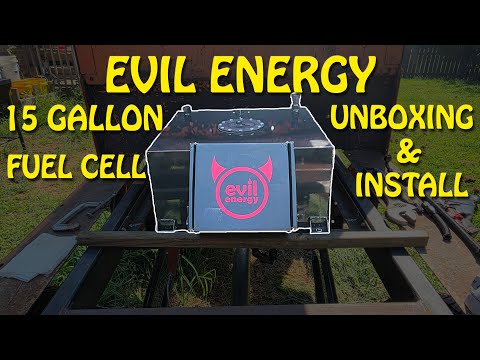
For racing applications, many choose a specialized fuel cell over a stock tank. Whether you're looking at a gas tank diagram for a muscle car or a petrol tank diagram for a modern import, the physics remains the same: consistent fuel pickup is the priority. For racing setups, many drivers opt for a specialized Fuel Cell Gas Tank to ensure maximum safety. You can learn more about these in our guide on How Does a Fuel Cell Work?.
Part 2: Tracing the Flow: Automotive Fuel System Diagram
To visualize how fuel travels to your engine, we look at the automotive fuel system diagram. There are two primary layouts used in the American tuning scene: Return-style and Returnless.

As outlined in our detailed guide on Understanding the Fuel Injection System, the transition from the tank to the injectors involves multiple stages of filtration and pressure regulation. A standard fuel system diagram typically includes:
-
Low-Pressure Lines: Pulling fuel from the tank.
-
Fuel Filter: Removing microscopic contaminants.
-
High-Pressure Rails: Distributing fuel to the cylinders.
Return-Style System (The Enthusiast’s Choice)
In this setup, fuel is pumped to the engine, and excess fuel is sent back to the tank via a return line.
-
Benefits: This keeps fuel temperatures lower and allows for a vacuum-referenced regulator, essential for forced induction.
-
Path: Pump → Filter → Fuel Rail → Regulator → Return Line.

Returnless System (The Modern Standard)
Common in late-model daily drivers, the pressure is regulated inside the tank itself.
-
Benefits: Fewer lines running under the chassis, which reduces weight and complexity.

Part 3: Plumbing the Beast: Car Fuel Line Diagram
Once fuel leaves the tank, it enters the plumbing phase, where a car fuel line diagram becomes critical. Choosing the right material here can mean the difference between a reliable build and a fire hazard.
Why PTFE is the Gold Standard
Traditional rubber lines often degrade when exposed to modern E85 (ethanol) fuels. This is why PTFE (Polytetrafluoroethylene) is preferred.
-
Durability: PTFE lines are burst-resistant and prevent fuel vapors from 'sweating,' keeping your garage smell-free.
-
Sizing: Most high-performance builds, including LS swaps, utilize -6AN or -8AN lines.
For a deep dive into specific sizing and fitment, see our 15 Gallon Fuel Cell & PTFE Fuel Lines Guide.

Part 4: Why EVIL ENERGY is the Right Choice for Your Build
Founded in 2016, EVIL ENERGY specializes in high-quality automotive parts, including fuel systems, cooling systems, and exhaust components. Choosing the right components is critical for vehicle longevity and safety. EVIL ENERGY auto parts are engineered to meet the rigorous demands of modern high-performance builds.
We focus on delivering an exceptional user experience, offering reliable products with a 1-year warranty and a 180-day return policy. With a commitment to performance and customer satisfaction, EVIL ENERGY ensures the best value and reliability for your project.
The Gold Standard for LS Swap Fuel Systems
What does LS swap mean? It is the process of retrofitting a GM LS-series engine into a different vehicle chassis. Because an LS Swap Fuel System requires consistent high pressure, our 6AN PTFE Fuel Line Kit is the preferred choice. You can LS swap almost any vehicle when you have a reliable Fuel Line Kit that supports the flow demands of these legendary engines.
Optimized for Advanced EFI Fuel Systems
An EFI system (Electronic Fuel Injection) precisely manages fuel delivery to improve horsepower. Modern EFI fuel systems operate at significantly higher pressures than carbureted setups. EVIL ENERGY fuel systems utilize PTFE technology to ensure your EFI system remains leak-free and fully compatible with corrosive fuels like E85.
Specialized Solutions for Every Engine
Whether you are modernizing a classic or tuning a modern street machine, we have the resources you need:
-
For Classic Muscle: Learn How to Choose the Right Carburetor for a Chevy 350 (SBC) Engine or see how we stack up in our Holley VS EVIL ENERGY comparison.
-
For Modern EFI: Understand the electronics behind the flow in our guide on Understanding the Fuel Injection System.
Technical Summary
| Feature | Description | Related Diagram |
| Storage | Secure containment with baffles for G-force management. | Gas tank diagram |
| Delivery | High-pressure transport via hard lines or braided hoses. | Car fuel line diagram |
| Regulation | Maintaining PSI levels based on manifold vacuum. | Auto fuel system diagram |
Shop High-Performance Fuel System Components
Professional-grade parts for LS Swaps, EFI Conversions, and Classic Builds.

Fuel Pump Kits & Assemblies

Fuel Filters & Accessories

Fuel Pressure Regulator Kits

Fuel Cells & Tank Accessories

Fuel Rails & Manifold Kits

Carburetor Systems
Part 5: Conclusion
Mastering your vehicle's fueling requires more than just parts; it requires a visual understanding of the flow. By studying a car fuel tank diagram and mapping out your car fuel line diagram, you ensure your engine never runs lean when it matters most.
Ready to build? Explore the full EVIL ENERGY Fuel System Collection to find the lines, fittings, and pumps trusted by enthusiasts worldwide.
Part 6: Mastering Your Build: Fuel System Frequently Asked Questions
Q1: Why is a precise car fuel system diagram essential for an LS swap?
A: When performing an LS swap, you are integrating a high-pressure modern engine into a chassis that may not have been designed for it. Most LS engines require a constant 58 PSI to operate correctly. A detailed car fuel system diagram acts as your engineering blueprint, helping you plan the placement of critical components like the Corvette-style regulator/filter or an inline high-flow pump. Without this visual guide, it is easy to misroute lines, leading to fuel starvation or dangerous pressure spikes that can ruin your new engine.
Q2: What is the main difference between a return and returnless auto fuel system diagram?
A: In a return-style auto fuel system diagram, fuel is constantly circulated from the tank to the engine and back again. This movement helps keep the fuel cool and allows for a vacuum-referenced regulator at the fuel rail, which is vital for boosted applications. Conversely, a returnless system simplifies the car fuel line diagram by regulating pressure inside the tank and using only one feed line to the engine. While simpler, returnless setups are more prone to 'fuel tank heating' and can be harder to tune for extreme horsepower levels.
Q3: Why should I look for internal baffles in a gas tank diagram?
A: If you look at a high-performance gas tank diagram, you will notice internal walls called baffles. These are crucial for any car that sees spirited driving or track time. Baffles prevent fuel from sloshing to one side of the tank during hard cornering or heavy braking. By studying a diagram of fuel tank internals, you can see how these walls keep the fuel pickup submerged at all times, preventing the pump from sucking in air—a common cause of sudden engine leaning and catastrophic failure.
Q4: Does the car fuel line diagram change when switching to E85 fuel?
A: While the physical routing in your car fuel line diagram might stay the same, the material requirements change drastically. E85 (ethanol) is highly corrosive to standard rubber hoses and will cause them to degrade, crack, and leak over time. For any build involving ethanol, you must upgrade to PTFE-lined fuel lines. PTFE is chemically inert, meaning it won't break down or allow fuel vapors to 'sweat' through the hose, keeping your vehicle safe and your garage free of gasoline odors.
Q5: How do I interpret the sending unit in a diagram of fuel tank internals?
A: A diagram of fuel tank components will always include a sending unit, which is the link between your gas tank and your dashboard. It consists of a float attached to a variable resistor (potentiometer), as the fuel level drops, the float moves, changing the electrical resistance and sending a specific voltage to your fuel gauge. When upgrading to a custom fuel cell, it is vital to ensure the Ohm scale of your new sending unit matches your car’s factory gauge.
Q6: Where is the best position for a filter in an automotive fuel system diagram?
A: In a professional automotive fuel system diagram, filtration is usually a two-stage process. First, a coarse 'pre-filter' (around 100 microns) is placed before the pump to protect it from large debris. Second, a fine 'post-filter' (10-40 microns) is placed between the pump and the fuel rails. This secondary filter is critical for protecting sensitive fuel injectors from microscopic particles that could cause clogs or poor spray patterns.
Q7: Can I use a standard petrol tank diagram for an EFI conversion?
A: You can often reuse the stock tank shown in a petrol tank diagram, but the internal 'guts' must change. Carbureted systems only require 5-7 PSI, while an EFI system needs 40-60+ PSI. This means your auto fuel system diagram must be updated to include a high-pressure EFI pump and, in most cases, a return line to handle the excess volume. Choosing the right carburetor size is no longer a factor here; instead, you focus on injector flow rates.
Q8: What makes a fuel cell diagram different from a standard gas tank?
A: A fuel cell diagram typically highlights safety features not found in factory tanks. These include a 'sump' at the bottom to concentrate fuel at the pickup point and anti-slosh foam that fills the interior volume. These features ensure that even when the tank is nearly empty, the pump has a steady supply of fuel, making it the preferred choice for drag racing and off-road applications where extreme angles are common.
Q9: How do I choose the correct hose size for my car fuel line diagram?
A: Selecting the right diameter for your car fuel line diagram depends on your horsepower goals. For most street builds under 500hp, a -6AN (3/8') line provides ample flow. However, if you are pushing between 500hp and 1000hp, you should step up to a -8AN (1/2') line. Larger lines reduce friction and pressure drop, ensuring that your fuel pump doesn't have to work overtime to deliver the volume your engine demands.
Q10: Why choose EVIL ENERGY components for your fuel system project?
A: EVIL ENERGY parts are engineered to turn these technical diagrams into reality. We focus on solving the most common DIY frustrations: leaks, poor fitment, and high costs. Our PTFE fuel lines and CNC-machined fittings are designed for 'Factory Replacement Ready' installation and are fully E85 compatible. Backed by a 1-year warranty and a 180-day return policy, we provide the reliability of premium brands at a value that keeps your project moving forward.
About EVIL ENERGY Fuel Systems
Performance Without the Premium
At EVIL ENERGY, we understand that for a car enthusiast, the fuel system is the most critical yet often the most stressful part of a build. Since our founding in 2016, our mission has been to bridge the gap between expensive, 'big-name' racing brands and unreliable, low-quality alternatives. We believe that every builder—whether working on a garage LS swap or a professional EFI conversion—deserves access to race-grade plumbing without the 'brand tax.'
Solving the Problems Builders Care About:
-
'Will it leak?' – Leaks are the #1 fear in fuel systems. That’s why we specialize in PTFE (Polytetrafluoroethylene) technology. Unlike traditional rubber lines that degrade over time, our PTFE lines are chemically inert and burst-resistant. Every EVIL ENERGY fitting is CNC-machined from 6061-T6 aluminum to ensure a 100% leak-free seal under high-pressure demands.
-
'Is it E85 compatible?' – Modern pump gas and racing fuels contain ethanol, which eats through standard rubber hoses. Our fuel systems are 100% E85 and Methanol compatible, ensuring your fuel lines won't 'sweat' or crack, no matter what fuel you run.
-
'Will it fit my specific build?' – We don't just sell parts; we provide solutions. From 15-gallon fuel cells for track cars to specialized LS swap fuel line kits, our components are designed for 'Factory Replacement Ready' fitment, reducing the need for custom fabrication.
-
'What if something goes wrong?' – Tuning a car is a journey. To support you, we offer an industry-leading 1-year warranty and a 180-day return policy. We stand by our products because we use them in our own builds.
Why Trust Us?
We are more than a parts manufacturer; we are a knowledge resource for the community. From tuning a Chevy 350 carburetor to plumbing a modern EFI fuel system, we provide the technical guides and tutorials you need to get the job done right the first time. When you choose EVIL ENERGY, you’re choosing a partner committed to your vehicle’s performance, safety, and your ultimate satisfaction on the road or track.