![[20FT] EVIL ENERGY PTFE Fuel Line Kit, complete black hose & fittings set, 180-day return](http://www.ievilenergy.com/cdn/shop/files/Test-2025-Evilenergy-125598065_940x.png?v=1742144807)
![[16FT] EVIL ENERGY PTFE Fuel Line Kit, black braided hose, fittings, free shipping & return](http://www.ievilenergy.com/cdn/shop/files/Test-2025-Evilenergy-125598171_940x.png?v=1742144807)
![CPE Fuel Line[25FT]](http://www.ievilenergy.com/cdn/shop/files/25FTCPE_FuelLine_940x.png?v=1735220649)
![CPE Fuel Line[20FT]](http://www.ievilenergy.com/cdn/shop/files/20FTCPE_FuelLine_940x.png?v=1735220649)





Car Air Intake System Guide: From Air Filter to Cylinder Head

🎁 A Personal Gift For My Readers
To support your project, I've secured an exclusive 8% OFF for you.
Simply paste the code at checkout.
💡 Use the savings to grab your extra fittings, oil lines, or connectors for free!
Direct Answer
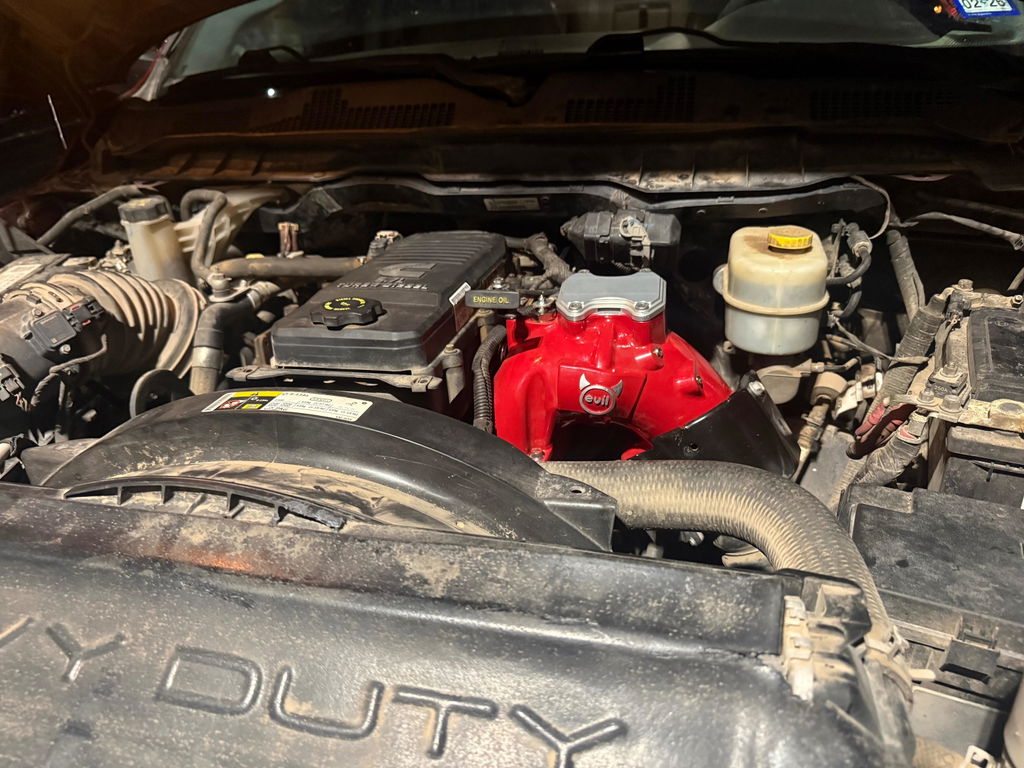
A car air intake system moves filtered air through the intake tube, throttle body, intake manifold, and cylinder-head ports before it enters the cylinders. A useful upgrade improves the actual restriction without creating sensor, fitment, tuning, or airflow-velocity problems. Treat the system as one matched airflow path, not a collection of unrelated large parts. Learn how to match cylinder heads, intake manifold, throttle body, and camshaft before planning a complete engine combination.
Key Takeaways
- The intake path is only as effective as its most restrictive or poorly matched section.
- Filter area, tube routing, throttle control, manifold design, head ports, camshaft, and tuning work together.
- A larger component is not automatically better for low-speed response or the engine's intended operating range.
- Vehicle-specific cold air kits require exact year, model, engine, sensor, and emissions-equipment checks.
- Diagnose maintenance and installation problems before buying performance parts.
What Parts Make Up a Car Air Intake System?

Most fuel-injected intake systems follow this path:
- Air inlet or air box: Receives outside air and helps protect the filter from water, debris, and engine-bay heat.
- Engine air filter: Traps particles before they reach sensors, the throttle body, valves, and cylinders. Compare engine air filter types, fitment, and replacement requirements.
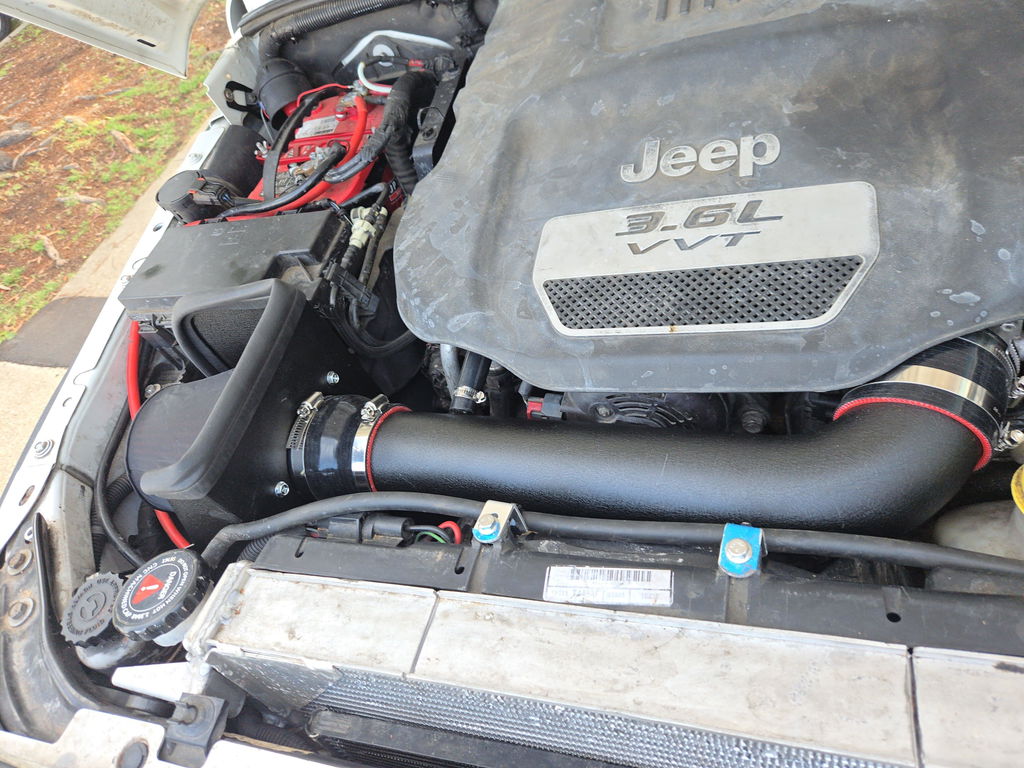
- Intake tube and couplers: Carry air while accommodating sensors, crankcase ventilation connections, and movement between the body and engine.
- MAF and/or MAP sensors: Provide airflow or pressure data used by the engine control unit, depending on the vehicle's control strategy.
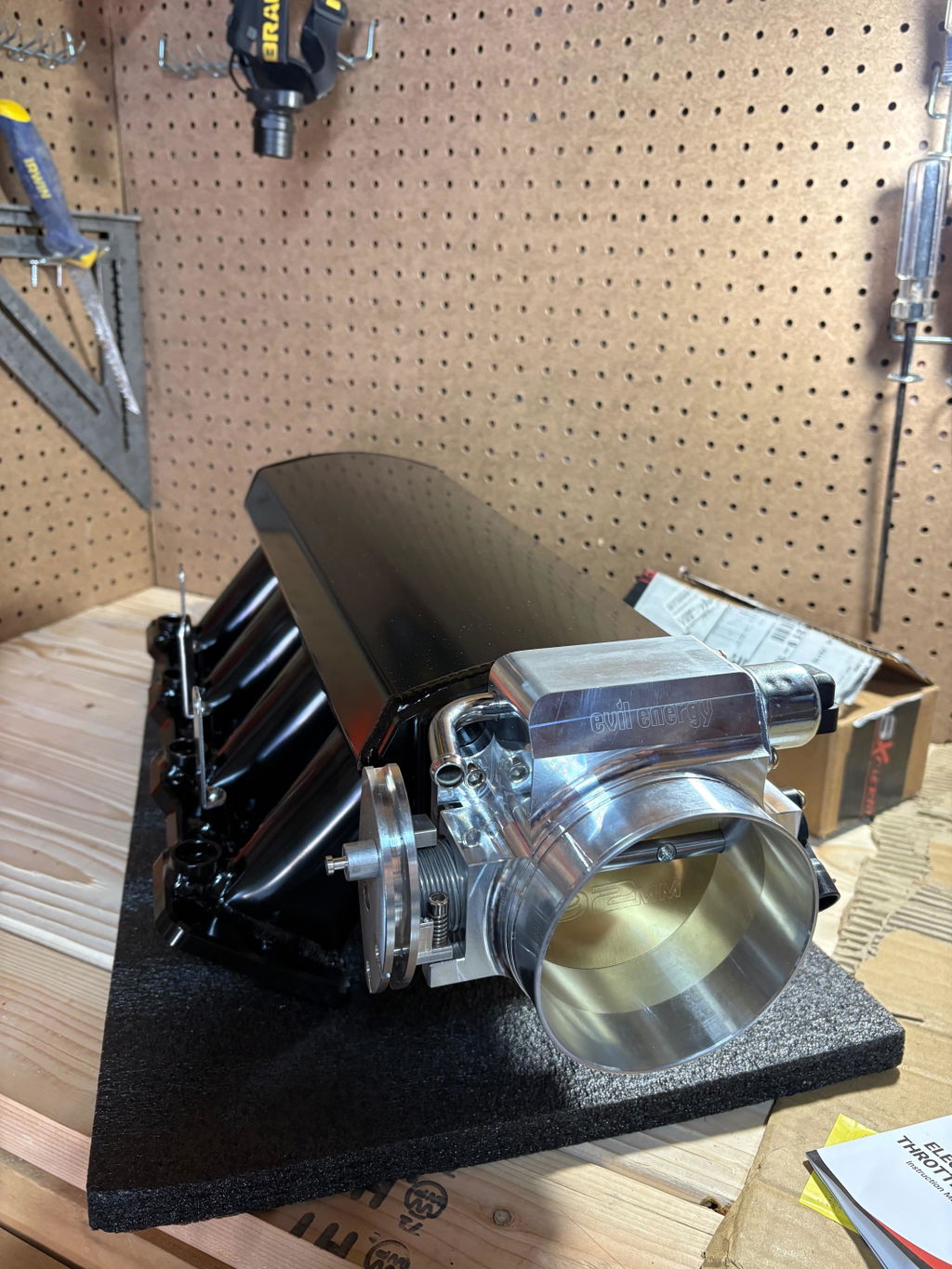
- Throttle body: Regulates airflow into the intake manifold. Review DBW vs cable throttle bodies, bore size, and LS fitment.
- Intake manifold: Distributes air, or the air-fuel mixture on carbureted systems, among the cylinders. Learn how runner length, plenum design, EFI, and carbureted intake manifolds differ.
- Cylinder-head intake ports and valves: Form the final airflow passage into each combustion chamber. Compare LS, SBC, and BBC cylinder-head runner and chamber sizes.
On carbureted engines, the carburetor meters fuel into the incoming air while its throttle plates regulate airflow above the manifold. On many EFI engines, injectors deliver fuel near the intake ports or directly into the cylinders. These differences change manifold, fuel-system, sensor, wiring, and tuning requirements.
How Does Each Component Affect Airflow?
| Component | Main Job | Common Selection Variable | Common Problem |
|---|---|---|---|
| Air filter | Remove contaminants | Media, area, dimensions, service type | Dirty, damaged, undersized, or poorly sealed |
| Tube and couplers | Carry air | Diameter, bends, sensor provisions | Leaks, collapse, heat exposure, or sensor disturbance |
| Throttle body | Meter airflow | Bore, actuation, bolt pattern, electronics | Deposits, wrong connector, or calibration problems |
| Intake manifold | Distribute airflow | Port shape, runner length, plenum, RPM range | Port mismatch, leaks, or clearance problems |
| Cylinder head | Feed the cylinder | Port, runner, chamber, valve and spring package | Engine-family, port, chamber, or valvetrain mismatch |
The correct question is not, 'Which part is biggest?' It is, 'Which part limits the combination in the RPM range and use case that matter?'

Where Do Intake Restrictions Usually Appear?
Start with service and installation issues. A loaded filter, loose clamp, split coupler, disconnected breather hose, contaminated sensor, throttle deposits, vacuum leak, or collapsed tube can create symptoms that resemble an undersized component.
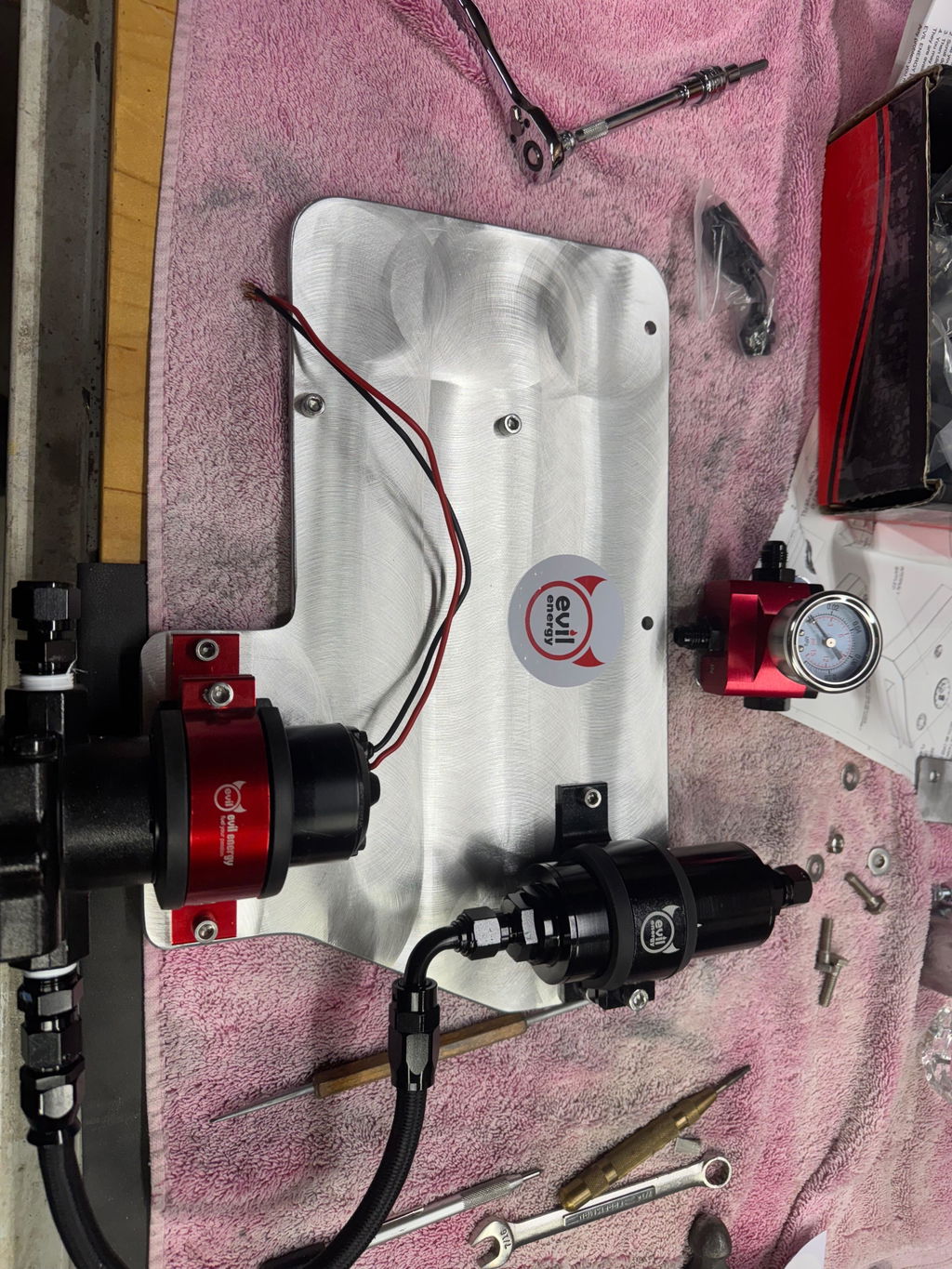
For a modified engine, the limiting area may move. A stock filter and air box may support a mild build but become restrictive after displacement, camshaft, cylinder-head, forced-induction, or RPM changes. Conversely, a large throttle body cannot correct restrictive head ports, an unsuitable manifold, poor calibration, or insufficient fuel delivery.

How Should You Diagnose an Intake Problem?
- Scan for diagnostic trouble codes and review relevant live data.
- Inspect the filter, air box, tube, clamps, couplers, sensor seals, and breather connections.
- Check for unmetered-air or vacuum leaks.
- Confirm that the throttle plate operates correctly and that its electronic connector or cable is secure.
- Compare the installed manifold, throttle body, and cylinder-head port families. For LS engines, review cathedral-port vs rectangular-port LS intake compatibility.
- Review recent modifications and possible tuning requirements.
- Test before replacing parts whenever suitable diagnostic equipment is available.
Do not diagnose an intake problem solely from sound. A louder system may simply transmit more induction noise.

How Do EVIL ENERGY Intake Products Fit Into the System?
EVIL ENERGY intake-related product categories include vehicle-specific cold air intake kits, replacement and reusable filters, mechanical and electronic throttle bodies, EFI and carbureted intake manifolds, and LS, SBC, and BBC cylinder heads. These products support different stages of an intake or engine build, but they are not automatically interchangeable.
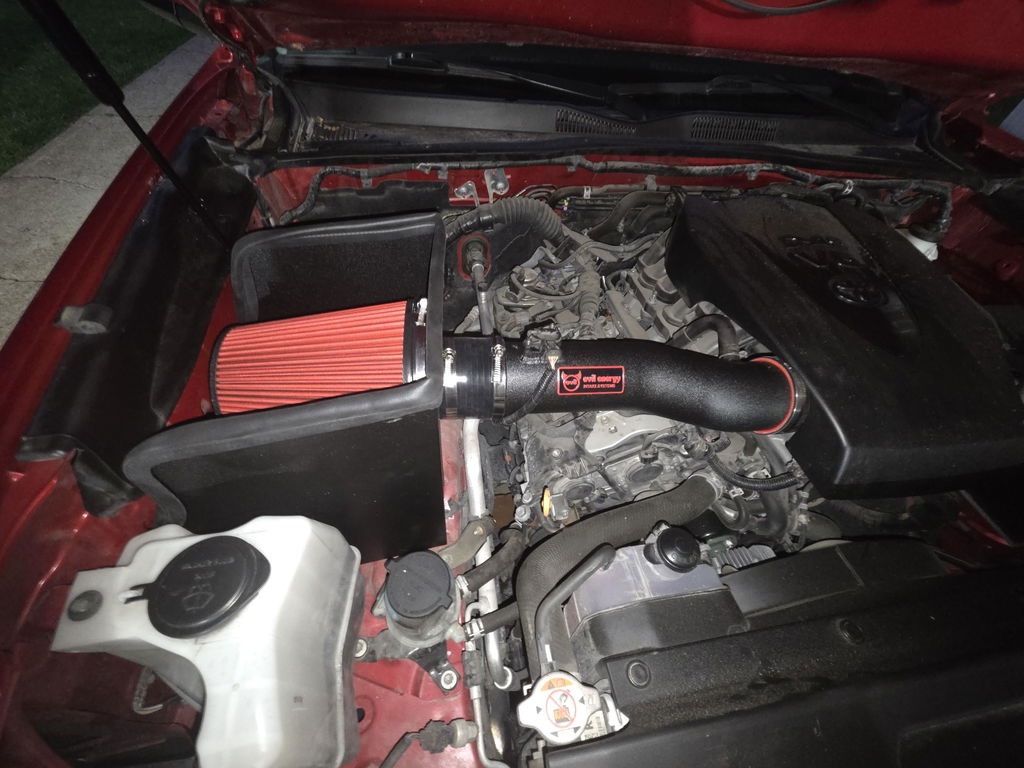
A vehicle-specific cold air kit should be selected by exact vehicle and engine. Review the cold air intake kit fitment and installation guide before ordering. A throttle body still requires bore, bolt-pattern, actuation, sensor, manifold, wiring, and tuning checks. A cylinder head requires verification of block family, intake-port design, combustion chamber, valves, springs, pushrods, headers, gaskets, and fasteners.
What Should You Upgrade First?
| Situation | First Action |
|---|---|
| Dirty filter or damaged duct | Restore the existing system before upgrading |
| Stock vehicle with desired intake sound and serviceable filter | Compare a verified vehicle-specific cold air kit |
| Built engine with a measured inlet restriction | Evaluate the tube, filter, and throttle body together |
| Manifold does not match the intended RPM range | Select a manifold around the complete engine combination |
| Cylinder-head and camshaft change | Recalculate compression, valve clearance, airflow, and tuning needs |
For a step-by-step decision path, see what intake upgrade you should do first.
Who Is This Guide For?
This guide is for DIY owners, LS-swap builders, EFI users, street-performance drivers, and project planners who want to understand the complete intake path before buying parts.
Who Is This Guide Not For?
This guide is not a substitute for a product-specific instruction manual, professional engine-build calculations, emissions-compliance guidance, or a calibration procedure for a particular vehicle.
FAQs
Q: What is the main purpose of an air intake system?
A: It supplies the engine with filtered air through a controlled path while supporting the sensors, airflow measurement, and cylinder distribution required by the engine-management and fuel systems.
Q: Does a cold air intake replace the whole intake system?
A: No. It normally replaces or modifies the filter, air box, and inlet tube upstream of the throttle body. The throttle body, intake manifold, cylinder heads, valves, and calibration remain part of the complete system.
Q: Can a larger throttle body add power by itself?
A: Only when the existing throttle body is a meaningful restriction and the rest of the engine combination can use the additional airflow area. Fitment, throttle control, and calibration still matter.
Q: What causes an intake vacuum leak?
A: Possible sources include damaged gaskets, loose fasteners, cracked hoses, uncapped ports, injector seals, throttle-body seals, and intake-manifold sealing problems.
Q: Do intake upgrades require tuning?
A: Some do not, while others can change measured airflow, electronic throttle behavior, injector requirements, or volumetric efficiency enough to require calibration. Follow the exact product instructions and vehicle data.