The core difference between a high-pressure fuel pump (HPFP) and a low-pressure fuel pump (LPFP) is the pressure each one makes and the job it does in the fuel delivery chain. The low-pressure fuel pump is a lift and transfer pump: it pushes fuel from the tank at the back of the vehicle up to the engine bay, typically at 43–87 psi (3–6 bar). The high-pressure fuel pump is a mechanical intensifier and metering pump: it takes that fuel and squeezes it to 725–5,075 psi (50–350 bar) on gasoline direct-injection (GDI) engines, or 30,000–36,000+ psi (2,000–2,500+ bar) on diesel common-rail engines.
These two pumps are not substitutes. On a GDI or common-rail diesel engine they work in series: the low-pressure pump keeps the inlet of the high-pressure pump above the fuel's vapor pressure so it never cavitates, and the high-pressure pump overcomes compression-stroke pressure and atomizes fuel into an ultra-fine spray within a few milliseconds.
In this guide
High-Pressure vs. Low-Pressure Fuel Pump at a Glance
| Low-Pressure Fuel Pump (LPFP) | High-Pressure Fuel Pump (HPFP) | |
| Fuel Pump Core Job | Lifts fuel from the tank to the engine bay or HPFP inlet and prevents vapor lock | Final-stage intensifying and metering into the high-pressure rail and direct injectors |
|---|---|---|
| Fuel Pump Operating Pressure | 43–87 psi (3–6 bar); some diesel lift pumps 5–18 psi | GDI: 725–5,075 psi; diesel common rail: 23,000–36,000+ psi |
| Fuel Pump Flow Output | 60–250 LPH of continuous flow, plus cooling circulation | On-demand pulses; displacement per stroke changes with load and rpm |
| Fuel Pump Drive and Control | 12V brushed or brushless motor, PWM speed control through the fuel pump control module (FPCM) | Camshaft-driven plunger on a three- or four-lobe cam, metered by an ECU-controlled flow control valve |
| Fuel Pump Mounting Location | Inside the tank in the fuel delivery module, or inline on a chassis rail | On the engine: cylinder head, under the intake manifold or by the timing housing |
| Common Fuel Pump Designs | Turbine vane (most common), gerotor, roller-vane | Single plunger with roller tappet (GDI); radial multi-plunger (diesel CP3/CP4 type) |
What Pressure Does Each Fuel Pump Deliver?
Pressure and flow are separate quantities, but in a fuel system they are tightly linked. The low-pressure fuel pump has to span the length of the underbody and deliver plenty of volume, typically 60–250 LPH, at a base pressure of about 43–87 psi. On a conventional multi-point (port) injection engine, that is already enough for the injector to atomize fuel into the intake port.
On GDI and common-rail diesel engines, the injector tip sits in the hot, highly compressed top of the combustion chamber. To spray fuel against cylinder pressure late in the compression stroke and break it into micron-size droplets within milliseconds, the high-pressure pump compresses the fuel 50 to more than 500 times over. Put simply: the low-pressure pump decides whether fuel reaches the engine bay on time without boiling, and the high-pressure pump decides whether that fuel can atomize and penetrate a pressurized cylinder.

How pressure has climbed: first-generation GDI pumps ran 725–2,175 psi (50–150 bar), the second generation reached about 2,900 psi (200 bar), and current systems built for strict particulate-number limits commonly run 5,075 psi (350 bar). Diesel common-rail pumps hold 23,000–36,000+ psi so the injector can fire five to seven separate pilot, main and post injections per combustion cycle. Heavy-duty diesel lift pumps sit at the other extreme, often just 5–18 psi, because their job is high flow (100–250 GPH) plus water and air removal.
Where Low-Pressure and High-Pressure Fuel Pumps Are Mounted
The low-pressure fuel pump lives inside the tank or on a chassis rail close to it, because a liquid pump is good at pushing and poor at pulling. Placed in a hot engine bay and asked to draw fuel the length of the car, a pump would create suction in the line that, combined with engine heat, drops gasoline below its vapor pressure and boils it into vapor lock. Modern vehicles submerge the electric pump in a swirl pot at the bottom of the tank, which gives it zero suction lift and uses the surrounding fuel to cool and quiet the motor. The trade-offs between tank-mounted and frame-mounted pumps are covered in in-tank vs. external fuel pump.

The high-pressure fuel pump bolts to the engine. Reaction forces of thousands of psi are far beyond what a compact 12V motor can push against, so the pump rides on the cylinder head, the end of the camshaft or the timing gear housing and takes its drive from cam rotation. Keeping it there also keeps the steel line to the fuel rail as short as possible, which reduces elastic losses in the high-pressure volume.
Here is an Evil Energy fuel pump swap on a 1996 Dodge Ram, a look at what tank-side pump service involves:
Which Engines Use One Fuel Pump and Which Use Two?
One low-pressure pump only: naturally aspirated and turbocharged gasoline engines with port fuel injection (MPI/PFI) or early throttle-body injection (TBI). Fuel sprays onto the back of the intake valve, rail pressure needs to be only about 45–65 psi, and a single in-tank electric pump feeds the injectors directly.
Low-pressure plus high-pressure pump:
- Gasoline direct injection (GDI, FSI, TSI, EcoBoost and similar): the in-tank pump supplies 58–87 psi to the engine bay, and the cam-driven high-pressure pump boosts it to 725–5,075 psi for the direct-injection rail.
- Dual-injection gasoline engines (such as D-4S, third-generation EA888, second-generation EcoBoost): a port-injection rail fed straight from the in-tank pump handles cold starts and keeps intake valves clean at low load, while a direct-injection rail fed by the high-pressure pump handles knock control and torque at medium to high load.
- Common-rail diesel (CRDI, TDI and heavy-duty): an electric lift pump, or a gear transfer pump built into the back of the high-pressure pump, feeds fuel through the filter and water separator to a radial-plunger high-pressure pump (CP3/CP4 type) that builds 23,000–36,000+ psi.

How a Low-Pressure Fuel Pump Works
A modern low-pressure fuel pump is not just a motor. It is part of a fuel delivery module that also carries a strainer sock, a reservoir (swirl pot), a fuel-level sender, a one-way check valve and often a pressure regulator.

How Does Fuel Get From the Tank Into the Pump?
When the ignition switches on or the ECU sees a crank signal, the fuel pump relay or control module powers the 12V motor, the impeller spins up and suction forms at the inlet. Fuel first passes through the nylon strainer sock at the bottom, typically 30–70 microns, which stops rust, sand and varnish from the tank floor.

To keep the pump from starving when fuel sloshes away in hard corners, on steep grades or at low fuel levels, the module uses a swirl pot. A small share of the pump's pressurized output drives a venturi jet pump at the bottom of the pot, which keeps drawing fuel in from the corners of the tank or a saddle tank so the pump inlet stays submerged.

Evil Energy EFI 255LPH Electric In-Tank Fuel Pump Kit
A high-flow in-tank fuel pump for 12V DC EFI systems, rated at 255 LPH at 43 psi and 190 LPH at 80 psi on 12V, with a 15–90 psi operating range. Runs on gasoline, E85 and ethanol blends below E85.
- 255 LPH @ 43 psi
- 190 LPH @ 80 psi
- 15–90 psi range
- Gasoline and E85
What Keeps Line Pressure Up After the Engine Shuts Off?
Fuel leaves the pump through an outlet check valve, then runs forward through the fuel filter. When the engine stops, that check valve closes and traps residual pressure in the line, typically 36–51 psi held for tens of minutes or longer. Trapped pressure keeps fuel in the hot engine bay from vaporizing, so hot restarts happen without a long prime.
Pressure regulation has largely moved from return-style systems, where the pump runs flat out and a regulator at the rail sends hot excess fuel back to the tank, to returnless demand-based systems:
- Mechanical returnless: the regulator sits in the tank module and excess fuel spills straight back into the swirl pot, so engine-bay heat never returns to the tank and evaporative (EVAP) emissions stay low.
- Electronic returnless (FPCM with PWM closed-loop control): the most common setup on GDI vehicles. A low-side pressure sensor reports to the ECU, which picks a target from real-time load, for example about 51 psi while cruising, rising to 84–87 psi at full load or for hot-weather vapor-lock protection. The FPCM changes the PWM duty cycle to match pump speed to demand, which cuts electrical load and pump heat.
Turbine, Gerotor or Roller-Vane: Which Low-Pressure Pump Design Is Which?

- Turbine pump (most common in modern cars): a non-positive-displacement impeller with dozens of small vanes spinning above 7,000 rpm in an annular channel. Output is smooth with no pressure pulsing, it runs quietly with no whine, and with no rubbing parts it commonly lasts beyond 93,000 miles. Running constantly near empty is what usually shortens that life, as covered in how long a fuel pump lasts.
- Gerotor pump: a positive-displacement design where inner and outer rotors with a one-tooth difference mesh eccentrically, drawing fuel in as the chamber grows and pushing it out as it shrinks. It keeps high volumetric efficiency against the 72–87 psi backpressure GDI systems need, flow drops off less as pressure rises, and it shows up in large-displacement vehicles and high-flow aftermarket pumps. More on sizing high-flow pumps is in this 300LPH fuel pump upgrade guide.
- Roller-vane pump: metal rollers ride in slots in an eccentric rotor and are thrown outward against the housing to form sealed chambers. It builds pressure easily, above 87–116 psi, but the sliding rollers make it sensitive to dirty fuel and give it a characteristic hum. It appears mainly in early European injection systems and external chassis-mounted lift pumps.
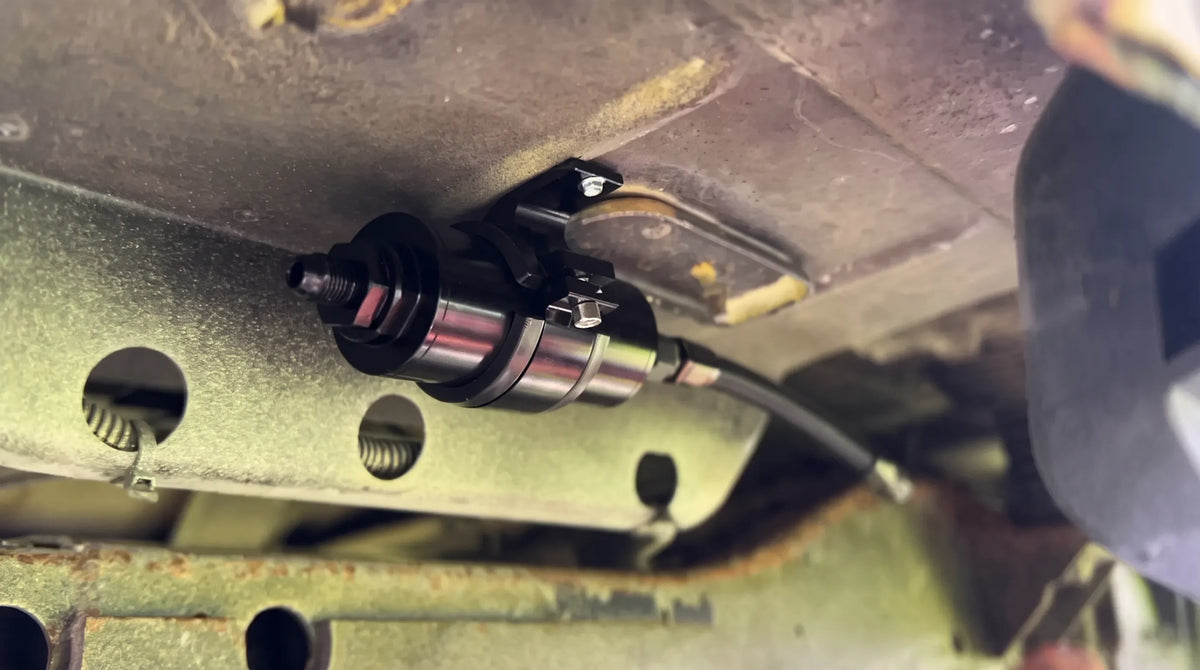
Frame-mounted external pumps are the other common low-side layout, especially on swaps and custom tanks; this inline and in-tank fuel pump kit guide compares the two installs.

Evil Energy External Inline Fuel Pump, 300LPH High Flow 12V
A universal external inline fuel pump for 12–13.5V DC EFI systems, engineered for GM LS V8 engines and fitting most cars with 12V EFI. It flows 300 LPH at 43 psi and 13.5V with operating pressure up to 75 psi, mounts below the tank so fuel is gravity-fed, and runs on gasoline, race gas, ethanol and diesel.
- 300 LPH @ 43 psi
- Up to 75 psi
- 12–13.5V EFI
- Below-tank mounting
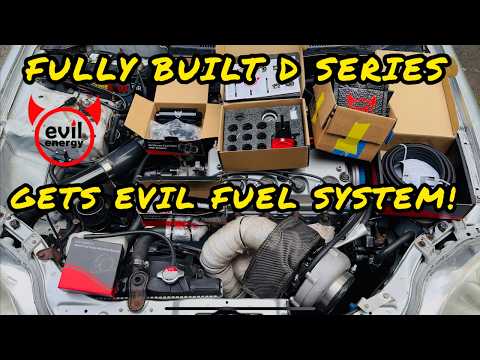
Watch an Evil Energy fuel pump and filter go into an E85 supercharged E46 race car with PTFE fuel lines:
How a High-Pressure Fuel Pump Works
If the low-pressure pump is a smooth, continuous blower, the high-pressure fuel pump is a miniature hydraulic press firing many times per second.
How Does a GDI Pump Build Direct-Injection Pressure?
Most GDI engines use a single axial plunger pump with a high-strength stainless body. Inside are a low-pressure inlet chamber with a metal-diaphragm damper that absorbs pressure pulses in the feed line, a precision plunger and barrel, an electronically controlled inlet (spill) valve, a high-pressure outlet check valve and a mechanical pressure limiter.
With the low-pressure pump feeding 58–87 psi to the inlet, the plunger moves down on its return spring and fuel floods the chamber. The cam then drives the plunger up; once the inlet closes, the trapped fuel is squeezed in a tiny dead volume and pressure jumps to 725–5,075 psi within milliseconds. When chamber pressure passes rail pressure, the outlet check valve opens and fuel rushes into the rail. If rail pressure runs away because a control valve sticks, for example past 5,500–5,800 psi, the internal pressure limiter opens and dumps fuel back to the inlet side to protect the rail. Diesel CP3/CP4-type pumps use two or three radial plungers, rely entirely on diesel's lubricity for micron-level clearances, and push rail pressure to 29,000–36,000+ psi.
How Does the ECU Control a Cam-Driven Pump?
The pump is driven purely by the camshaft and its plunger stroke never changes, yet the ECU varies rail pressure smoothly from about 725 psi at idle to 5,075 psi at full load. It does this with a flow control valve (FCV), also called a spill or metering valve, timed precisely to crank and cam position.
Cam lobe and roller tappet: a dedicated three- or four-lobe drive cam on the intake or exhaust camshaft gives three or four plunger strokes per cam revolution. To survive contact loads of several thousand newtons, modern engines put a needle-bearing roller tappet between the cam and the plunger. Earlier engines used a flat follower, which can wear through and destroy the cam lobe once the oil film breaks down.
Stroke-by-stroke spill control: on a common normally-open inlet valve, the ECU reads the fuel rail pressure (FRP) sensor and chooses the crank angle at which it energizes and closes the valve on each upstroke:
- Intake stroke (plunger falling): the FCV is off and held open by spring force and chamber vacuum, so fuel fills the chamber.
- Zero delivery: the plunger rises but the FCV stays off. Fuel is pushed back into the inlet chamber, no pressure builds and the outlet valve stays shut.
- Partial delivery: the FCV stays open for the first half of the upstroke, spilling that fuel back, then closes at mid-stroke so only the second half is compressed into the rail.
- Full delivery: the FCV closes the moment the plunger leaves bottom dead center, so the entire stroke is pressurized and sent to the rail.

That ticking sound: stand next to a running GDI engine and you will hear a crisp, rhythmic tick near the valve cover. That is not lifter noise; it is the FCV solenoid seating dozens of times per second along with the outlet check valve opening and closing.
Why Are High-Pressure Fuel Lines One-Time-Use Parts?
Factory service information treats the steel line between the pump and the rail, and the pump mounting bolts, as one-time-use parts that are replaced whenever they are removed. There are three engineering reasons:
- The seal is a metal-to-metal crush seal. At 2,900–36,000 psi a rubber O-ring at a line joint would extrude and tear, so the line ends use precision steel ball fittings that seat against cones in the pump and rail. On the first tightening to spec, for example a two-stage torque of about 62 lb-in then 89 lb-in (7 Nm then 10 Nm) or a specified angle, the ball face deforms and work-hardens to match the cone. A reused line cannot conform the same way, and under vibration it can weep atomized fuel onto a hot exhaust manifold or cylinder head.
- Residual pressure is an injection hazard. Thousands of psi can stay in the rail after shutdown, and a pinhole leak can fire a jet through skin and tissue like a needle-free syringe.
- Spring preload must come off evenly. Rotate the cam until the drive lobe is on its base circle, then loosen or tighten the two flange bolts alternately in half-turn steps. Pulling one bolt out first lets the plunger spring cock the pump flange, which can strip the aluminum head threads or score and seize the plunger.
Design, Compatibility and Cost Differences Between the Two Pumps
Materials, Tolerances and Lubrication
Low-pressure pumps typically use engineering-plastic brackets with aluminum or galvanized steel casings, and the impeller runs with micron-level hydraulic clearances. High-pressure pumps use forged stainless or high-strength alloy steel heads with no rubber seal between plunger and barrel; sealing comes from a metal fit of just 1–3 microns.
The in-tank low-pressure pump is fully submerged, and fuel flowing through the armature both lubricates the bearings and cools the motor. The high-pressure pump uses split lubrication: the roller tappet and cam run in engine oil, while the plunger relies entirely on fuel. A high-temperature fluorocarbon/PTFE double-lip seal separates the two. Once that seal wears, gasoline can leak down the plunger into the crankcase, raising the oil level and diluting the oil.
Engine and Fuel-System Compatibility
Pump type is locked to how the engine forms its mixture. Port injection has a long injection window (180–360 degrees of crank rotation) into a port at or near atmospheric pressure, so a low-pressure pump alone makes a good homogeneous mixture. GDI and common-rail diesel must inject and atomize inside a short crank-angle window in the middle to late compression stroke to control knock, raise compression and enable stratified or compression-ignition combustion, so they need the two-stage setup of an electric low-pressure pump feeding a mechanical high-pressure pump.
What Does Each Fuel Pump Cost to Replace?
| Low-Pressure Fuel Pump Replacement | GDI High-Pressure Pump Replacement | Diesel Common-Rail Pump Replacement | |
| Fuel Pump Parts Cost | $150–$600 for the assembly; $50–$180 for a bare pump core | $200–$780, plus $50–$120 for the one-time line, bolts and tappet | $500–$1,500+ depending on the truck and pump |
|---|---|---|---|
| Fuel Pump Installed Cost | $600–$1,500; dropping the tank adds $200–$400 of labor | $500–$1,900; 1–2 hours on a top-mounted four-cylinder, 3–5 hours on a V6/V8 | $1,500–$3,000; $6,000–$10,000+ if debris contaminates the rail and injectors |
| Fuel Pump Service Points | Disconnect the battery, clean debris off the tank top, replace the tank seal and filter | Depressurize, inspect the cam lobe and tappet, fit a new high-pressure line, torque in two stages | Remove timing or front accessories, bleed all air to prevent dry running, reset the ECU pump learn values |
An access panel under the rear seat avoids dropping the tank and is the biggest single swing in low-pressure pump labor. For a fuller breakdown by vehicle type, see how much it should cost to replace a fuel pump.
Symptoms of a Failing High-Pressure or Low-Pressure Fuel Pump
Both pumps sit in the same series chain, so each has its own signature symptoms plus a large overlap of fuel-starvation symptoms. For a general checklist, see how to know if your fuel pump is bad.
Low-Pressure Fuel Pump Symptoms
- Whining or howling from the tank: a healthy pump gives a soft hum during its 2–3 second prime. Worn bearings, a dragging armature or a clogged strainer that makes the pump cavitate produce a high-pitched whine from under the rear seat. This guide to fixing fuel system noises helps separate pump whine from line and mounting noise.
- Stalling after heat soak or a long highway run, restarting once cool: a classic sign of aging windings or an overheating FPCM. Below a quarter tank, fuel temperature climbs, winding resistance rises, output collapses and line pressure falls below vapor pressure.
- Cutting out on corners, grades or low fuel: a damaged swirl-pot valve or failed jet pump lets the pump suck air during fast cornering or climbing, even with a quarter tank showing.
- Very slow first start, instant second crank: a leaking outlet check valve lets residual pressure fall to zero, so the pump spends 3–5 seconds refilling the line on the first key-on.
- Low-side fault codes: P008A (low-pressure fuel system pressure too low), P008B (too high), P0230 or P0627 (fuel pump control circuit).
High-Pressure Fuel Pump Symptoms
- Rising oil level with a gasoline smell on the dipstick: unique to the high-pressure pump. A failed plunger seal forces gasoline into the valve cover and sump on every stroke, thinning the oil, while fuel vapor drawn through the PCV system drives long-term fuel trim rich (around −15% to −25%) and sets P0172/P0175.
- Dull metallic clatter near the valve cover: when the roller tappet bearing breaks up or a flat follower wears through, the cam strikes the plunger metal-to-metal, far louder than normal solenoid ticking.
- Instant limp mode at high rpm or under hard acceleration: idle and light cruise need only about 580–870 psi, which a worn pump can still manage. At wide-open throttle, when demand rises to 2,900–5,075 psi, a worn plunger or stuck-open FCV falls short and the ECU cuts power and caps rpm around 2,500–3,000.
- Hard start, then weak running on feed pressure: with the FCV circuit open, the pump stops boosting, but 58–87 psi from the low-pressure pump still pushes through the check valves. Cold starts are very hard because the injector barely atomizes, and once running the engine is weak, misfires and may smoke.
- High-side fault codes: P0088 (rail pressure too high, often a spill valve stuck closed), P0090 or P0251 (metering control valve circuit or performance).
Symptoms That Can Point to Either Pump
Whichever stage starves, the injectors end up short of fuel, so these symptoms alone cannot tell you which pump failed:
- Extended cranking, hard starting, or cranks but will not start
- Hesitation, surging and power loss under load, acceleration or uphill
- Random misfires and lean codes: P0300, P0171/P0174, and above all P0087 (fuel rail or system pressure too low)
How to Diagnose Which Fuel Pump Is Failing
The rule that saves the most money: a P0087 code does not mean the high-pressure pump is bad. Before condemning an expensive HPFP, measure low-side pressure and flow. Here is the four-step workflow:
Step 1: Read Codes and Graph Commanded vs. Actual Rail Pressure
If you see P0087, P0088, P0190–P0194 (rail pressure sensor circuit) or P008A, do not start swapping parts. Use a scan tool that graphs live data on a road test and overlay desired rail pressure, actual rail pressure, FCV duty cycle and low-side pressure if the vehicle has that sensor. Watch tracking at idle, at wide-open throttle and after shutdown.
- If desired and actual match at idle (both around 725 psi) but actual falls to about 290 psi, or all the way to 72–87 psi (the low-pressure pump's own output), on hard acceleration, suspect a clogged low-side filter, a weak low-pressure pump or a failed FCV.
- If actual rail pressure sits at 58–87 psi under all conditions, the high-pressure pump is not working at all. Check the FCV fuse and connector, and whether the tappet is worn through or broken.
- If actual pressure collapses under load while FCV duty is already maxed out, there is a real physical supply shortage.
Step 2: Test Low-Side Pressure, Loaded Pressure Drop and Volume
Static pressure is deceptive. A 90% clogged filter or a varnish-packed strainer can still show a normal 65 psi at idle, but at 4,000 rpm the restriction drags pressure down, the pump inlet runs dry and vapor forms in the chamber. Vapor compresses, so no amount of plunger force can then build 2,900 psi. Tee a mechanical gauge and flow meter in ahead of the high-pressure pump inlet, even if a low-side sensor exists, to rule out sensor drift. Confirm pressure holds steady in the specified 51–87 psi range at idle and under load, run a 15- or 30-second volume test and convert it against the 60–250 LPH spec, then watch residual pressure for 15 minutes after shutdown to catch a leaking check valve or line. Gauge hookup and volume test details are in how to test a fuel pump.
Step 3: Check High-Side Pressure Against Factory Specifications
Move to the high side only after low-side pressure and flow are fully in spec. Because high-side pressure reaches 2,900–36,000 psi, never connect an ordinary rubber-hose gauge to the high-pressure rail. High-side diagnosis relies on scan-tool data, the rail pressure sensor signal (typically a linear 0.5–4.5 V), and relief-valve checks. Use the actuator test or an oscilloscope to check the FCV current waveform and coil resistance (typically 0.5–5 ohms).
After a hot shutdown, rail pressure should rise for the first few minutes from heat expansion; if it drops right away, suspect a leaking direct injector or an internal leak at the outlet check valve or pressure limiter. On common-rail diesels, also run an injector return-flow test: a worn injector control valve bleeds rail pressure back to the tank, and the pump cannot keep up no matter how hard it works.
Step 4: Rule Out Filters, Wiring, Sensors, Fuel Quality and Cam Wear
- Filters: inspect an external filter (commonly replaced about every 12,000 miles) or the in-tank element (about 56,000–62,000 miles) for varnish from poor fuel.
- FPCM and wiring: run a loaded voltage-drop test at the pump connector. A control module mounted near a frame rail or rear wheel well is prone to road-salt corrosion. Relay and fuse failures can mimic a dead pump, as covered in fuel pump relay and fuse symptoms.
- Sensor drift: with the key on, engine off and the system fully depressurized, the FRP sensor should read zero. A sensor that drifts high, say reporting 870 psi when the rail holds 145 psi, makes the ECU stop commanding pressure, and the engine may not start with no code set.
- Fuel quality: water or low-lubricity fuel destroys the oil film on GDI and diesel plungers, scoring them and spreading metal debris through the system.
- Cam wear: with the pump off, inspect the roller tappet and the cam drive lobe. A lobe that has lost lift means even a brand-new pump cannot build pressure.

Can a Low-Pressure Fuel Pump Replace a High-Pressure Pump?
Why the Two Pumps Are Not Interchangeable
High-pressure and low-pressure fuel pumps share nothing in structure, drive method, pressure range or electrical interface.
- The pressure gap is too large. A low-pressure pump tops out around 87 psi, while cylinder pressure near the end of a GDI compression stroke reaches 220–435 psi (580–870 psi in diesels). Beyond missing the 725–5,075 psi needed for atomization, hot cylinder gas could push back into the rail when the injector opens.
- Mechanical drive vs. electric rotation. The low-pressure pump is a 12V rotary pump in the tank with plastic quick-connects or hose; the high-pressure pump is a reciprocating pump bolted to the head, driven by the cam, with cone-seat steel lines.
Why Matching Pressure Specs Still Matters Within One Pump Type
- Inlet pressure collapse: a GDI pump sits on a cylinder head above 212°F and depends on 72–87 psi of feed pressure to keep gasoline from boiling as it enters the chamber. Fitting a 51 psi port-injection pump to a GDI vehicle that needs 87 psi lets fuel vaporize in the pump, and cavitation can pit the plunger within a few thousand miles.
- FCV calibration mismatch: high-pressure pumps differ in plunger diameter, displacement per stroke, solenoid inductance and normally-open or normally-closed logic, all matched to a specific ECU map. The wrong pump causes rail pressure oscillation and long-term torque limiting.

Upgrade the Supply Side of Your Fuel System
In-tank and external inline electric fuel pumps for EFI builds, with high-flow options for swaps, E85 and boosted engines.
Shop Fuel PumpsHigh-Pressure and Low-Pressure Fuel Pump FAQs
Q: What is the difference between a high-pressure and a low-pressure fuel pump?
A: The differences come down to pressure, location and drive. A low-pressure fuel pump is a 12V electric rotary pump in the tank or under the chassis that moves 60–250 LPH to the engine bay at 43–87 psi. A high-pressure fuel pump is a cam-driven plunger pump on the engine that compresses that fuel to 725–5,075 psi on GDI gasoline engines or 23,000–36,000+ psi on common-rail diesels.
Q: Does my car have both a high-pressure and a low-pressure fuel pump?
A: It depends on the injection system. A gasoline direct-injection engine (badged GDI, FSI, TSI, TFSI, EcoBoost, SkyActiv-G, SIDI and similar) or a modern common-rail diesel (TDI, CRDI, dCi, BlueHDi and similar) has both pumps. A port-injected gasoline engine (MPI/PFI) has only the in-tank low-pressure fuel pump.
Q: Which fuel pump supplies fuel to the injectors?
A: On port injection, the in-tank low-pressure pump feeds the rail and injectors directly. On GDI and common-rail diesel, the engine-mounted high-pressure pump feeds the direct injectors, and the low-pressure pump only feeds the high-pressure pump. On dual-injection engines, the low-pressure pump feeds the port injectors and the high-pressure pump, which in turn feeds the direct injectors.
Q: What are the symptoms of a failing low-pressure fuel pump?
A: Look for a high-pitched whine from the tank, cutting out below a quarter tank or on hard corners and grades, stalling after heat soak that clears once the car cools, very long cranking on the first start after sitting (a leaking check valve), and P008A or P0087 codes.
Q: What are the symptoms of a failing high-pressure fuel pump?
A: Beyond weak acceleration, hard starts and P0087/P0088 codes, a high-pressure fuel pump has three signature symptoms: a rising oil level that smells of gasoline (plunger seal leak, often with a rich P0172), metallic knocking at the pump mount (tappet or follower wear), and instant limp mode under hard acceleration.
Q: How can I tell which fuel pump is failing?
A: Measure low-side pressure and volume at the high-pressure pump inlet. If feed pressure drops below about 29 psi under acceleration, the problem is the low-pressure pump, filter or FPCM. If feed pressure stays above 72 psi while actual rail pressure lags far behind commanded (for example 435 psi actual vs. 2,900 psi commanded), the problem is the high-pressure pump, FCV or cam tappet.
Q: Can a bad low-pressure pump cause low fuel rail pressure?
A: Yes, and it is the most common misdiagnosis. The high-pressure fuel pump cannot draw fuel from the tank; it depends on the low-pressure pump to fill its chamber and keep enough inlet pressure to stop hot gasoline from boiling. A weak low-pressure pump leaves the chamber partly filled with vapor, and the plunger cannot build target rail pressure.
Q: Does a low fuel pressure code mean the high-pressure pump is bad?
A: No. P0087 only says rail pressure is below target. Common causes, roughly in order of likelihood, are a weak low-pressure pump or clogged strainer, a clogged fuel filter, a sticking FCV or bad connection, a worn plunger, a worn cam tappet, a leaking direct injector, or a drifting rail pressure sensor.
Q: Why should the low-pressure fuel system be tested first?
A: Because the high-pressure side can only deliver what the low-pressure side supplies. Replacing a high-pressure fuel pump and line before confirming 43–87 psi and 60–250 LPH on the low side leaves the new pump starved, brings P0087 straight back, and can wear out the new pump through cavitation.
Q: Can a clogged fuel filter damage a high-pressure fuel pump?
A: Yes. A clogged filter collapses inlet pressure at high load, causing cavitation and loss of fuel lubrication. The plunger relies on fuel to lubricate and cool it, so dry running can score the plunger coating quickly and even break up the rollers, spreading debris through the rail. Replacing an external filter about every 12,000 miles and an in-tank element about every 56,000–62,000 miles protects both pumps; replacement elements are in the fuel filters collection.
Q: Can you keep driving with a failing fuel pump?
A: A failing fuel pump can quit while merging or crossing an intersection, which stalls the engine and reduces power-steering and brake assist. Low pressure also creates a lean mixture that raises combustion temperature and can burn pistons, melt plug electrodes or damage the catalytic converter. A high-pressure fuel pump leaking gasoline into the oil can wipe out rod bearings, and a wearing diesel pump can contaminate the injectors and tank, turning a pump job into a full fuel-system replacement.
Q: Can an engine run with a failed high-pressure fuel pump?
A: A GDI gasoline engine often can, in limp mode: if the spill valve fails de-energized or the plunger is worn but the in-tank pump is healthy, 58–87 psi of feed pressure still reaches the rail. Atomization is poor, so the engine may need long cranking and runs weakly with rpm capped around 2,000–3,000. A seized pump or broken cam stops it entirely. A common-rail diesel will not start, because its injectors need at least 2,900–4,350 psi to open and atomize.
Q: Can you replace only the high-pressure fuel pump?
A: Yes, if pressure and flow tests show the low-pressure pump is healthy. Replacing a GDI high-pressure fuel pump should include a new roller tappet, a new one-time-use high-pressure line and flange bolts, new fluorocarbon O-rings, and an oil and filter change if the old pump leaked gasoline into the crankcase.
Q: How much does it cost to replace a high- or low-pressure fuel pump?
A: A low-pressure fuel pump assembly typically costs $600–$1,500 installed, at the low end on cars with a rear-seat access panel and at the high end on trucks and SUVs that need the tank dropped. A GDI high-pressure fuel pump runs about $500–$1,900. A diesel common-rail pump costs about $1,500–$3,000, or $6,000–$10,000+ if debris contaminates the rail and injectors.
Q: Are high-pressure and low-pressure fuel pumps interchangeable?
A: No. The low-pressure fuel pump is a 12V electric rotary pump in the tank making 43–87 psi; the high-pressure fuel pump is a cam-driven plunger pump on the cylinder head making 725–36,000+ psi. Mounting, line connections, drive source and output differ by more than a hundredfold.
Q: Do gasoline and diesel engines use different high-pressure fuel pumps?
A: Yes. GDI pumps run 725–5,075 psi, are fist-sized single-plunger units on the head driven by the valve camshaft, and need a hard diamond-like carbon (DLC) plunger coating because gasoline has almost no lubricity. Diesel common-rail pumps run 23,000–36,000+ psi, are large twin- or triple-plunger units with their own eccentric shaft driven by timing gears, chain or belt, and run fully immersed in diesel, which is why gasoline or water contamination ruins them so quickly.