How to Spot a Bad Fuel Pressure Regulator
The fastest way to identify bad fuel pressure regulator symptoms is to look for black smoke from the exhaust, engine hesitation, and fouled spark plugs. If your vehicle cranks but won't fire, it may be due to a fuel pressure regulator stuck open symptoms, preventing the system from building the necessary PSI. For LS engine swaps, a rock-solid 58 PSI is the benchmark; any deviation is a primary fuel pressure regulator failure symptom.
What is a Fuel Pressure Regulator?
The fuel pressure regulator is the 'brain' of your EFI system. It ensures that the fuel rail maintains constant pressure so that injectors can achieve perfect fuel atomization. Whether you are running a stock setup or a custom LS engine swap, once you encounter fuel pressure regulator issues, the air-fuel ratio (AFR) becomes unbalanced, leading to the following performance failures.

10 Signs of a Bad Fuel Regulator
#1: Black Smoke from the Exhaust
This is one of the most visible bad fuel pressure regulator symptoms. When the regulator fails and allows fuel pressure to climb too high, excess fuel enters the combustion chamber, resulting in thick black smoke from unburnt fuel.

#2: Fouled Spark Plugs (Carbon Buildup)
Inspect your spark plugs. If the electrodes are covered in a thick layer of black, dry carbon, you have definitive fuel pressure regulator failure symptoms. Over-pressurization 'floods' the plugs, leading to misfires.

#3: Engine Hesitation and Acceleration Lags
Does your engine stumble when you hit the gas? This is a common sign of a bad fuel regulator. The regulator cannot increase pressure quickly enough to meet the engine's demand under load, causing a 'flat spot' in acceleration.

#4: Fuel Pressure Regulator Stuck Open Symptoms
If the fuel pressure regulator is stuck open, fuel flows freely back to the tank instead of staying in the rail.
-
The Result: A 'Hard Start' or 'No Start' condition because the fuel rail cannot reach the required PSI (typically 58 PSI for LS systems) to fire the injectors.

#5: Drastic Drop in Fuel Economy
If your MPG drops suddenly, it’s often because a faulty fuel regulator is failing to bypass excess fuel, forcing the engine to consume far more gasoline than the ECU expects.

Core Solution: EVIL ENERGY Adjustable EFI Fuel Pressure Regulator Kit
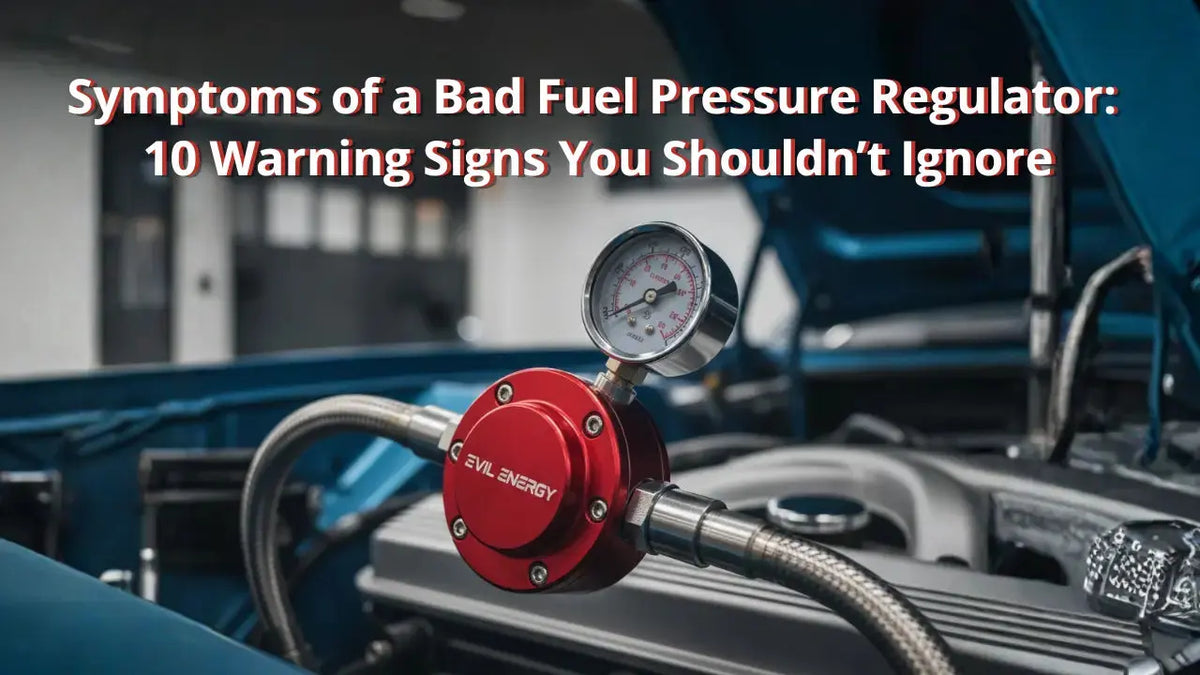
If you are experiencing these symptoms, upgrading to an EVIL ENERGY adjustable regulator is the ultimate fix. CNC-machined from 6061-T6 aluminum and featuring a liquid-filled gauge, our regulators absorb pump pulsations to provide an incredibly accurate 43-58 PSI reading. It’s the perfect insurance policy for both daily drivers and high-horsepower LS builds.

#6: Fuel in the Vacuum Hose (The 'Gas Smell' Test)
Expert Diagnostic Trick: Pull the vacuum reference line off the regulator. If you see liquid gasoline or smell raw fuel inside the hose, the internal diaphragm is ruptured. This is a critical fuel pressure regulator failure symptom and poses a serious fire hazard.

#7: Engine Stalling or Rough Idling
Stalling at stoplights? The pressure fluctuations provided by a bad fuel regulator make it difficult for the engine to maintain a steady RPM at idle.
#8: Gasoline Odor on the Dipstick
When a regulator fails 'rich,' excess fuel can wash down the cylinder walls and contaminate your oil. If your oil smells like gas, check for bad fuel pressure regulator symptoms immediately to prevent bearing wear.
#9: Misfiring at Idle
Low fuel pressure (caused by a regulator failing in the 'open' position) leads to a lean misfire, making the engine shake or vibrate excessively while stopped.

#10: Noisy Fuel Pump
When a regulator is restricted, or the return side is blocked, the fuel pump works overtime and emits a loud, high-pitched whining noise. This is usually a byproduct of long-term fuel pressure regulator issues.
Expert Diagnostics & LS Swap Tips
When fine-tuning your LS1 swap fuel pump kit, keep these professional insights in mind:
-
The 58 PSI Gold Standard: Most LS systems require a constant 58 PSI. To ensure this accuracy, we recommend pairing your regulator with EVIL ENERGY PTFE fuel lines, which resist expansion and ensure every pound of pressure reaches the injectors.
-
Pressure Creep: If your PSI rises even after adjustment, check for a return line restriction. We recommend a return line diameter equal to or larger than the feed line to ensure the EVIL ENERGY regulator's bypass functions correctly.
Conclusion: Prioritize Your Fuel Pressure for Peak Performance
In summary, ignoring bad fuel pressure regulator symptoms is a gamble that can lead to poor fuel economy, fouled spark plugs, or even catastrophic engine failure. Whether you are dealing with black smoke or fuel pressure regulator stuck open symptoms, early diagnosis is key to keeping your vehicle on the road.
For enthusiasts and builders working on an LS engine swap, precision is everything. A standard plastic regulator often can't keep up with the demands of a high-flow system. Upgrading to a professional-grade EVIL ENERGY Adjustable Fuel Pressure Regulator ensures your engine receives a consistent 58 PSI, eliminating the 'lean' or 'rich' conditions that plague unoptimized EFI conversions. Don't let a faulty fuel regulator hold back your horsepower—invest in quality components and enjoy a smoother, more responsive drive.
FAQs: Mastering Fuel Pressure Regulator Diagnostics
Q1: What is the most common sign of a bad fuel regulator?
A: The most common bad fuel pressure regulator symptom is a noticeable drop in engine performance, such as hesitation during acceleration or a rough idle, often accompanied by black smoke from the exhaust.
Q2: Can a bad fuel pressure regulator cause my car not to start?
A: Yes. If you have fuel pressure regulator stuck open symptoms, the fuel rail cannot hold the pressure needed to prime the injectors, resulting in an engine that cranks but refuses to fire.
Q3: How do I know if the internal diaphragm of my regulator has failed?
A: Perform the 'Gas Smell Test.' Disconnect the vacuum hose from the regulator; if you find liquid fuel or a strong gasoline odor inside the hose, the diaphragm is ruptured. This is a definitive fuel pressure regulator failure symptom.
Q4: Will a faulty regulator trigger a 'Check Engine' light?
A: Typically, yes. A failed fuel pressure regulator often triggers codes P0172 (System Too Rich) or P0175, as the ECU tries to compensate for the incorrect fuel pressure.
Q5: Why is 58 PSI so important for an LS swap?
A: Most LS swap fuel systems are hard-coded in the ECU to expect exactly 58 PSI (4 bar). If your regulator fails and the pressure drops, the engine will run lean, which can cause permanent piston damage.
Q6: Can I just clean my fuel pressure regulator to fix it?
A: No. Because most fuel pressure regulator issues stem from a torn internal rubber diaphragm or a weakened spring, cleaning won't fix the mechanical failure. Replacement is the only reliable solution.
Q7: Why does my fuel pump sound louder than usual?
A: If your regulator is restricted or the return line is blocked, the fuel pump has to work much harder to push fuel, creating a high-pitched whining noise. This is a frequent byproduct of fuel pressure regulator issues.
Q8: What is 'Pressure Creep' and how do I fix it?
A: Pressure creep is when the PSI slowly rises above your setting. This is usually caused by a return line restriction. Ensure your EVIL ENERGY regulator is paired with a sufficiently sized return line to allow excess fuel to bypass back to the tank.
Q9: Does a bad fuel pressure regulator affect gas mileage?
A: Absolutely. A faulty fuel regulator that stays closed will skyrocket your fuel pressure, causing the engine to burn significantly more gas than necessary, leading to a massive drop in MPG.
Q10: Why should I choose an adjustable regulator over a factory one?
A: An EVIL ENERGY adjustable regulator allows you to fine-tune your pressure to match your specific injectors and engine mods. Plus, our integrated liquid-filled gauge allows for real-time monitoring, making it much easier to spot bad fuel pressure regulator symptoms before they become a major problem.