How to Test a Fuel Pressure Regulator
To effectively perform a how-to test a fuel pressure regulator procedure, start by checking the vacuum port for internal leaks. Follow this with a dynamic pressure test while the engine is running and a static hold test after shutdown. For high-performance setups like an LS engine swap, ensuring a steady 58 PSI is the gold standard for determining if your regulator is functioning correctly. If you are unsure of what to look for, reviewing the primary symptoms of a bad fuel pressure regulator is the best first step.

What is a Fuel Pressure Regulator?
The fuel pressure regulator is the 'brain' of your EFI system. It maintains a constant pressure in the fuel rail so that injectors achieve perfect fuel atomization. Whether you are running a stock vehicle or a custom LS engine swap, knowing how to tell if the fuel regulator is bad is essential to prevent air-fuel ratio imbalances that lead to performance failures.
-
Bypass Style Regulators: These maintain precision by sending excess fuel back to the tank—highly recommended for performance EFI systems.
-
Blocking Style Regulators: These stop flow when demand is low but are prone to 'pressure creep,' which can complicate your diagnostic process.

Why Proper Fuel Pressure is Important
Learning how to know if the fuel pressure regulator is bad prevents several critical engine issues:
-
Acceleration Lag: A slow-reacting regulator creates 'flat spots' in power.
-
Engine Misfires: Low pressure leads to a lean condition where the engine fails to fire correctly.
-
Internal Damage: Long-term over-pressurization can foul spark plugs or dilute engine oil with raw gasoline.
Preparing for Fuel Pressure Regulator Adjustment & Testing
Before you dive into how to check for a bad fuel pressure regulator, gather these essential tools:
-
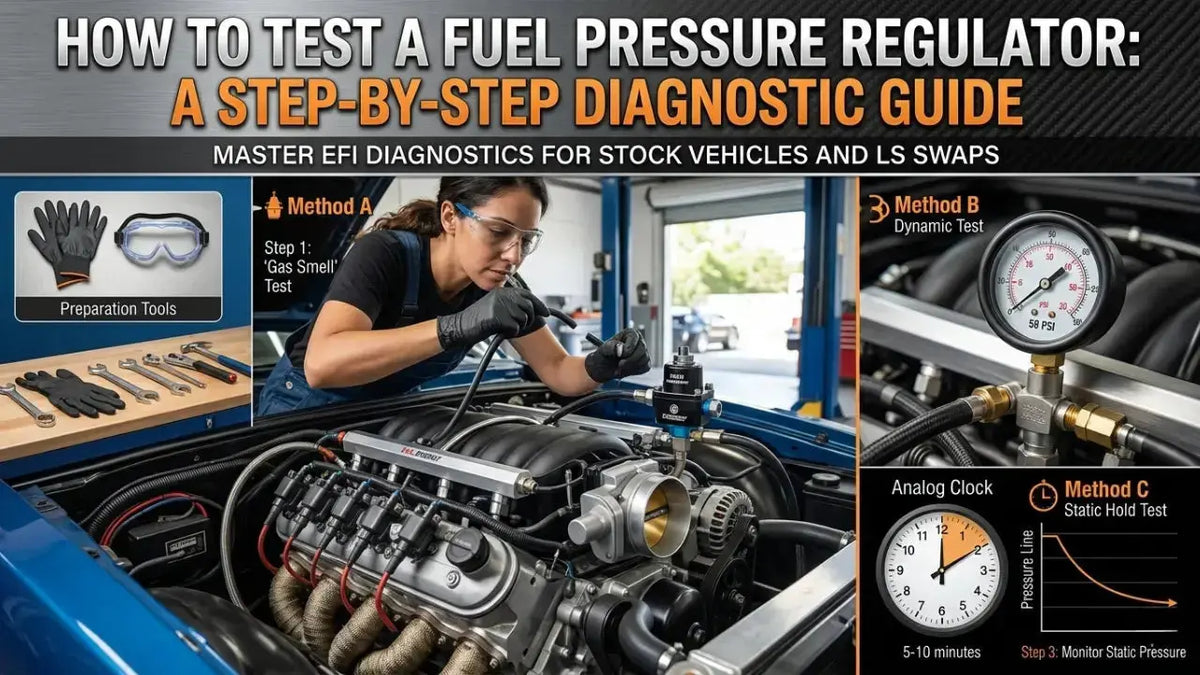
High-Quality Gauge: A liquid-filled gauge (like those in EVIL ENERGY kits) provides steady, vibration-free readings.
-
Safety Gear: Fuel-resistant gloves and goggles are mandatory.
-
Hand Tools: A basic wrench set or Allen keys for adjustments.
Safety Check: Always work in a well-ventilated area. Ensure the engine is cool to the touch to prevent fuel ignition on hot exhaust manifolds.

Step-by-Step: How to Test a Fuel Pressure Regulator
Method A: The Vacuum Hose Inspection (The 'Gas Smell' Test)
This is the fastest way regarding how to know if the fuel pressure regulator is bad. It identifies a ruptured internal diaphragm.
-
Locate the vacuum reference line on the regulator.
-
With the engine off, disconnect the hose.
-
Diagnostic Insight: If you see liquid gasoline or smell raw fuel inside the hose, the diaphragm is blown. This is a critical sign of how to check for a bad fuel pressure regulator and poses a serious fire hazard.
Method B: Dynamic Fuel Pressure Test
Observing the system under load is the core of how to test a fuel pressure regulator.
-
Connect your gauge to the fuel rail's Schrader valve.
-
Start the engine and monitor the PSI at idle (LS swaps should hold at 58 PSI).
-
Abnormal Signs: If the needle bounces erratically or the pressure fails to reach the spec, you have confirmed how to tell if the fuel regulator is bad.
Method C: Static Hold Pressure Test
This method checks if the regulator is 'stuck open,' causing hard-start conditions.
-
Turn the ignition to 'ON' (do not start) to prime the system, then turn it off.
-
Watch the gauge for 5–10 minutes.
-
Expert Insight: If the pressure drops rapidly, the regulator is leaking internally or stuck open, which is a definitive sign of how to know if fuel pressure regulator is bad.
Common Issues & Troubleshooting: Expert Diagnostics
When fine-tuning your LS engine swap or EFI fuel system kit, look for these specific red flags:
-
Pressure Creep: If you turn the adjustment screw counter-clockwise but the PSI stays high, you likely have a return line restriction. The line may be too small to bypass the fuel pump's volume.
-
Inconsistent Idle: Fluctuating PSI often points to a clogged fuel filter or a failing fuel pump rather than the regulator itself.
-
No Vacuum Response: If the PSI does not drop slightly when you reconnect the vacuum line at idle, the regulator is not responding to engine load changes.
Conclusion: Prioritize Your Fuel Pressure for Peak Performance
Ignoring the signs of how to know if the fuel pressure regulator is bad is a risk that leads to poor MPG and engine damage. Whether you are dealing with black smoke or acceleration lag, a proper how to test a fuel pressure regulator is your first line of defense. Investing in quality components ensures your EFI system remains stable under any load.
FAQs: Mastering Fuel Pressure Regulator Diagnostics
Q1: What is the most common sign of a bad fuel regulator?
A: The most frequent symptom is a noticeable drop in engine performance, such as hesitation during acceleration or a rough idle. If you are learning how to tell if a fuel regulator is bad, look for black smoke from the exhaust, which indicates a 'rich' condition where the regulator is allowing too much fuel into the combustion chamber.
Q2: Can a bad fuel pressure regulator cause my car not to start?
A: Yes. If you have fuel pressure regulator stuck open symptoms, the fuel rail cannot hold the pressure needed to prime the injectors. This results in an engine that cranks but refuses to fire because it cannot reach the required PSI (typically 58 PSI for LS systems).
Q3: How do I perform a quick DIY test on my regulator?
A: The fastest way to check for a bad fuel pressure regulator is the 'Gas Smell Test.' Disconnect the vacuum reference line from the regulator while the engine is off. If you find liquid gasoline or a strong raw fuel odor inside the hose, the internal diaphragm is ruptured, and the unit must be replaced.
Q4: Why is 58 PSI so important for an LS engine swap?
A: Most LS engine swap ECUs are hard-coded to expect exactly 58 PSI (4 bar). If your regulator fails and the pressure drops, the engine will run lean, which can cause permanent piston damage. Using a high-quality EVIL ENERGY adjustable regulator ensures this pressure remains rock-solid.
Q5: Will a faulty regulator trigger a 'Check Engine' light?
A: Usually, yes. A failed regulator often triggers OBD-II codes such as P0172 (System Too Rich) or P0175. The ECU detects that it cannot control the fuel trim because the mechanical regulator is overriding the programmed fuel delivery.
Q6: How to test a fuel pressure regulator using a gauge?
A: Connect a fuel pressure gauge to the service port on your fuel rail. Observe the needle while the engine idles; it should stay steady at the manufacturer’s spec. If the needle vibrates or drops when you rev the engine, you've confirmed how to know if the fuel pressure regulator is bad.
Q7: What is 'Pressure Creep' and how do I fix it?
A: Pressure creep occurs when the fuel pressure continues to rise even after you've adjusted the regulator. This is a common fuel pressure regulator failure symptom often caused by a restricted return line. Ensure your return line is large enough to handle the volume of fuel being bypassed back to the tank.
Q8: Why does my fuel pump sound louder than usual?
A: If your regulator is restricted or the return side is blocked, the fuel pump has to work much harder to push fuel, creating a high-pitched whining noise. This is a frequent byproduct of long-term fuel pressure regulator issues.
Q9: Does a bad fuel pressure regulator affect gas mileage?
A: Absolutely. A faulty regulator that fails in the 'closed' position will skyrocket your fuel pressure, forcing the engine to burn significantly more gas than necessary. This leads to a massive and sudden drop in MPG.
Q10: Why should I choose an adjustable regulator over a factory one?
A: An EVIL ENERGY adjustable regulator allows you to fine-tune your pressure to match specific injectors or engine mods. Additionally, the integrated liquid-filled gauge makes it much easier to spot how to check for a bad fuel pressure regulator before it leads to a total breakdown.