


Subscribe now to unlock $9.99 deals


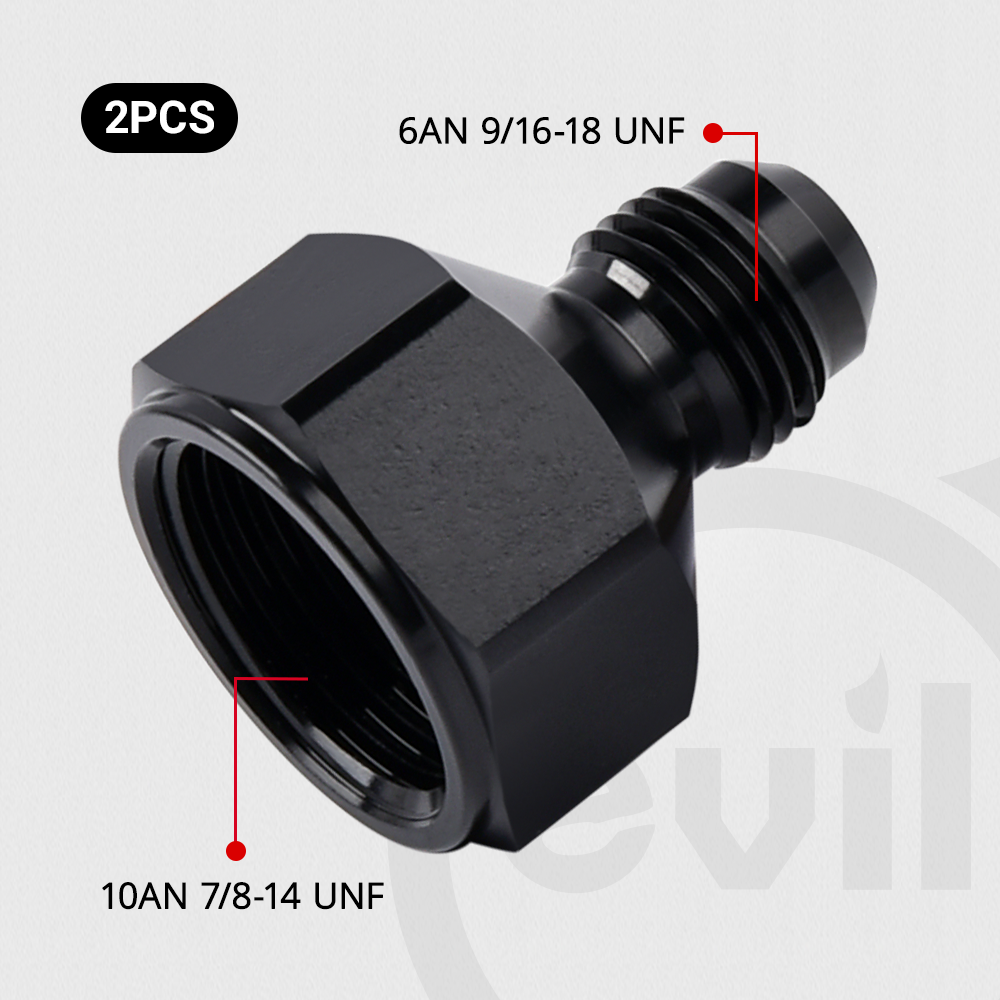
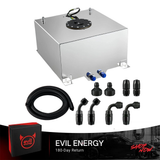

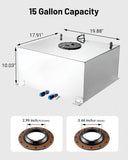
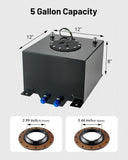
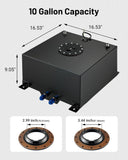
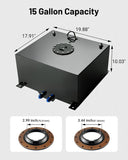



EVIL ENERGY 5/10/15/20 Gallon Fuel Cell Gas Tank Aluminum with Level Sender 6AN 12FT CPE Fuel Line Kit Black/silver
- $119.99
- $119.99
- Unit price
- per
Style
-
CPE
SKU:
EVKT11234S1BK-AMZ1
Product Type:
Fuel Cell Tank Kits

EVIL ENERGY Fuel Cell Tank Specification
| Brand | EVIL ENERGY |
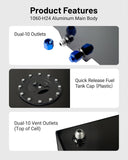
| Tank Material | 1060-H24 Aluminum, 2.5 mm wall |
| Fit Type | Universal |
| Tank Color | Silver/Black |
| Tank Inlet/Outlet Fitting | AN10 (5/10/15/20 Gallon) |
| Exterior Finish | Polished |
| Tank Capacity | 5/10/15/20 Gallons |
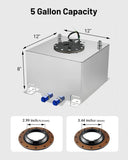
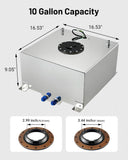
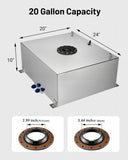
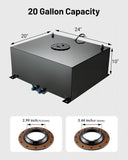
| Tank Size (L × W × H) | 5 gallon: 12.01 × 12.01 × 8.27 in (305 × 305 × 210 mm) 10 gallon: 16.54 × 16.54 × 9.06 in (420 × 420 × 230 mm) 15 gallon: 19.88 × 17.91 × 10.04 in (505 × 455 × 255 mm) 20 gallon: 24.02 × 19.88 × 10.04 in (610 × 505 × 255 mm) |
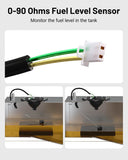
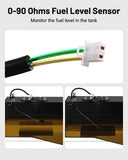
| Fuel Level Sending Unit | Pre-installed, 0–90 ohm (0 ohm empty, 90 ohm full) |
| Anti-Slosh Foam | Pre-installed in the 5, 10, 15 and 20 gallon tank |
| Filler Cap | Quick-release plastic cap |
EVIL ENERGY 6AN CPE Fuel Line and Fittings Specification
| Fuel Line | 12 ft 6AN CPE hose, Black or Silver |
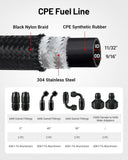
| Hose Construction | CPE synthetic rubber inner tube, 304 stainless steel wire reinforcement, nylon braided cover |
| Hose Size | 0.343 in inside diameter, 0.543 in outside diameter |
| Minimum Bend Radius | 2.5 in |
| Pressure Rating | 750 PSI working, 2,250 PSI burst |
| Temperature Range | −22°F to 248°F |
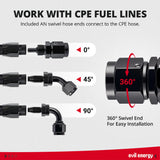
| Hose Ends | 6AN swivel fittings in straight, 45° and 90° |
| Tank Adapters | AN10 to 6AN |
| Fuels Compatible with CPE Hose | Diesel, race gas, ethanol-free gasoline |
Fuel Cell Kit Contents
| Package Includes | Aluminum fuel cell with sending unit and anti-slosh foam 12 ft 6AN CPE fuel line 6AN swivel hose ends AN10 to 6AN adapters |
| Sold Separately | Fuel pump, fuel pressure regulator, fuel filter |
Fuel Cell Sizes Compared: 5, 10, 15 and 20 Gallon
 |
 |
 |
 |
|
Capacity |
5 Gallon |
10 Gallon |
15 Gallon |
20 Gallon |
|
Outlets |
AN10 |
AN10 |
AN10 |
AN10 |
|
Size (L × W × H) |
12.01 × 12.01 × 8.27 in |
16.54 × 16.54 × 9.06 in |
19.88 × 17.91 × 10.04 in |
24.02 × 19.88 × 10.04 in |
|
Mounting tab |
3.46" |
3.46" |
3.46" |
3.46" |
|
Tank Contents |
Level Sensor (0–90Ω) & Anti-Slosh Foam |
Level Sensor (0–90Ω) & Anti-Slosh Foam |
Level Sensor (0–90Ω) & Anti-Slosh Foam |
Level Sensor (0–90Ω) & Anti-Slosh Foam |
|
Fuel weight when full, gasoline |
About 30 lb |
About 60 lb |
About 90 lb |
About 120 lb |
|
Fuel weight when full, diesel |
About 35 lb |
About 70 lb |
About 105 lb |
About 140 lb |
|
Range carried at 15 MPG |
Up to 75 miles |
Up to 150 miles |
Up to 225 miles |
Up to 300 miles |
|
Common builds |
Derby cars, karts, short drag sessions |
Drift cars, autocross cars, UTVs |
Street and strip swaps, prerunners |
Trail rigs, diesel trucks, long-range trips |
Fuel weight uses about 6 lb per gallon for gasoline and about 7 lb per gallon for diesel, and does not include the tank. Range is capacity multiplied by 15 MPG, before any reserve.
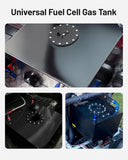
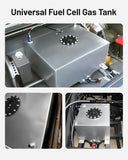
The EVIL ENERGY fuel cell kit pairs an aluminum fuel tank in 5, 10, 15 or 20 gallon capacity with 12 ft of 6AN CPE fuel line, 6AN swivel hose ends and AN10 to 6AN adapters. Every tank arrives with a 0–90 ohm sending unit and anti-slosh foam already installed, so the tank and its plumbing for an off-road rig, a long-range diesel truck or a DIY engine swap come in one box.
5 / 10 / 15 / 20 gal
Four aluminum tank sizes
12 ft
6AN CPE fuel line with hose ends
0–90 ohm
Sending unit, pre-installed
Anti-slosh foam
Pre-installed in every size
Is This Fuel Cell Kit Right for Your Build
| Best for | Better served by another kit |
|---|---|
| • Off-road rigs, UTVs and prerunners fueled with diesel, race gas or ethanol-free gasoline • Long-range second tanks on diesel and overland trucks • DIY engine swaps where the pump, filter and regulator are already chosen • Drift, drag and derby cars that need a universal aluminum tank |
• E10, E15, E85 or methanol builds: choose the PTFE line version of this kit • Builds starting from nothing: the complete fuel cell tank kit adds the pump, filters and regulator • Factory-location replacement: this universal fuel cell mounts in a custom position |
Which Fuel Tank Size to Choose
Start from fuel use, not vehicle size: fuel burned per hour × hours between fill-ups + a reserve, then step up to the next tank size that fits the mounting space.
| Build | Size to start with | Why it fits |
|---|---|---|
| Derby cars and karts | 5 gallon | The smallest tank needs only a 12.01 × 12.01 in footprint. |
| Off-road rigs and UTVs | 10 or 15 gallon | Anti-slosh foam keeps fuel at the pickup on climbs and side-hills, and the CPE hose bends to a 2.5 in radius around frame rails and suspension. |
| DIY engine swaps and race cars | 10 or 15 gallon | AN10 tank ports and the supplied AN10 to 6AN adapters connect to common 6AN plumbing, leaving the pump and regulator choice open. |
| Long-range diesel and overland trucks | 20 gallon | Plumbed as a second tank, the largest size carries up to 300 miles of fuel at 15 MPG, and the CPE line is built for diesel. |
The Specifications tab lists every footprint and the fuel weight for each size. For more detail, read what size fuel cell a build needs and the guide to choosing an off-road fuel cell. Derby builders can follow the steps for installing a demolition derby fuel tank and should check the event rulebook before mounting any tank.
What Comes in the 20 Gallon Fuel Cell Kit

The largest tank in this kit is the 20 gallon fuel cell, which measures 24.02 × 19.88 × 10.04 in. The body is 1060-H24 aluminum with a 2.5 mm wall, a material that does not rust the way a steel gas tank can and keeps weight low before any fuel goes in. Twenty gallons of gasoline weighs about 120 lb and the same volume of diesel about 140 lb, so the aluminum fuel tank needs a flat, fully supported base and solid mounting points.

Each kit ships with one aluminum fuel cell in the size selected, plus the hose and fittings that connect the tank to a 6AN fuel system. The 20 gallon fuel cell kit and the 5, 10 and 15 gallon kits carry the same parts. The fuel cell kit covers the tank and the tank-side plumbing, so the pump and regulator can be matched to the engine's horsepower and fuel pressure target.
| In the box | Sold separately |
|---|---|
| • Aluminum fuel cell in 5, 10, 15 or 20 gallon • 0–90 ohm sending unit, pre-installed • Anti-slosh foam, pre-installed • 12 ft of 6AN CPE fuel line • 6AN swivel hose ends • AN10 to 6AN adapters |
• Fuel pump • Fuel pressure regulator • Fuel filter |
What Is Inside the Aluminum Fuel Tank
Each tank size leaves the box with the same parts already in place: a fuel level sending unit, anti-slosh foam and a quick-release cap.

How the 0–90 Ohm Sending Unit Reads Fuel Level
A fuel level sending unit is pre-installed in the 5, 10, 15 and 20 gallon tank. It reads 0 ohm at empty and 90 ohm at full, the range used by many GM-style and aftermarket fuel gauges. Match the gauge to the same 0–90 ohm range and ground the sender to the chassis for a steady reading.

Why Anti-Slosh Foam Matters on Rough Terrain
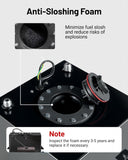
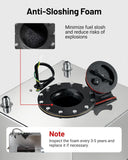
Anti-slosh foam fills the tank and slows fuel movement during climbs, descents, hard braking and cornering. Calmer fuel stays around the pickup, which helps the pump draw fuel instead of air when the level runs low. The foam comes installed in every size of this gas tank.

How to Fill and Inspect the Fuel Cell
With the cap removed, the foam is in plain view for a quick condition check before a trip or a race day. Fill the tank on level ground and leave room at the top for fuel to expand as it warms.
How to Take the Fuel Cell Cap Off

The EVIL ENERGY fuel cell uses a quick-release cap. Lift the tab, twist the cap to unlock it, then lift the cap straight off.
Tips for taking the cap off:
Why 6AN CPE Fuel Line Suits Off-Road and DIY Routing
The 6AN CPE fuel hose in this kit has a CPE synthetic rubber inner tube, 304 stainless steel wire reinforcement and a nylon braided cover. The hose bends to a 2.5 in minimum radius, carries a 750 PSI working pressure rating and is rated from −22°F to 248°F, so it can follow frame rails, pass over axles and reach into tight engine bays. A 6AN line suits most builds in the 400 to 600 horsepower range.
| CPE line kit on this page | PTFE line kit | |
|---|---|---|
| Fuel in the tank | Diesel, race gas, ethanol-free gasoline | E10 and E15 pump gasoline, E85, methanol |
| Hose feel | Flexible rubber-lined hose that bends to a 2.5 in radius | Firmer PTFE-lined hose |
| Line length | 12 ft | 12, 16 or 20 ft |
| Cost | Lower | Higher |
Running E10 or E85? See the PTFE fuel cell kit →
A return-style EFI system needs a second hose run back to the tank. Measure both the supply route and the return route, then add 6AN CPE fuel line if the two runs total more than 12 ft.
Which Fuels Work with the CPE Fuel Cell Kit

The aluminum fuel cell and the CPE fuel line in this kit are matched for diesel, race gas and ethanol-free gasoline. Most gasoline sold at U.S. pumps is an E10 blend with about 10% ethanol, so read the label on the pump before filling. For E10, E15, E85 or methanol, pick the PTFE line version of the same tank, which is built for ethanol and alcohol fuels.
How to Plan a DIY Fuel Cell Installation
The kit handles the tank and its plumbing. These are the parts that complete the fuel system and what each one has to match.
| Part to add | What it does | What to match |
|---|---|---|
| Fuel pump | Moves fuel from the tank to the engine | Flow for the engine's horsepower, pressure for EFI or carburetor |
| Fuel filters | Protect the pump and the injectors or carburetor | One filter before the pump and one after it |
| Fuel pressure regulator | Holds fuel pressure steady | About 58 PSI for an LS-type EFI engine, about 5 to 7 PSI for a carburetor |
| Vent line | Lets the tank breathe as fuel level and temperature change | Route it upward and away from heat, with rollover protection |
| Gauge and wiring | Shows fuel level and powers the pump | A 0–90 ohm gauge, plus a relay and fuse for the pump |
| Mounting | Holds the loaded tank in place | Straps or a tray that supports the whole base of the tank |
- Test-fit the tank. Check the footprint and height against the size chart and leave room for the hose ends and the cap.
- Mount it. Set the fuel cell on a flat, fully supported surface and fasten it to the vehicle structure.
- Plumb it. Thread the AN10 to 6AN adapters into the tank ports, cut the CPE hose to length and assemble the 6AN swivel hose ends.
- Route the hose. Keep it away from exhaust heat, sharp edges and moving parts, with bends wider than a 2.5 in radius.
- Vent and wire. Run the vent line upward, then connect the sending unit to the gauge and ground it to the chassis.
- Check for leaks. Add a small amount of fuel, run the pump and inspect every connection before the first drive.
The full walkthrough is in the fuel cell installation guide.
Advanced
Estimated Time: 2-3 hours
Tools Required
- Socket set and ratchet
- Combination wrench set
- Torque wrench
- AN wrench set
- Bench vise
- Hose cutter
- Deburring tool
- Hydraulic floor jack and jack stands
- Fuel transfer pump
- Drain pan
- Screwdriver set
- Pliers
- Marker
- Drill and drill bits (if required)
- Safety glasses
- Fuel-resistant gloves
Pre-Installation Checklist
- Read the complete installation manual and the applicable vehicle service manual. Follow only the steps for components included in your kit, and skip sections for components not supplied.
- Confirm the vehicle uses an electronic fuel injection (EFI) system.
- Inspect the kit and verify all components and hardware are present and undamaged.
- Work in a well-ventilated area away from flames, sparks, hot surfaces, and other ignition sources.
- Relieve fuel system pressure, turn the ignition OFF, allow the engine to cool, and disconnect the negative battery cable.
- Support the vehicle securely with jack stands and keep an approved fire extinguisher nearby.
Installation Steps
- Relieve fuel system pressure and remove the old fuel filter, fuel pump, and fuel pressure regulator as required.
- Position and securely mount the fuel cell with clearance from exhaust, suspension, driveshaft, and moving components.
- Mount the fuel pump close to and preferably at or below the fuel cell, using the supplied bracket and rubber isolators.
- Install the 100-micron and 10-micron fuel filters in the direction shown by their flow arrows.
- Mount the fuel pressure regulator away from heat, install the pressure gauge in the 1/8-inch NPT port, and connect the vacuum/boost reference hose if used.
- Measure, cut, deburr, and assemble the supplied CPE or PTFE fuel hose and AN fittings; pressure-test each completed hose assembly.
- Connect the return-style system in this order: fuel cell, 100-micron filter, fuel pump, 10-micron filter, fuel rail, fuel pressure regulator, return line, fuel cell.
- Reconnect electrical connections and secure all hoses and wiring away from heat, sharp edges, and moving parts.
- Prime the system, check every connection for leaks, start the engine, and adjust fuel pressure only while monitoring the gauge.
- Test-drive the vehicle and complete the final leak inspection.
Post-Installation Verification
- Confirm the fuel cell, pump, filters, regulator, hoses, fittings, wiring, and mounting hardware are secure.
- Verify each filter and the fuel pump are oriented in the correct flow direction.
- Confirm hoses are not kinked, twisted, under tension, or exposed to exhaust heat, sharp edges, or moving parts.
- Prime the fuel system and inspect all connections for leaks before starting the engine.
- Adjust fuel pressure only with the gauge connected, then tighten the regulator adjustment jam nut.
- Recheck for leaks with the engine warm, after the road test, and again after 50-100 km.
Troubleshooting
- Engine will not start: check the pump fuse, power, wiring, ground, fuel pressure, filter condition, and fuel-line routing.
- Low fuel pressure: inspect for leaks, verify filter direction, replace clogged filters, and check regulator adjustment.
- High fuel pressure: verify regulator adjustment and inspect the return line for kinks or restrictions.
- Fuel leak: switch the ignition OFF immediately, clean spilled fuel, and repair loose or damaged hoses and fittings before operation.
- Noisy fuel pump: verify secure mounting, rubber isolation, correct location near the fuel cell, and an unrestricted inlet supply.
- Fluctuating fuel pressure: inspect for air leaks and verify the vacuum/boost reference connection.
Maintenance
- Inspect the complete fuel system after the initial road test and periodically thereafter.
- Recheck all connections after 50-100 km and retighten loose fittings without overtightening AN fittings.
- Replace any leaking, damaged, clogged, or improperly installed component before operating the vehicle.
Brand Summary
| Policy | Details |
|---|---|
| Cancellation Policy | Orders can be canceled within 48 hours of placement. Refund processed in 3-5 business days. |
| Returns Policy | Returns accepted within 180 days. Full refund within 90 days; 15% fee for 90-180 days. |
| Non-Returnable Items | Only regular-priced items are eligible for refunds; sale items are non-refundable. |
| Refund Processing | If no refund received, check your bank/credit card. For ongoing issues, contact support@ievilenergy.com. |
Return Reasons
- Quality Issues: Provide photos/videos; we cover return shipping.
- Wrong Item Ordered: Buyer covers return shipping; email within 30 days.
- Change of Mind: Buyer covers return shipping; email within 30 days.
- Shipping Damage: Inspect packages; do not sign for damaged items.
- Incorrect Item Shipped: Contact within 7 days.
Price Protection Policy
Effective from August 25, 2024. Price drops within 7 days of purchase can be claimed.
Disclaimer
EVIL ENERGY reserves the right to interpret, modify, or terminate this policy in accordance with applicable laws and regulations.
If you need further information or assistance, feel free to ask!
Product Videos
Related Articles

Fuel Cell Gas Tank Guide: Everything You Need to Know from Basics to Upgrades
What Is a Fuel Cell?
Fuel cells are specialized fuel storage units often used in motorsports, off-road racing, and performance builds. While the term 'fuel cell' may remind people of hydrogen fuel cells used for energy conversion, in the context of automoti...

What Size Fuel Cell Do I Need? A Complete Fuel Cell Sizing Guide
How many gallons does your fuel cell actually need? This guide covers the sizing math, horsepower based estimates, and capacity recommendations across drag, drift, track, street, and off road use.

How to Build and Choose the Best Off-Road Fuel Cell
This comprehensive guide is the ultimate resource for off-road enthusiasts looking to eliminate engine hesitation through a professional custom off-road fuel system build. The article provides a deep dive into the mechanics of fuel slosh and its primary con...

The Ultimate Visual Guide to Your Car’s Fuel System & Tank Anatomy
Dive into the anatomy of performance fuel systems with this comprehensive visual guide. We explore detailed car fuel tank diagrams, the engineering behind gas tank baffles, and the plumbing essentials of car fuel line diagrams. Learn why PTFE fuel lines are...

Fuel Tank vs. Fuel Cell: The Ultimate Guide to Racing Fuel Cell Safety
Is your engine stalling, misfiring, or struggling to start? These common fuel pressure issues often point to a single culprit: a faulty fuel regulator. This comprehensive guide serves as your diagnostic hub for identifying fuel regulator symptoms across cla...

15 Gallon Fuel Cell & PTFE Fuel Lines Guide: Size, Fitment, Hose & AN Fittings
A 15-gallon fuel cell comes in cube and rectangular layouts and works well for drift, track days, street-strip, LS swaps and classic replacements. For plumbing, a PTFE fuel line hose is the safest all-round choice (E10/E85 compatible). Most street/track bui...

How to Build and Install a Fuel Tank for Your Demolition Derby Car
This comprehensive guide dives into the engineering logic of high-performance fuel systems for demolition derby. From selecting 0.125-inch aluminum alloys to mastering Aluminum TIG Welding Repair, we cover everything needed to build a 'survival cell' for th...

Fuel Safe Tank Guide: How It Works, Specs & Safety Features
Ultimate Fuel System Safety Upgrade: A fuel safe tank is a high-integrity, crash-survivable containment system designed to prevent leaks and ignition during high-speed impacts. Engineered with a T6061-T6 aluminum fuel cell shell and internal safety bladders...

How Does a Fuel Cell Work?
The Complete Guide for Performance and Racing Applications
When people hear the term fuel cell, they often think of hydrogen-powered electric vehicles. But in the automotive performance world, a fuel cell refers to a high-safety fuel storage tank, engineere...
No Amazon reviews available for this product.
RELATED PRODUCTS
Example product title
- $119.99
- $119.99
- Unit price
- per
Example product title
- $119.99
- $119.99
- Unit price
- per
Example product title
- $119.99
- $119.99
- Unit price
- per
Example product title
- $119.99
- $119.99
- Unit price
- per
Example product title
- $119.99
- $119.99
- Unit price
- per
Example product title
- $119.99
- $119.99
- Unit price
- per
RECENTLY VIEWED PRODUCTS
- Choosing a selection results in a full page refresh.