![[20FT] EVIL ENERGY PTFE Fuel Line Kit, complete black hose & fittings set, 180-day return](http://www.ievilenergy.com/cdn/shop/files/Test-2025-Evilenergy-125598065_940x.png?v=1742144807)
![[16FT] EVIL ENERGY PTFE Fuel Line Kit, black braided hose, fittings, free shipping & return](http://www.ievilenergy.com/cdn/shop/files/Test-2025-Evilenergy-125598171_940x.png?v=1742144807)
![CPE Fuel Line[25FT]](http://www.ievilenergy.com/cdn/shop/files/25FTCPE_FuelLine_940x.png?v=1735220649)
![CPE Fuel Line[20FT]](http://www.ievilenergy.com/cdn/shop/files/20FTCPE_FuelLine_940x.png?v=1735220649)





How to Build and Install a Fuel Tank for Your Demolition Derby Car

🎁 A Personal Gift For My Readers
To support your project, I've secured an exclusive 8% OFF for you.
Simply paste the code at checkout.
💡 Use the savings to grab your extra fittings, oil lines, or connectors for free!
Competing in a demolition derby requires more than just a heavy foot and a reinforced bumper; it requires an engineered fuel system that can survive a warzone. If you’re gearing up to compete, ensuring you have a reliable and safe Demolition Derby Fuel Tank is the most critical technical decision you will make. A well-built Aluminum Fuel Cell does more than store gas—it acts as a survival cell, protecting the driver during violent impacts, reducing catastrophic fire risks, and ensuring your engine receives a steady fuel flow even when the car is being slammed from all sides.
This comprehensive guide walks you through the engineering logic of choosing, building, installing, and maintaining a high-performance Demolition Derby Fuel Tank designed to withstand the brutal environment of the track while maximizing Demolition Derby Car Safety.

Choosing the Right Fuel Tank for Your Demolition Derby Car
Selecting the right vessel is foundational for both track performance and Demolition Derby Car Safety. Standard stock tanks are thin and located in 'crush zones,' making them mobile bombs in a derby. A dedicated Aluminum Fuel Cell is the industry standard for a reason.
Material Science: Steel vs. Aluminum
- Steel Tanks: Offer immense puncture resistance, but are heavy and prone to internal rust over time.
- Aluminum Fuel Cell: Modern 5052 or 6061 aluminum alloy is the preferred choice. It provides a superior strength-to-weight ratio and natural corrosion resistance. When using an Aluminum Fuel Cell, the weight savings allow for better weight distribution, which is crucial for maneuvering a damaged car.
Capacity and Baffling Logic
When selecting a Fuel Cell Tank Kit, size matters. Generally, a 5 to 15-gallon capacity is the 'sweet spot.' A tank that is too large adds unnecessary weight and 'slosh' momentum, which can upset the car's handling. For peak Demolition Derby Car Safety, look for a Fuel Cell Tank Kit that includes internal anti-slosh foam or 'baffles.' This foam prevents the fuel from surging during hard hits, which prevents the fuel pump from sucking air and stalling your engine at a critical moment.
The EVIL ENERGY Advantage
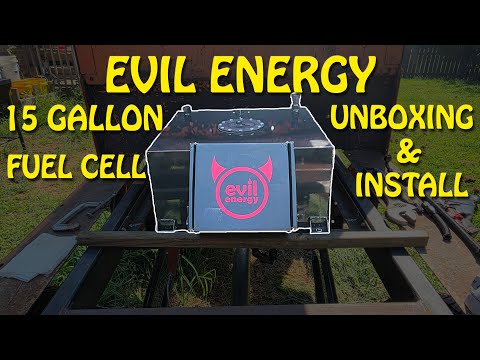
For drivers who don't have the time to custom-fabricate from scratch, the EVIL ENERGY 5/10/15 Gallon Fuel Cell Tank Kit Upgraded offers a turnkey solution. It features 0.125-inch thick aluminum walls and AN-style fittings, ensuring that your Demolition Derby Fuel Tank exceeds most technical inspection requirements.
For more details on reliable tank options and kits, explore the EVIL ENERGY 5/10/15 Gallon Fuel Cell Tank Kit Upgraded, which features durable aluminum construction and universal fittings tailored for custom setups.

Step-by-Step Guide to Building a Custom Aluminum Fuel Cell
For the DIY builder, constructing your own Demolition Derby Fuel Tank allows for a 'glove-fit' within your specific cage design.
The Fabrication Process
- Layout and Geometry: Use cardboard templates to mock up the tank. Aim for a 'low-profile' rectangular design to keep the center of gravity low.
- Material Prep: Cut 1/8-inch aluminum sheets. Clean the edges with a stainless steel wire brush. This is non-negotiable for a successful Aluminum TIG Welding Repair or initial build, as contaminants cause porosity.
- TIG Welding Specifications: The integrity of your Demolition Derby Fuel Tank depends on your welding skill. Use an AC TIG setting with a high frequency. Pro Tip: For a 1/8-inch Aluminum Fuel Cell, set your machine to approximately 150-165 Amps.
- The Art of Aluminum TIG Welding Repair: If you are modifying an existing tank, Aluminum TIG Welding Repair requires even more care. You must ensure all fuel residue is chemically neutralized before an arc strike.
Structural Integrity Testing
After completing the Aluminum Fuel Cell, perform a 'Soap Bubble Test.' Pressurize the tank to only 2-3 PSI (do not over-pressurize!) and spray soapy water on all seams. Any leak in a Demolition Derby Fuel Tank is a disqualification risk and a fire hazard.

Installing Your Fuel Tank in a Demolition Derby Car
A masterfully built Demolition Derby Fuel Tank is useless if it’s poorly mounted. Installation is where Demolition Derby Car Safety is truly won or lost.
The 'Halo' Mounting Position
The safest location for your Aluminum Fuel Cell is centrally located behind the driver, bolted to a 'tank protector' or part of the four-point cage. This keeps the Demolition Derby Fuel Tank as far as possible from the outer skin of the car.
Securing the Fuel Cell Tank Kit
- Double-Strap Method: Use two 2-inch wide steel straps to wrap around the Aluminum Fuel Cell.
- Through-Bolting: Bolts should go through the floor and be backed by large 'fender washers' to prevent the Demolition Derby Fuel Tank from ripping through the sheet metal during a rollover.
Fuel Line Routing and Protection
To enhance Demolition Derby Car Safety, your fuel lines should be made of braided stainless steel or PTFE. Route them through the interior of the car, away from sharp metal edges and moving parts like the driveshaft. If a line must pass through a firewall, use a bulkhead fitting—never just a drilled hole. This attention to detail is what separates a professional Fuel Cell Tank Kit installation from a dangerous amateur one.
For comprehensive knowledge on fuel cell functionality and safe installations, visit How Does a Fuel Cell Work? | EVIL ENERGY Aluminum Fuel Cells.
Repairing and Maintaining Your Derby Car Fuel Tank with Aluminum TIG Welding
Demolition derbies are destructive. Your Demolition Derby Fuel Tank will take a beating, and maintenance is what ensures it lives to see the next heat.
Post-Heat Inspection Checklist
- Mounting Points: Check for 'oval-ing' of bolt holes.
- Seam Integrity: Look for 'stress whitening' on the corners of your Aluminum Fuel Cell.
- Foam Degradation: Over time, race fuel can break down the internal foam of a Fuel Cell Tank Kit. If you see black particles in your fuel filter, it’s time for a replacement.
Executing an Aluminum TIG Welding Repair
When cracks appear, Aluminum TIG Welding Repair is the only acceptable fix. 'J-B Weld' or epoxy has no place on a Demolition Derby Fuel Tank.
- Stop-Drilling: Drill a tiny hole at each end of the crack to stop it from spreading before you begin the Aluminum TIG Welding Repair.
- V-Grooving: Use a carbide burr to create a V-groove in the crack to ensure 100% weld penetration.
Safety Best Practices When Building and Using Demolition Derby Fuel Tanks
Safety in the arena is about redundancy. A single failure in your Demolition Derby Fuel Tank system can end your race—or worse.
- Tip-Over Valves: Every Aluminum Fuel Cell must have a roll-over vent valve. If you end up on your roof, this valve prevents fuel from dumping onto the hot exhaust.
- Fire Suppression: Always keep a 5lb ABC fire extinguisher within reach of the driver, and ensure your Demolition Derby Car Safety harness allows for a 5-second exit.
- Fuel Selection: Use high-octane fuel compatible with the seals in your Fuel Cell Tank Kit.
- Educational Resources: Knowledge is power. For deeper dives into fuel system physics, visit the Fuel Cell Gas Tank Guide or explore specialized Fuel Cell Tank Kits for Vehicles offered by EVIL ENERGY.
FAQs About Building and Installing Fuel Tanks for Derby Cars
Q1: Why is a dedicated Demolition Derby Fuel Tank safer than a stock gas tank?
A: Stock tanks are typically located behind the rear axle or under the trunk floor—major 'crush zones' in a derby. A dedicated Aluminum Fuel Cell is relocated to the rear-seat area, inside the roll cage. This relocation is the single most important factor for Demolition Derby Car Safety, as it keeps flammable liquids away from impact points and hot exhaust components.
Q2: What is the ideal wall thickness for an Aluminum Fuel Cell?
A: For maximum durability, look for a Demolition Derby Fuel Tank with a wall thickness of at least 0.125 inches (3mm). Thinner walls may save weight, but are prone to cracking under the violent chassis flex of a derby. High-quality kits, such as those in a professional Fuel Cell Tank Kit, use 5052-H32 aluminum for the best balance of weldability and strength.
Q3: Can I perform Aluminum TIG Welding Repair on a tank that previously held race fuel?
A: Yes, but with extreme caution. The tank must be drained, steam-cleaned, or filled with an inert gas (like Argon or CO2) to displace explosive vapors. Aluminum TIG Welding Repair on an unclean tank is life-threatening. Always ensure the workspace is ventilated and use a dedicated aluminum filler rod like 4043 or 5356.
Q4: How does internal foam improve Demolition Derby Car Safety?
A: Internal 'anti-slosh' foam serves two purposes. First, it prevents fuel from slamming against the tank walls during a hit, which could rupture a seam. Second, it acts as a flame arrestor. In the event of a puncture, the foam significantly slows the rate of fuel leakage and helps prevent a 'pool fire,' drastically increasing Demolition Derby Car Safety.
Q5: What are the common signs that my Demolition Derby Fuel Tank needs a replacement?
A: You should replace your Aluminum Fuel Cell if you notice 'stress whitening' at the corners, deep gouges from mounting straps, or internal foam that has begun to crumble. If a leak occurs in a high-stress area, even a professional Aluminum TIG Welding Repair may not be enough to restore the structural integrity required for a championship-level heat.
Q6: What fuel lines should I use with my Fuel Cell Tank Kit?
A: Never use standard rubber hoses. For the best Demolition Derby Car Safety, use braided stainless steel or PTFE-lined hoses with AN (Army-Navy) threaded fittings. These lines are resistant to high-octane racing fuels and provide a much higher burst pressure, ensuring your Demolition Derby Fuel Tank stays connected even when the chassis twists.
Q7: Is a 5-gallon or 15-gallon Fuel Cell Tank Kit better for a compact derby car?
A: For compact or 'bone-stock' classes, a 5-gallon Aluminum Fuel Cell is usually preferred. It occupies less space in the cabin and reduces the 'slosh' weight that can make a small car harder to steer. For long-running 'Big Car' or 'Pro-Stock' heats, a 10 or 12-gallon Demolition Derby Fuel Tank ensures you won't run dry before the final 'mad dog' hit.
Q8: How do I properly vent a Demolition Derby Fuel Tank?
A: A proper vent must allow air in (to prevent a vacuum) and vapors out. However, for Demolition Derby Car Safety, you must install a roll-over check valve. This valve contains a ball-bearing that blocks the vent line if the car flips, preventing fuel from dumping into the cockpit—a critical requirement for passing tech inspection.
Q9: Can I mount my Fuel Cell Tank Kit directly to the floorboards?
A: It is not recommended. Floorboards are thin and can tear during a collision. Instead, mount your Demolition Derby Fuel Tank to a steel 'tank protector' cradle that is welded to the frame or the roll cage. This ensures the Aluminum Fuel Cell moves with the cage, not the bodywork, maintaining consistent Demolition Derby Car Safety.
Q10: Why are AN-fittings superior for an Aluminum Fuel Cell?
A: Unlike NPT (pipe thread) or hose clamps, AN-fittings use a 37-degree flare surface to create a metal-to-metal seal. This prevents leaks caused by the extreme vibrations of a demolition derby. When you buy an upgraded Fuel Cell Tank Kit from a brand like EVIL ENERGY, these high-performance fittings are typically included to ensure a leak-proof system.