![[20FT] EVIL ENERGY PTFE Fuel Line Kit, complete black hose & fittings set, 180-day return](http://www.ievilenergy.com/cdn/shop/files/Test-2025-Evilenergy-125598065_940x.png?v=1742144807)
![[16FT] EVIL ENERGY PTFE Fuel Line Kit, black braided hose, fittings, free shipping & return](http://www.ievilenergy.com/cdn/shop/files/Test-2025-Evilenergy-125598171_940x.png?v=1742144807)
![CPE Fuel Line[25FT]](http://www.ievilenergy.com/cdn/shop/files/25FTCPE_FuelLine_940x.png?v=1735220649)
![CPE Fuel Line[20FT]](http://www.ievilenergy.com/cdn/shop/files/20FTCPE_FuelLine_940x.png?v=1735220649)





How to Adjust New Fuel Pressure Regulator: A Simple Guide

🎁 A Personal Gift For My Readers
To support your project, I've secured an exclusive 8% OFF for you.
Simply paste the code at checkout.
💡 Use the savings to grab your extra fittings, oil lines, or connectors for free!
Quick Summary: How to Adjust Your Fuel Pressure Regulator
To adjust a fuel pressure regulator, locate it on the fuel rail and disconnect the vacuum line to set the Base Fuel Pressure. With the engine idling, turn the adjustment screw clockwise to increase PSI or counter-clockwise to decrease it. Most EFI systems—especially for an LS engine swap—require a static base pressure of 58 PSI. Always recheck the gauge after reconnecting the vacuum line.
Adjusting a fuel pressure regulator is key to making sure your car runs smoothly, whether it's for daily driving or racing. In this guide, we'll walk you through the process step-by-step, explaining how to set the fuel pressure correctly in simple terms while covering the essential details.

What is a Fuel Pressure Regulator?
A fuel pressure regulator is an essential component in a vehicle's fuel system. It maintains the desired fuel pressure in the fuel rail, ensuring that the engine receives the correct amount of fuel for optimal performance. There are primarily two types of regulators: Bypass Style and Blocking Style.
- Bypass Style Regulators allow fuel to flow continuously back to the tank when there's no demand from the engine, which helps maintain consistent pressure.
- Blocking Style Regulators, on the other hand, stop the flow of fuel completely when the engine is not demanding it. This can lead to a phenomenon known as pressure creep, which can complicate adjustments.

Why Proper Fuel Pressure is Important
Getting the right fuel pressure is essential for your engine's performance. If it's set too low or too high, you can run into problems like:
- Poor throttle response (delayed reaction when you press the gas)
- Engine misfires (the engine doesn't fire correctly)
- Even engine damage in extreme cases
High-performance cars or engines with upgrades like bigger injectors or turbochargers need precise fuel pressure to run properly.
Preparing for Fuel Pressure Regulator Adjustment
Before you dive into adjusting your fuel pressure regulator, it's crucial to gather the right tools and ensure you're in a safe environment.
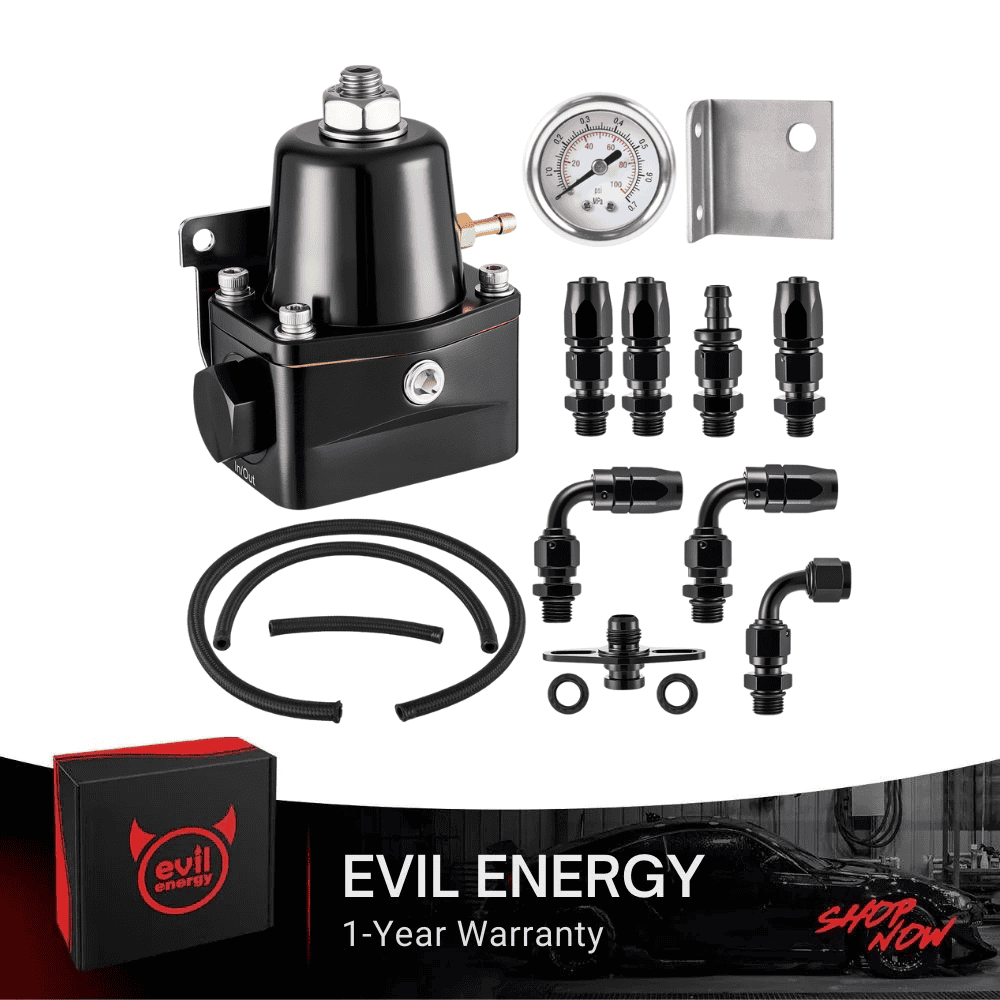
Tools You’ll Need
- A reliable fuel pressure gauge
- A wrench or Allen key (depending on your FPR type)
- A vacuum line cap (if applicable)
- Safety goggles and gloves for protection
- A high-quality fuel pressure regulator (gotta have one to adjust it, right?)
Ensure a Safe Environment
Park your vehicle on a flat surface and ensure the engine is cool to prevent burns. Disconnecting the battery is also recommended to eliminate any risk of electrical shock or short-circuiting while you work.
Step-by-Step: Adjusting Your Fuel Pressure Regulator
#Step 1. Locate Your Fuel Pressure Regulator
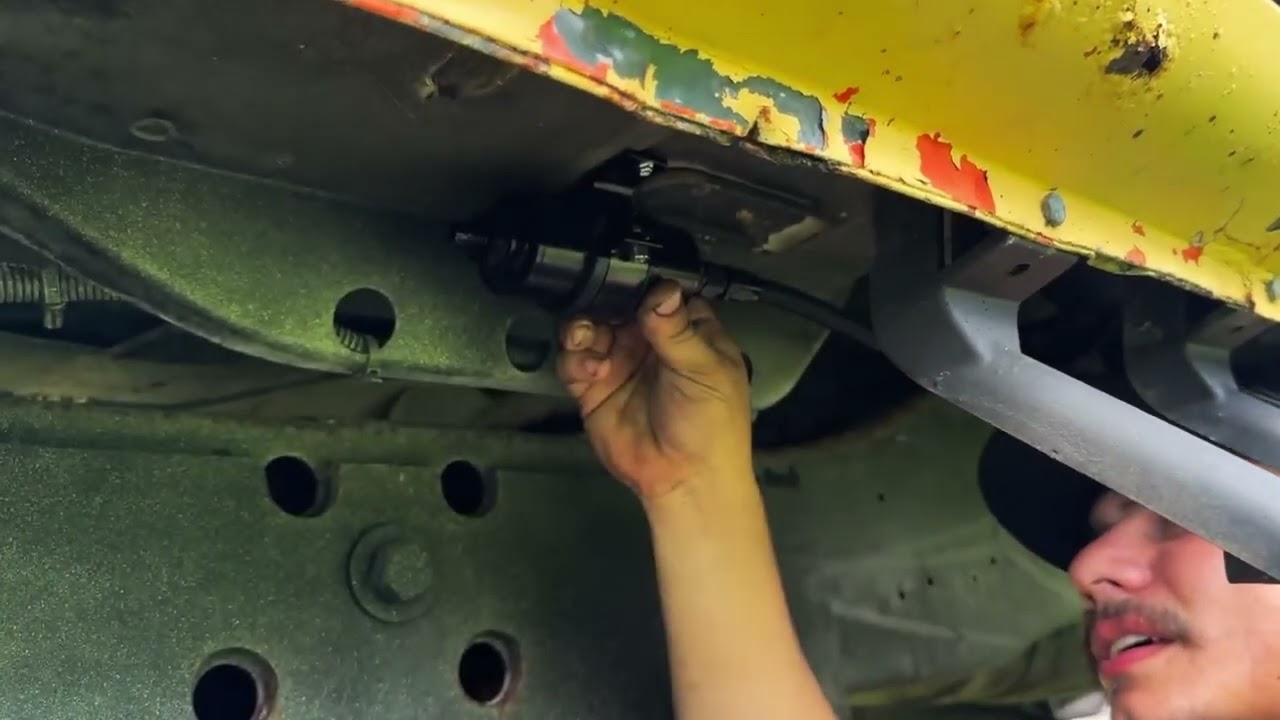
The first step is identifying where the fuel pressure regulator is located. Typically, it can be found on the fuel rail (where the fuel injectors connect) or near the intake manifold. If you're unsure, check your car's manual to find it.

#Step 2. Disconnect and Cap the Vacuum Line (Establishing Base Pressure)
If your fuel pressure regulator (FPR) is vacuum-referenced, disconnect the vacuum hose and place a cap on the line. This step is critical because it allows you to set the static base fuel pressure without interference from engine vacuum. Disconnecting the line simulates a Wide Open Throttle (WOT) condition, ensuring the engine has sufficient fuel flow under maximum load.
#Step 3. Start the Engine and Monitor the Gauge
With the vacuum line securely disconnected, start the engine and allow it to reach a steady idle. This provides a real-time look at how the fuel pump and regulator are interacting.
- Expert Insight: Always adjust pressure with the engine running, as the fuel pump must be at full operating speed to provide an accurate reading on the gauge.
- Safety Check: Inspect for any immediate leaks around the fittings or the regulator body before proceeding to adjustments.
#Step 4. Check the Current Fuel Pressure
Use the fuel pressure gauge to check the current pressure at idle. Most cars will need a baseline pressure between 43 and 58 psi, but the exact number depends on your specific car and any modifications. Check your vehicle's manual or the regulator's specs for the correct pressure.
#Step 5. Adjust the Fuel Pressure
- If you need to increase the pressure, turn the adjustment screw clockwise.
- To decrease the pressure, turn it counterclockwise. Make small adjustments and wait a few moments for the pressure to stabilize before checking again with the gauge.

#Step 6. Recheck the Pressure
After making adjustments, check the pressure again. You may need to repeat the process a few times until the pressure matches your car's requirements.
#Step 7. Reconnecting the Vacuum Line for Normal Operation
Once you've achieved the desired pressure with the vacuum line disconnected, reconnect it back to its original position. This will adjust the pressure slightly, but it should still be within the proper range.
Common Issues & Troubleshooting: Expert Diagnostics
When fine-tuning your LS engine swap or EFI system, encountering irregularities is common. Below are deep-dive troubleshooting insights to help you diagnose problems like a professional fuel system engineer:
1. Inconsistent Pressure Readings
If your gauge fluctuates or fails to hold a steady PSI, the issue typically stems from the supply side of the EFI fuel system kit:
- Faulty Fuel Pump: A worn-out pump may fail to provide the constant volume required to maintain pressure.
- Contaminated Filtration: A dirty fuel filter creates a restriction, causing the pressure to drop under load or fluctuate at idle.
2. Understanding Pressure Creep
Pressure creep occurs when the fuel pressure continues to rise even after the adjustment screw is set. While often associated with blocking-style regulators, it has a specific root cause in bypass systems:
- Return Line Restrictions: If turning the adjustment screw counter-clockwise fails to lower the pressure, the problem is likely not a faulty regulator. Instead, the return line may be too small or obstructed, preventing fuel from flowing back to the tank fast enough to relieve pressure.
- Bypass Limitations: In high-flow EFI fuel systems, if the return orifice is too small for the pump's volume, the system will maintain a 'floor' pressure regardless of the regulator setting.
3. Diagnosing a Ruptured Regulator Diaphragm
The vacuum reference port is a key diagnostic window for the health of your EFI fuel systems:
- The 'Gas Smell' Test: When you disconnect the vacuum line (as described in Step 2), check for the smell of raw gasoline or the presence of liquid fuel inside the hose.
- Required Action: If fuel is present in the vacuum line, the internal diaphragm is ruptured. You must replace the regulator immediately to prevent the engine from 'flooding' or creating a significant fire hazard.
You've Got This! Enjoy Tuning Your Fuel Pressure Regulator
With these steps, you’re well on your way to fine-tuning your fuel pressure for optimal engine performance. Whether you’re a racer or a DIY enthusiast, properly adjusting your fuel pressure regulator can make a huge difference in your vehicle’s power and response. Enjoy the process and the boost in performance!
FAQs: Mastering Your EFI Fuel System Conversion
Q1: What is the main advantage of an EFI fuel system kit over a carburetor?
A: The primary advantage is the ability to provide precise fuel atomization and consistent pressure (typically 43-60 PSI). Unlike carburetors, modern EFI systems use sensors to adjust fueling in real-time, resulting in better cold starts and increased horsepower.
Q2: Does an EFI fuel kit require a return line to the tank?
A: While returnless systems are simpler to plumb, a return-style EFI fuel system kit is highly recommended for performance applications. It prevents vapor lock by continuously circulating cool fuel, ensuring the fuel rail stays pressurized without heat-soaking the gasoline.
Q3: Why must I disconnect the vacuum line when adjusting fuel pressure?
A: This is a critical step because it allows you to set the static base fuel pressure without interference from engine vacuum. Disconnecting the line simulates a Wide Open Throttle (WOT) condition, ensuring the engine has sufficient fuel flow under maximum load.
Q4: Why are PTFE lines recommended for modern EFI fuel systems?
A: PTFE-lined hoses are the gold standard because they are 100% impervious to the corrosive effects of ethanol (E10/E85) found in modern pump gas. Standard rubber lines can degrade over time, leading to leaks or clogged injectors.
Q5: What fuel pressure is required for an LS swap EFI fuel system kit?
A: Most LS-based EFI fuel systems require a constant 58 PSI (4 bar). Incorrect pressure setting for an LS engine swap can lead to lean conditions and potential engine damage.
Q6: How do I choose the right size fuel pump for my EFI fuel kit?
A: You must match the pump’s Liters Per Hour (LPH) to your horsepower goals. For example, a 255 LPH pump is usually sufficient for naturally aspirated systems under 500 HP, while boosted applications may require 340 LPH or dual-pump setups.
Q7: What is 'Pressure Creep' and how do I fix it?
A: Pressure creep occurs when fuel pressure continues to rise even after adjustment. This is often caused by a return line restriction (the line is too small or obstructed), preventing fuel from flowing back to the tank fast enough to relieve pressure.
Q8: How can I tell if my regulator's internal diaphragm is ruptured?
A: Perform the 'Gas Smell Test': disconnect the vacuum line and check for the smell of raw gasoline or liquid fuel inside the hose. If fuel is present, the diaphragm is ruptured, and the regulator must be replaced immediately to prevent fire hazards.
Q9: Can I install an EFI fuel kit on a vehicle that originally had a mechanical pump?
A: Yes, this is a common 'EFI conversion'. You will need to bypass the mechanical pump and install a complete kit, including an electric high-pressure pump, a regulator, and upgraded high-pressure lines to handle the significantly higher PSI.
Q10: Why does my fuel pressure drop when I reconnect the vacuum line?
A: This is normal operation. Once reconnected, the engine vacuum pulls on the regulator diaphragm to slightly decrease pressure at idle, which improves fuel economy and prevents carbon buildup.