







Subscribe now to get a gift with your first order!
Product Manual
- Carburetor Product Manual with needle valve — Download
| Brand | EVIL ENERGY |
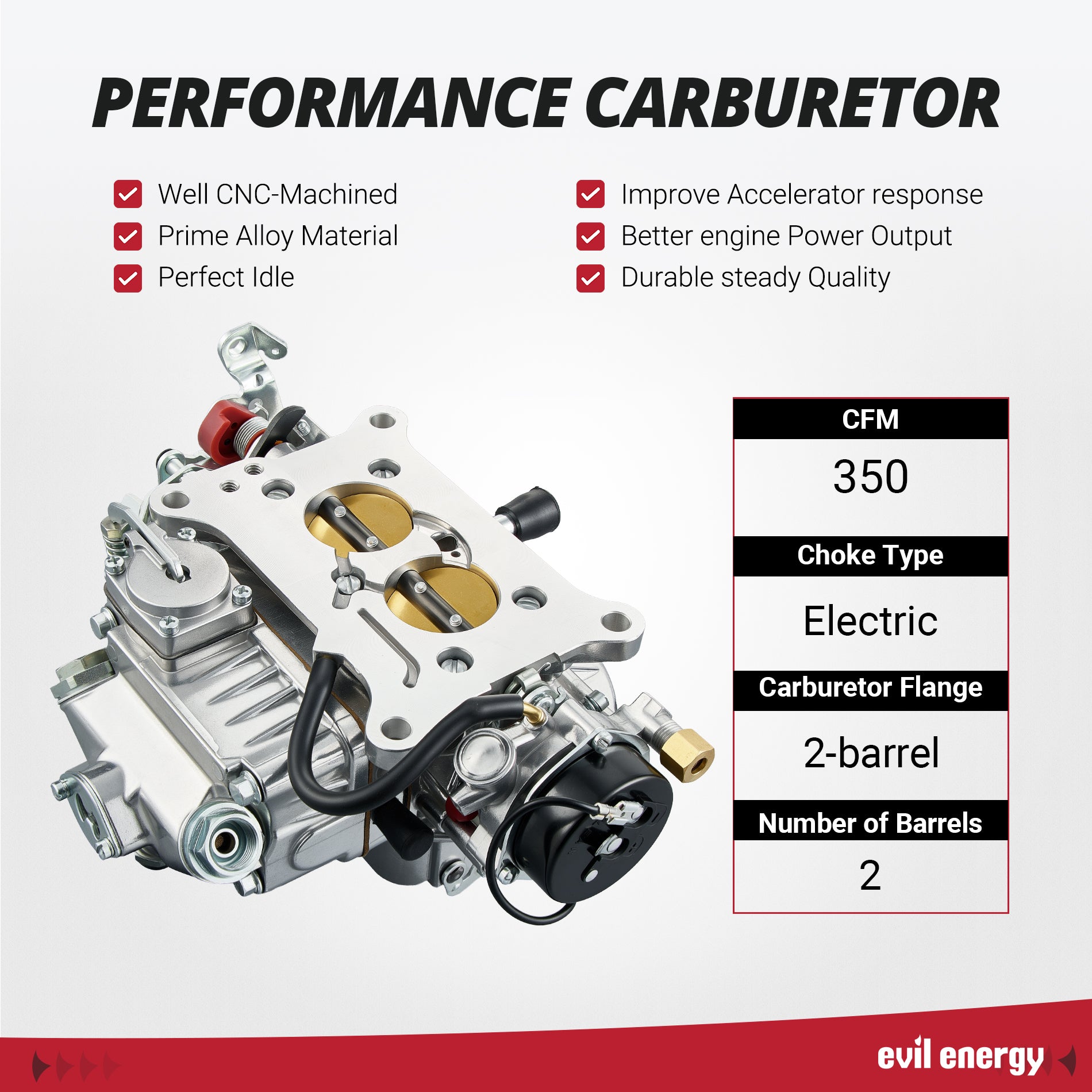
| Barrels | 2 |
| CFM | 350 |
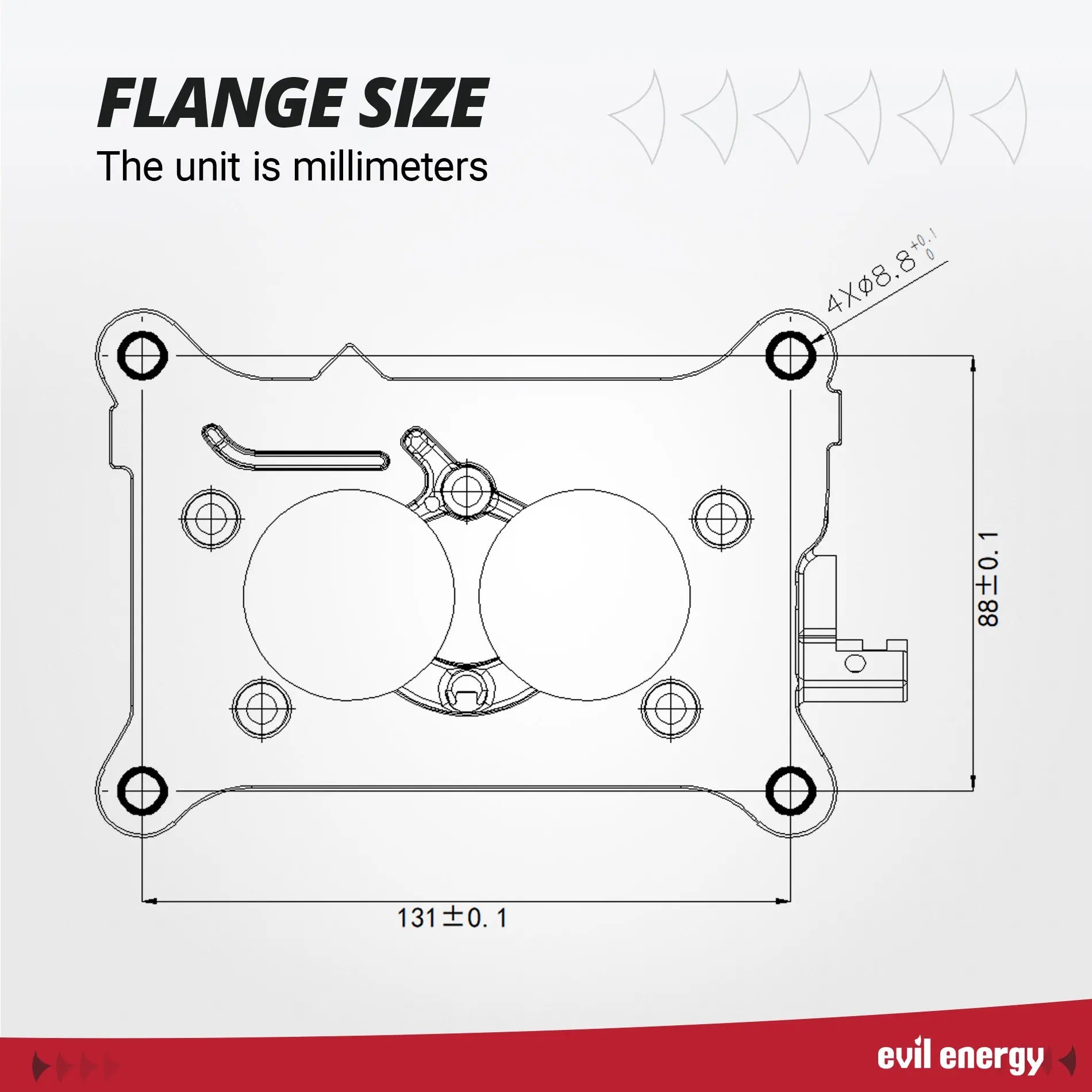
| Carburetor Flange | 2-barrel |
| Choke Type | Electric |
| Secondary Throttle Type | None |
| Fuel Inlet | Single |
| Calibration |
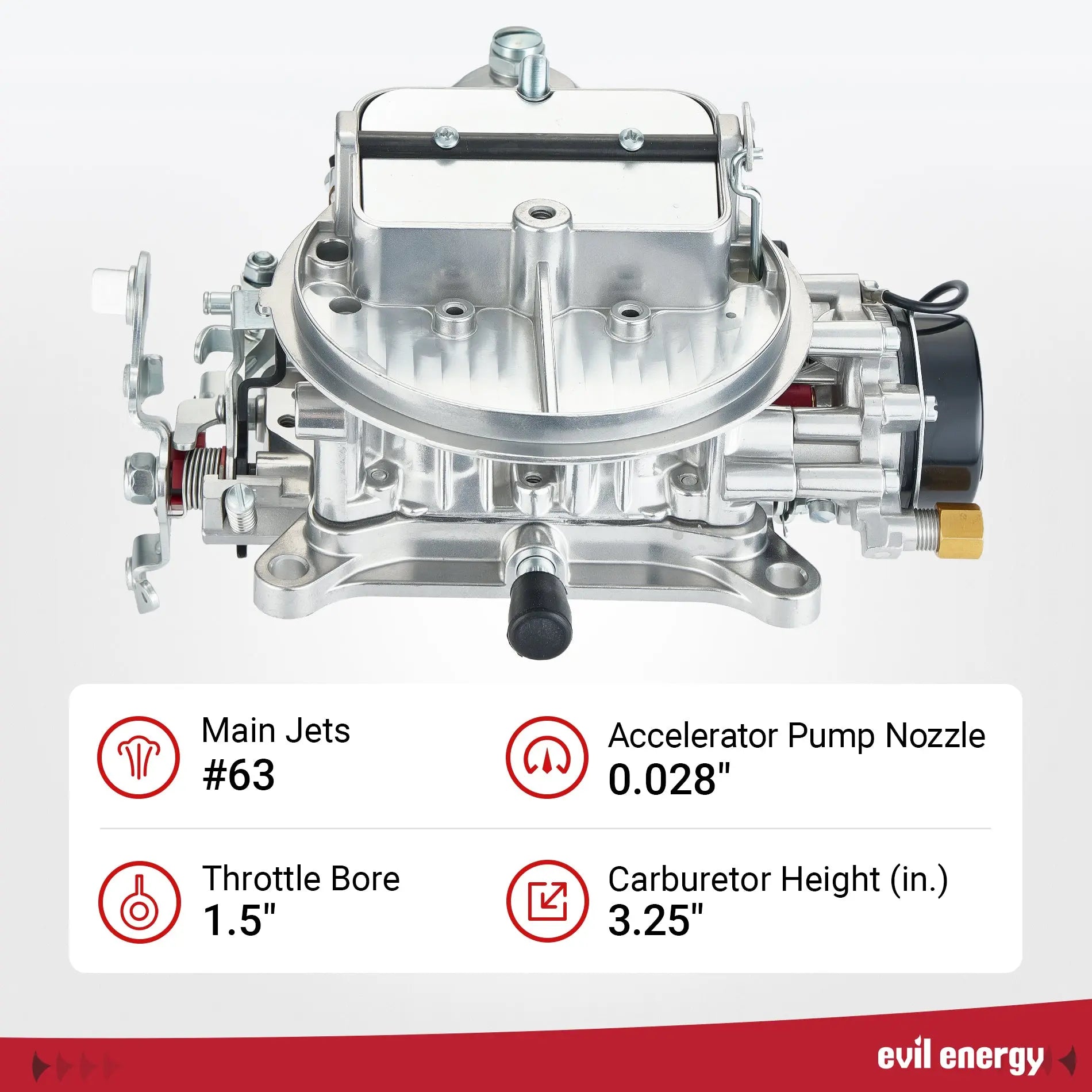
Jets:#63 |
| Venturi Diameter |
1.21 inch |
| Throttle Bore Diameter | 1.5 inch |
| Carburetor Height |
3.25 inch |
| Compatibility | GM, Ford, Chrysler AT Shift Linkage Assemblies |
| Remanufactured | No |
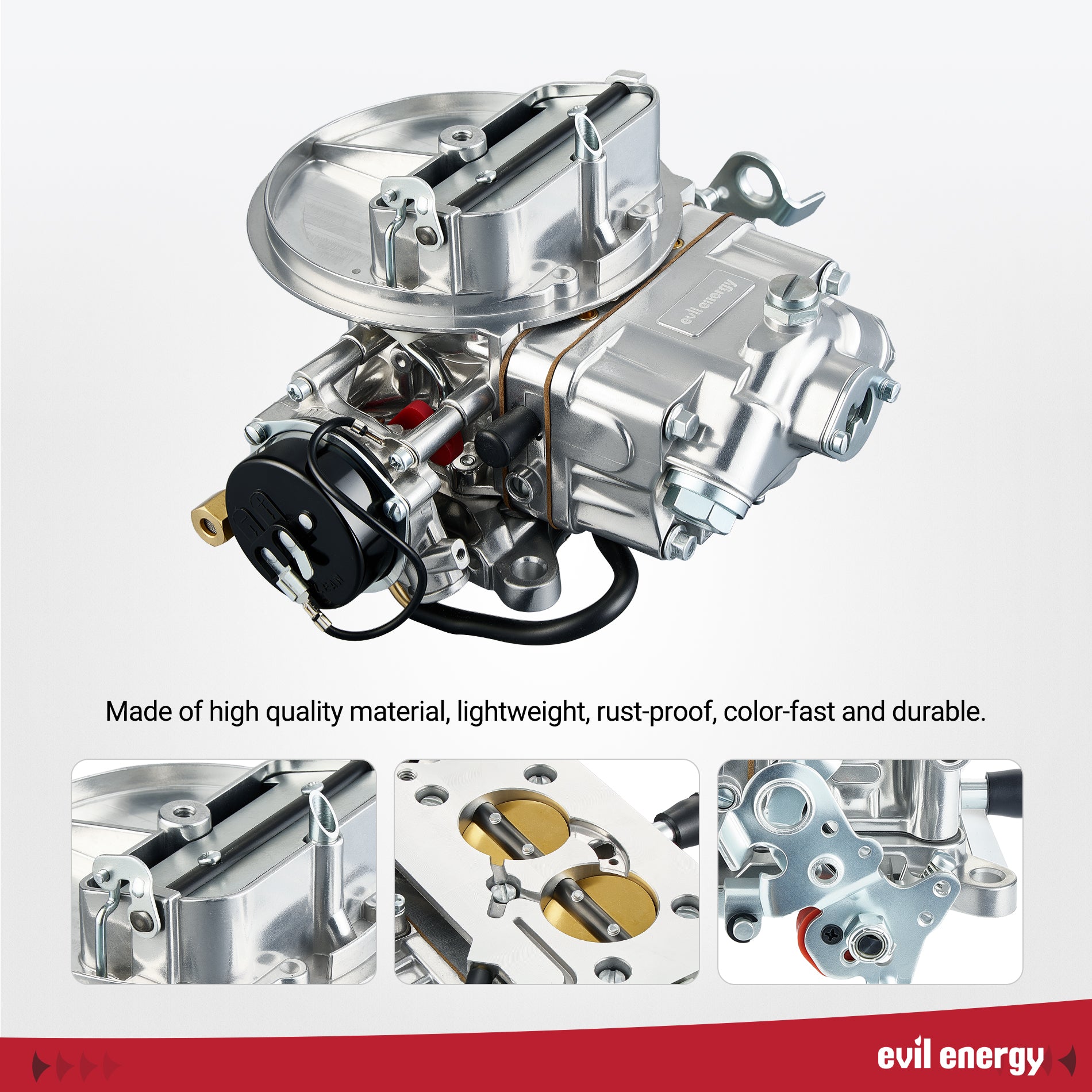
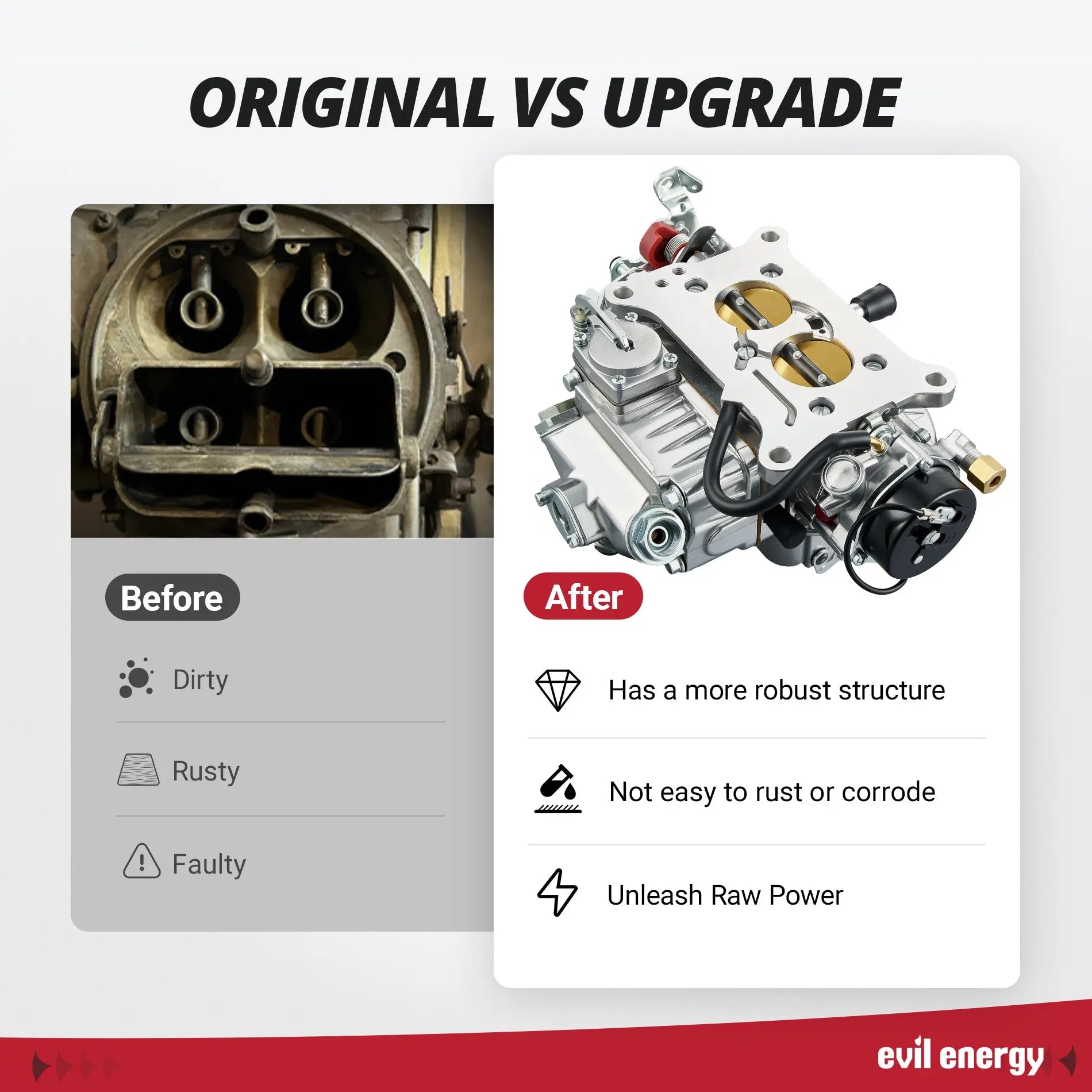
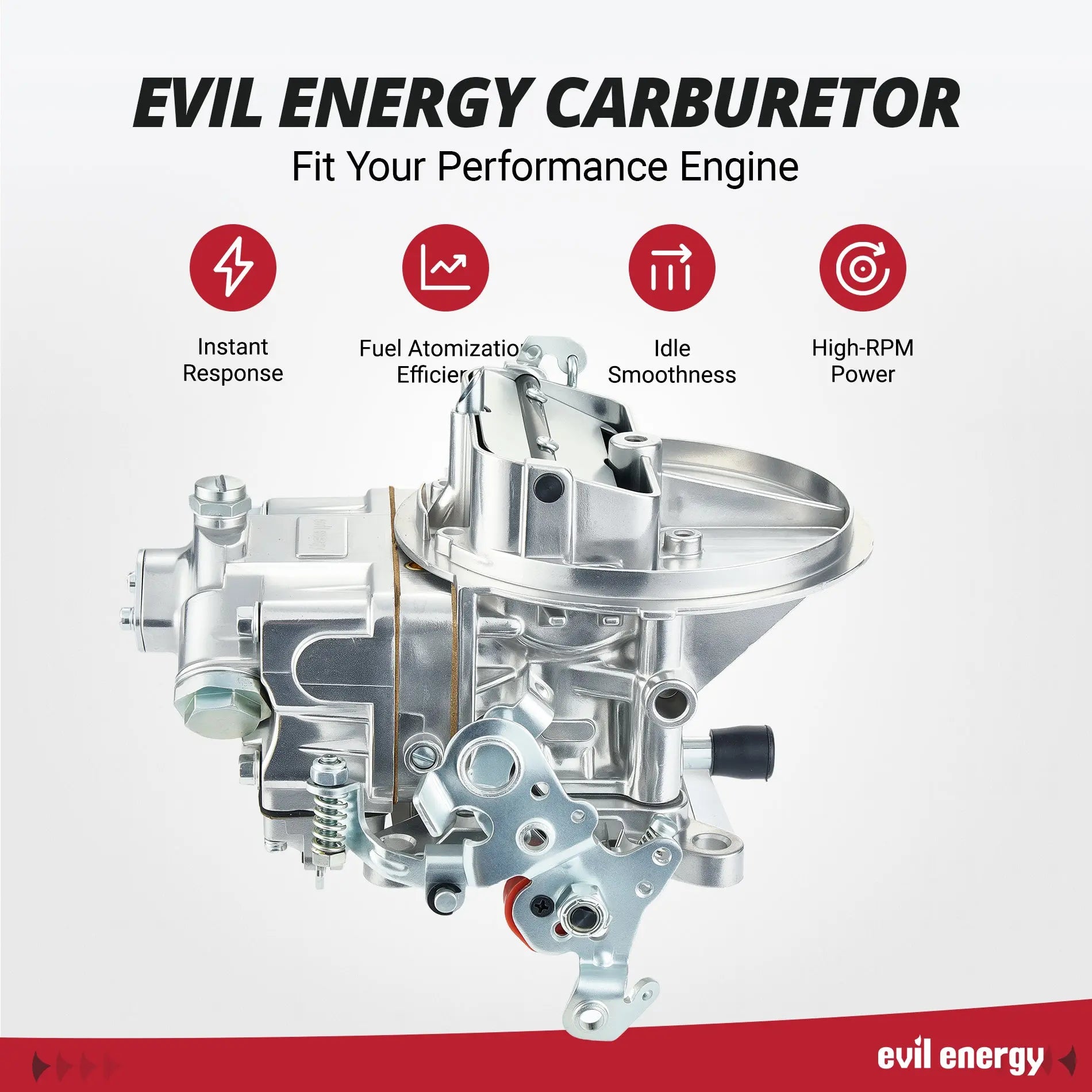
Upgrading to an EVIL ENERGY electric-choke, 2-barrel 350 CFM carburetor replaces a dirty, rusty, or unreliable factory unit with a stronger, corrosion-resistant design that helps restore dependable fuel delivery and responsive engine performance.

What Are the Benefits of This Electric-Choke 2-Barrel 350 CFM Carburetor?
- Fast, Reliable Cold Starts: The electric choke automatically manages the air and fuel requirements during startup, reducing manual adjustment. This makes the 350 CFM carburetor especially convenient for daily driving and changing weather conditions.
- Responsive Throttle Operation: Pre-calibrated #63 main jets, a 0.028-inch accelerator pump nozzle, and a 30cc accelerator pump work together to deliver fuel quickly, helping reduce hesitation and improve launch and acceleration.
- Stronger Low-RPM Torque: The 8.5 Hg power valve supplies additional fuel as engine load increases, supporting better starts, low-speed acceleration, and mild street-performance applications.
- Balanced Low-Speed Response and High-RPM Airflow: A 1.21-inch venturi and 1.5-inch throttle bore balance everyday throttle response with stable airflow at higher engine speeds.
- Compact Engine-Bay Fitment: The low-profile, 3.25-inch-tall body helps the carburetor fit into tighter engine compartments, making it suitable for classic cars, street builds, and space-limited projects.
- Simplified Maintenance: The straightforward 2-barrel design has fewer complex components, making inspection, tuning, and routine maintenance easier while meeting everyday and mild-performance needs.
- New Components Reduce the Risks of Remanufactured Units: This 350 CFM carburetor uses new main jets, an accelerator pump, a power valve, and other critical components, avoiding potential wear, inconsistent fuel delivery, and aging seals associated with some remanufactured carburetors.

Best Applications for This Electric-Choke 2-Barrel 350 CFM Carburetor
This electric-choke, 2-barrel 350 CFM carburetor is suitable for daily driving, mild street-performance builds, and replacing an older carburetor with a compatible 2-barrel mounting pattern. Its pre-calibrated fuel system supports responsive throttle operation and consistent fuel delivery, while the electric choke makes cold starts more convenient.

Daily Driving and Mild Street-Performance Builds
The 350 CFM airflow rating provides a practical balance between low-speed response and everyday drivability. It is designed for drivers who want easier cold starts, responsive acceleration, and dependable fuel delivery without moving to a larger 4-barrel carburetor. It is best suited to daily driving and mild performance upgrades rather than high-horsepower applications requiring substantially greater airflow.
Replacing an Older Compatible 2-Barrel Carburetor
This 350 CFM carburetor can replace an aging or damaged unit when the existing intake manifold uses a compatible 2-barrel mounting pattern. Installing a new carburetor can help address issues associated with corrosion, worn seals, contamination, and inconsistent fuel delivery. Because no vehicle-specific fitment chart is provided, compatibility should not be determined by engine brand or displacement alone.
GM, Ford, and Chrysler Linkage Applications
The carburetor supports GM, Ford, and Chrysler automatic-transmission kickdown linkages, although additional brackets or connecting components may be required. GM TH700R4 and TH200R4 transmissions require the correct TV-cable and throttle brackets for proper operation.
What to Verify Before Ordering
Before purchasing, confirm the intake-manifold mounting pattern, single fuel-inlet connection, electric-choke power supply, throttle linkage, and transmission-kickdown requirements. This product is not intended for marine use, and buyers should verify that their vehicle qualifies as a non-emissions-controlled application under applicable regulations.
Before purchasing, confirm the intake-manifold mounting pattern, single fuel-inlet connection, electric-choke power supply, throttle linkage, and transmission-kickdown requirements. Also review the following application and emissions restrictions.
Application Restrictions
- Not intended for marine applications or use with speed changers.
- Intended only for uncontrolled, non-emissions-controlled vehicles.
- Installation on emissions-controlled vehicles may violate applicable law. Check federal, state, and local regulations before purchasing or installing this carburetor.
Uncontrolled Non-Emissions-Controlled Vehicles
- 1965 and older U.S.-manufactured California-certified vehicles
- 1967 and older U.S.-manufactured federally certified vehicles
- 1967 and older foreign-manufactured vehicles
Emissions-Controlled Vehicles
- 1966 and newer U.S.-manufactured California-certified vehicles
- 1968 and newer U.S.-manufactured federally certified vehicles
- 1968 and newer foreign-manufactured vehicles
⚠️Warning:
Do not install this carburetor on an emissions-controlled vehicle where its use is prohibited by law. Verify your vehicle’s emissions classification and local regulations before installation.
Best 350 CFM Carburetor Alternative to the Holley 0-80350
For daily drivers and mild street-performance builds, the EVIL ENERGY Electric 350 CFM carburetor provides many of the core specifications found in the Holley 0-80350, including a 2-barrel design, electric choke, #63 main jets, and an 8.5 Hg power valve—at approximately 33.3% less than the Holley. It is a cost-effective choice for buyers seeking responsive throttle performance and smooth everyday drivability without the premium price. Before ordering, verify the mounting pattern, fuel-inlet connection, and transmission-linkage requirements for your application.

What’s the Difference Between EVIL ENERGY Electric and Manual Choke 350 CFM Carburetors?
Both EVIL ENERGY 350 CFM carburetors use a 2-barrel design and provide responsive throttle operation with consistent fuel delivery, so choosing between them is not about airflow capacity. The main differences are how the choke is controlled, the required installation setup, and the intended driving experience.
| Comparison | Electric-Choke 350 CFM Carburetor | Manual-Choke 350 CFM Carburetor |
| Core Performance | 350 CFM, 2-barrel design | 350 CFM, 2-barrel design |
| Choke Operation | Automatically controls the choke after receiving power | Driver controls the choke using a cable |
| Cold-Start Convenience | Easier and more convenient for frequent driving | Requires manual adjustment during cold starts |
| Installation Setup | Requires a suitable electrical connection | Requires a correctly installed and adjusted choke cable |
| Best Use | Daily drivers and convenience-focused street builds | Classic cars, hands-on performance builds, and selected track applications |
| Main Advantage | Greater cold-start convenience and ease of use | More direct control and a lower purchase price |
| Consider Before Buying | Confirm that a suitable electrical connection is available | Confirm that a compatible choke cable can be installed |
| A/T Linkage Compatibility | Supports GM, Ford, and Chrysler linkages; additional parts may be required | Supports GM, Ford, and Chrysler linkages; additional parts may be required |
Choose the electric-choke model if you want easier cold starts and convenient daily operation. Choose the manual-choke model if you prefer direct control, already have a choke-cable setup, or want a lower purchase price. Before ordering, verify your intake-manifold pattern, fuel connection, choke setup, and transmission-linkage requirements.
Frequently Asked Questions
Answers about the EVIL ENERGY 350 CFM 2-barrel electric-choke carburetor.
What do 350 CFM, 2-barrel, and electric choke mean?
350 CFM is the carburetor’s rated airflow under standardized test conditions. A 2-barrel carburetor has two venturis and two throttle bores. An electric choke uses electrical power to adjust the choke automatically during warm-up, reducing the need for manual cold-start control.
The engine’s approximate airflow requirement can be calculated using:
Recommended CFM = Engine displacement (CID) × Maximum RPM × Volumetric efficiency ÷ 3456
For example, a 283 CID engine operating at 5,000 RPM with 85% volumetric efficiency requires approximately 348 CFM.
Use this formula only as a starting point because 2-barrel and 4-barrel carburetors may be rated under different test conditions. Engine modifications, operating RPM, and intended use must also be considered.
How do I maintain an electric-choke 350 CFM carburetor?
Regularly inspect and clean the air filter, fuel filter, and exterior of the carburetor. Check for fuel leaks, vacuum leaks, and binding linkage. You should also inspect the electric choke’s power and ground connections, throttle return, float level, and idle quality.
Changing the main jets frequently is not routine maintenance. Adjust the jetting or air-fuel mixture only when spark-plug readings, air-fuel ratio measurements, or vacuum tests indicate that the engine is running too rich or too lean. Before long-term storage, prevent stale fuel from remaining inside the carburetor.
How does this 350 CFM 2-barrel carburetor work?
As air passes through the two venturis, the resulting pressure drop draws fuel through the main jets and mixes it with the incoming air. When the throttle is opened, the 30cc accelerator pump delivers additional fuel through the 0.028-inch nozzle to help reduce hesitation during rapid acceleration. As engine load increases, the 8.5 Hg power valve supplies additional fuel.
During a cold start, the electric choke temporarily restricts airflow and gradually opens as the engine warms up.
For more information, read How Does a Carburetor Work, and Can the Right One Improve Performance?
Is this EVIL ENERGY 350 CFM carburetor suitable for my project?
This carburetor is primarily designed for daily drivers, mild street-performance builds, and replacing an older carburetor with a compatible 2-barrel mounting pattern. It supports GM, Ford, and Chrysler automatic-transmission kickdown linkages, although additional brackets or connecting components may be required.
TH700R4 and TH200R4 transmissions require the correct TV-cable and throttle brackets.
Do not determine compatibility by engine brand or displacement alone. Before ordering, verify the intake-manifold mounting pattern, fuel-inlet connection, air-cleaner fitment, electric-choke wiring, and throttle linkage. This product is not intended for marine applications and is subject to emissions restrictions.
Chevy 350 SBC owners can consult How to Choose the Right Carburetor for a Chevy 350 Engine.
Should I choose the EVIL ENERGY carburetor or the Holley 0-80350?
Both carburetors feature a 350 CFM 2-barrel design, electric choke, #63 main jets, and an 8.5 Hg power valve. Both are intended primarily for street driving and mild performance applications.
Choose EVIL ENERGY if purchase price and core performance specifications are your main priorities.
Choose the Holley 0-80350 if you place greater value on an established brand, a built-in fuel filter, and a limited lifetime warranty.
For a more detailed comparison, read Holley vs. EVIL ENERGY: Which 350 CFM Carburetor Is the Better Choice?
How much horsepower can a 350 CFM carburetor support?
A 350 CFM carburetor does not have a fixed horsepower limit. The required airflow depends on engine displacement, maximum RPM, volumetric efficiency, camshaft specifications, intake and exhaust systems, and overall tuning.
For reference, a 350 CID engine operating at 4,000 RPM with 85% volumetric efficiency requires approximately 344 CFM. At 5,000 RPM, its estimated requirement increases to approximately 430 CFM.
A 350 CFM carburetor is therefore better suited to lower-RPM daily driving and mild performance builds. Engines that regularly operate at higher RPM, use extensive modifications, or have forced induction may require a larger carburetor.
How do I install this electric-choke 2-barrel 350 CFM carburetor?
Work on a cool engine in a well-ventilated area, keep ignition sources away, and disconnect the negative battery terminal. Remove the air cleaner, fuel line, vacuum hoses, throttle and transmission linkages, electric-choke wiring, and old carburetor. Clean the intake-manifold surface without allowing debris to enter the engine, then install the correct new gasket and tighten the carburetor evenly to the specifications in the product manual.
Reconnect the fuel and vacuum lines, throttle linkage, and transmission-kickdown components, confirming that the throttle opens fully and returns without binding. Connect the electric choke to the manufacturer-specified switched power source and a secure ground. After reconnecting the battery, start the engine, check immediately for fuel or vacuum leaks, confirm that the choke opens as the engine warms, and adjust the idle, fuel level, and air-fuel mixture as required.
TH700R4 and TH200R4 transmissions require the correct TV-cable and throttle brackets. If you are unfamiliar with fuel-system installation, have a qualified technician complete the work.
See the EVIL ENERGY carburetor installation guide for detailed instructions.
Pre-Installation Checklist
- Wear safety gloves and goggles, work in a well-ventilated area, keep ignition sources away, and have a Class B fire extinguisher nearby.
- Disconnect the negative battery terminal.
- Clean the installation area so debris cannot enter the engine intake.
- Verify the carburetor model matches the engine specifications.
- Inspect the gasket and seals for damage; replace damaged parts before installation.
Installation Steps
- Disconnect the fuel lines, air filter, and accelerator-pump linkage from the old carburetor, if installed.
- Loosen the mounting bolts, remove the old carburetor carefully, and clean residue or debris from the intake manifold.
- Position the new carburetor on the intake manifold with correct alignment.
- Reconnect the fuel lines, air filter, and accelerator-pump linkage.
- Operate the throttle linkage manually to check accelerator-pump function.
- For models equipped with the illustrated adjustable needle-valve assembly, use the fuel-level window and the PDF diagrams to return the fuel level to the factory mid-level setting without exceeding the indicated limits.
- Reconnect the battery, start the engine, verify smooth operation, and adjust idle speed as specified in the manual.
Post-Installation Verification
- Reconnect the negative battery terminal.
- Start the engine and verify smooth operation.
- Adjust the idle speed screw to achieve a stable idle, typically 800-1000 RPM, when appropriate for the application.
Troubleshooting
- Hard starting: check fuel delivery, choke operation, and ignition timing.
- Rough idle: clean the idle jets and adjust the air-fuel mixture screws.
- Fuel leaks: inspect gaskets and fuel lines for wear or damage.
- See the PDF for the full cold-start, warm-start, drivability, and performance troubleshooting tables.
Maintenance
- Inspect seals and connections every 5,000 miles or 6 months.
- Clean the carburetor internals every 10,000 miles or annually.
- The manual recommends replacing seals every 2 years or 50,000 miles and the accelerator pump every 3 years or 75,000 miles.

CFM Calculator
Enter engine parameters to calculate optimal CFM (Cubic Feet per Minute). Based on engine type and modification level, we’ll recommend the best carburetor size.
| Modification Level: | |
| Recommended CFM Range: | 0 - 0 |
Recommended Products:
If you have any other questions, please contact Customer Service at support@ievilenergy.com for assistance.
Brand Summary
| Policy | Details |
|---|---|
| Cancellation Policy | Orders can be canceled within 48 hours of placement. Refund processed in 3-5 business days. |
| Returns Policy | Returns accepted within 180 days. Full refund within 90 days; 15% fee for 90-180 days. |
| Non-Returnable Items | Only regular-priced items are eligible for refunds; sale items are non-refundable. |
| Refund Processing | If no refund received, check your bank/credit card. For ongoing issues, contact support@ievilenergy.com. |
Return Reasons
- Quality Issues: Provide photos/videos; we cover return shipping.
- Wrong Item Ordered: Buyer covers return shipping; email within 30 days.
- Change of Mind: Buyer covers return shipping; email within 30 days.
- Shipping Damage: Inspect packages; do not sign for damaged items.
- Incorrect Item Shipped: Contact within 7 days.
Price Protection Policy
Effective from August 25, 2024. Price drops within 7 days of purchase can be claimed.
Disclaimer
EVIL ENERGY reserves the right to interpret, modify, or terminate this policy in accordance with applicable laws and regulations.
If you need further information or assistance, feel free to ask!
Product Videos
Related Articles

The Ultimate 650 CFM Carburetor Guide: Choosing the Best Model for Your Engine
Why is 650 CFM the 'Golden Size'?
Hey, friend! Welcome to EVIL ENERGY's experience-sharing post. If you're modifying your V8, you're no stranger to the term 650 CFM Carburetor. Why is it so popular? Because for most street performance cars, a 650 CFM setup ...

Carburetor to Electric Fuel Pump Conversion: Reliable Fuel Delivery
This technical guide outlines the conversion from mechanical pumps to a high-performance electric fuel pump kit for carburetor applications. Key topics include eliminating vapor locks through rear-mounted pressurization, instant system priming for faster co...

Carburetor vs. Fuel Injection: What's the Difference and Which Is Better?
If you're diving into engine upgrades, tuning your first project car, or just curious about how your vehicle delivers fuel, you’ve probably heard the debate: carburetor vs. fuel injection. Which one’s better? Which one suits your building? And what exactly ...

500 CFM vs 650 CFM: Choosing Between Cruising Economy and Street Performance
Is bigger always better? When it comes to carburetors, the answer is often no. While 650 CFM units dominate the performance conversation, a 500 CFM carburetor is frequently the superior choice for small V8 engines (like the 283, 302, and 305) and daily driv...

How to Tune Your C/K Truck's Carburetor to Eliminate Cold Start Problems
This article addresses the common frustrations faced by classic C/K truck V8 engine owners, specifically hard cold starts and fuel leaks often caused by an outdated 4-barrel carburetor, highlighting the critical need for a reliable 600 CFM alternative. It i...

Holley VS EVIL ENERGY: Which 350 CFM Carburetor Is the Best Carburetor for a 350 Chevy?
Looking for the best 2-barrel carburetor for Chevy 350 performance? This in-depth review pits the industry standard Holley 350 CFM Carburetor against the value-driven EVIL ENERGY 350 CFM 2-Barrel Carburetor. We compare features, tunability, price, and overa...

650 CFM vs 750 CFM Carburetor: Why Bigger Isn't Always Better
This article addresses a common dilemma for V8 engine builders: choosing between a 650 CFM and a 750 CFM carburetor. It argues that the popular myth of 'bigger CFM equals more horsepower' is often wrong and that selecting a carburetor that is too large (lik...

How to Choose the Best Carburetor for Your Engine
Introduction
When it comes to classic cars, trucks, or performance builds, the carburetor is one of the most important components. It directly controls how fuel and air mix before entering the combustion chamber. Choosing the wrong size or type can lead to ...

How Does a Carburetor Work? Can the Right One Boost Your Performance?
When it comes to tuning your engine for optimal performance, understanding the role of the carburetor is critical. Though modern cars have switched to fuel injection systems, carburetors are still widely used in classic cars, high-performance builds, and ra...
RELATED PRODUCTS
Example product title
- $399.99
- $399.99
$419.99- Unit price
- per
Example product title
- $399.99
- $399.99
$419.99- Unit price
- per
Example product title
- $399.99
- $399.99
$419.99- Unit price
- per
Example product title
- $399.99
- $399.99
$419.99- Unit price
- per
Example product title
- $399.99
- $399.99
$419.99- Unit price
- per
Example product title
- $399.99
- $399.99
$419.99- Unit price
- per
RECENTLY VIEWED PRODUCTS
- Choosing a selection results in a full page refresh.