


![[10 IN] Electric radiator cooling fan full kit by Evil Energy with mounting hardware, relay, thermostat sensor, and wiring – complete electric fan automotive package with 1-year warranty](http://www.ievilenergy.com/cdn/shop/files/10_IN_19fc8dc4-9b53-43a6-b3bf-4cd76524632f_1200x.png?v=1753092948)
Subscribe now to get a gift with your first order!
![[8 IN] Electric radiator cooling fan full kit by Evil Energy with mounting hardware, relay, thermostat sensor, and wiring – complete electric fan automotive package with 1-year warranty](http://www.ievilenergy.com/cdn/shop/files/8_IN_b4241660-fd87-498d-be67-72b1e68dfc61.png?v=1753092948)
![[10 IN] Electric radiator cooling fan full kit by Evil Energy with mounting hardware, relay, thermostat sensor, and wiring – complete electric fan automotive package with 1-year warranty](http://www.ievilenergy.com/cdn/shop/files/10_IN_19fc8dc4-9b53-43a6-b3bf-4cd76524632f.png?v=1753092948)
![[12 IN] Electric radiator cooling fan full kit by Evil Energy with mounting hardware, relay, thermostat sensor, and wiring – complete electric fan automotive package with 1-year warranty](http://www.ievilenergy.com/cdn/shop/files/12INCH.png?v=1753092948)
![[14 IN] Electric radiator cooling fan full kit by Evil Energy with mounting hardware, relay, thermostat sensor, and wiring – complete electric fan automotive package with 1-year warranty](http://www.ievilenergy.com/cdn/shop/files/14inch.png?v=1753092948)
![EVILENERGY EVIL ENERGY 12 Inch Electric Radiator Cooling Fan 12V 80W Mount Kit - 12.5" x 11.8" x 2.6" - Radiator Fan - Compatible with Automobile Radiators [12 IN]](http://www.ievilenergy.com/cdn/shop/files/EVIL-ENERGY-12-Inch-Electric-Radiator-Cooling-Fan-12V-80W-Mount-Kit-12.5_-x-11.8_-x-2.6_-Radiator-Fan-Compatible-with-Automobile-Radiators-EVILENERGY-140344396.jpg?v=1753266977)
![[16 IN] Electric radiator cooling fan full kit by Evil Energy with mounting hardware, relay, thermostat sensor, and wiring – complete electric fan automotive package with 1-year warranty](http://www.ievilenergy.com/cdn/shop/files/16_2bc2caaa-ea7a-4679-acab-555386ab3397.png?v=1753092948)
![EVIL ENERGY 12 Inch Electric Radiator Cooling Fan 12V 80W Mount Kit - 12.5" x 11.8" x 2.6" - Radiator Fan - Compatible with Automobile Radiators[12 IN]](http://www.ievilenergy.com/cdn/shop/files/EVIL-ENERGY-12-Inch-Electric-Radiator-Cooling-Fan-12V-80W-Mount-Kit-12.5_-x-11.8_-x-2.6_-Radiator-Fan-Compatible-with-Automobile-Radiators-EVILENERGY-140344418.jpg?v=1753266977)
![Electric radiator cooling fan with 12V voltage, 80W motor, 1800 CFM airflow, and 10-blade design – high-performance electric fan for automotive cooling systems[12 IN]](http://www.ievilenergy.com/cdn/shop/files/EVIL-ENERGY-12-Inch-Electric-Radiator-Cooling-Fan-12V-80W-Mount-Kit-12.5_-x-11.8_-x-2.6_-Radiator-Fan-Compatible-with-Automobile-Radiators-EVILENERGY-140344590.jpg?v=1753266977)
![Complete electric radiator cooling fan kit with installation hardware, wiring harness, thermostat, relay, and connectors – full automotive electric fan accessories package[12 IN]](http://www.ievilenergy.com/cdn/shop/files/EVIL-ENERGY-12-Inch-Electric-Radiator-Cooling-Fan-12V-80W-Mount-Kit-12.5_-x-11.8_-x-2.6_-Radiator-Fan-Compatible-with-Automobile-Radiators-EVILENERGY-140344710.jpg?v=1753266815)
![Complete electric radiator cooling fan kit with 12V automotive fan, relay, thermostat sensor, wiring harness, mounting hardware, fuses, connectors, and installation accessories – ideal electric fan for cars [14 IN]](http://www.ievilenergy.com/cdn/shop/files/EVIL-ENERGY-12-Inch-Electric-Radiator-Cooling-Fan-12V-80W-Mount-Kit-12.5_-x-11.8_-x-2.6_-Radiator-Fan-Compatible-with-Automobile-Radiators-EVILENERGY-140345474.jpg?v=1753266977)
![EVILENERGY EVIL ENERGY 14 Inch Electric Radiator Cooling Fan 12V 80W Mount Kit - 14.8" x 14" x 3" - Radiator Fan - Compatible with Automobile Radiators [14 IN]](http://www.ievilenergy.com/cdn/shop/files/EVIL-ENERGY-12-Inch-Electric-Radiator-Cooling-Fan-12V-80W-Mount-Kit-12.5_-x-11.8_-x-2.6_-Radiator-Fan-Compatible-with-Automobile-Radiators-EVILENERGY-140345598.jpg?v=1753266977)
![[14 IN] High-power electric radiator cooling fan with 12V voltage, 160W motor, 2400 CFM airflow, and 8-blade design – electric fan automotive solution for high-performance cooling](http://www.ievilenergy.com/cdn/shop/files/EVIL-ENERGY-12-Inch-Electric-Radiator-Cooling-Fan-12V-80W-Mount-Kit-12.5_-x-11.8_-x-2.6_-Radiator-Fan-Compatible-with-Automobile-Radiators-EVILENERGY-140345613.jpg?v=1753266977)
![[14 IN] Complete electric radiator cooling fan kit with installation hardware, wiring harness, thermostat, relay, and connectors – full automotive electric fan accessories package](http://www.ievilenergy.com/cdn/shop/files/EVIL-ENERGY-12-Inch-Electric-Radiator-Cooling-Fan-12V-80W-Mount-Kit-12.5_-x-11.8_-x-2.6_-Radiator-Fan-Compatible-with-Automobile-Radiators-EVILENERGY-140345828.jpg?v=1753266815)
![[16 IN] Complete electric radiator cooling fan kit with 12V automotive fan, relay, thermostat sensor, wiring harness, mounting hardware, fuses, connectors, and installation accessories – ideal electric fan for cars](http://www.ievilenergy.com/cdn/shop/files/EVIL-ENERGY-12-Inch-Electric-Radiator-Cooling-Fan-12V-80W-Mount-Kit-12.5_-x-11.8_-x-2.6_-Radiator-Fan-Compatible-with-Automobile-Radiators-EVILENERGY-140345940.jpg?v=1753266977)
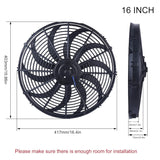
![EVILENERGY EVIL ENERGY 12 Inch Electric Radiator Cooling Fan 12V 80W Mount Kit - 15.8" x 16.4" x 2.9" - Radiator Fan - Compatible with Automobile Radiators[16 IN]](http://www.ievilenergy.com/cdn/shop/files/81SKqhkc5VL._SL1500.jpg?v=1753266977)
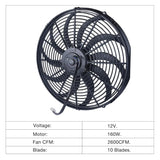
![[16 IN] Electric radiator cooling fan with 12V voltage, 160W motor, 2600 CFM airflow, and 10-blade design – high-performance electric fan for automotive cooling systems](http://www.ievilenergy.com/cdn/shop/files/EVIL-ENERGY-12-Inch-Electric-Radiator-Cooling-Fan-12V-80W-Mount-Kit-12.5_-x-11.8_-x-2.6_-Radiator-Fan-Compatible-with-Automobile-Radiators-EVILENERGY-140346148.jpg?v=1753266977)
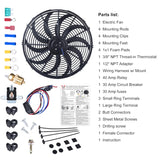
![[16IN] Complete electric radiator cooling fan kit with installation hardware, wiring harness, thermostat, relay, and connectors – full automotive electric fan accessories package](http://www.ievilenergy.com/cdn/shop/files/EVIL-ENERGY-12-Inch-Electric-Radiator-Cooling-Fan-12V-80W-Mount-Kit-12.5_-x-11.8_-x-2.6_-Radiator-Fan-Compatible-with-Automobile-Radiators-EVILENERGY-140346316.jpg?v=1753266815)
![[8 IN] Electric radiator cooling fan full kit by Evil Energy with mounting hardware, relay, thermostat sensor, and wiring – complete electric fan automotive package with 1-year warranty](http://www.ievilenergy.com/cdn/shop/files/Evil-Energy-8-Inch-Electric-Radiator-Cooling-Fan-12V-80W-10-Blades-Mount-Kit-EVIL-ENERGY-140411195_da7fc91e-3922-426d-8e60-b204b68f942e.jpg?v=1753266977)
![[8 IN] High-performance electric radiator cooling fan for cars with 315 CFM airflow, 2600 RPM speed, 12V voltage, and 80W power – electric fan automotive cooling solution](http://www.ievilenergy.com/cdn/shop/files/Evil-Energy-8-Inch-Electric-Radiator-Cooling-Fan-12V-80W-10-Blades-Mount-Kit-EVIL-ENERGY-140411012_ecc23bd8-5cfd-4bd0-b0c1-6b60cb061ccd.jpg?v=1753266977)
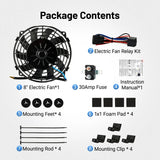
![[8 IN] Package contents of 8 inch electric radiator cooling fan kit – includes relay wiring kit, 30A fuse, installation manual, mounting feet, rods, clips, and foam pads for automotive use](http://www.ievilenergy.com/cdn/shop/files/Evil-Energy-8-Inch-Electric-Radiator-Cooling-Fan-12V-80W-10-Blades-Mount-Kit-High-Performance-Cooling-Upgrade-EVIL-ENERGY-140411410.jpg?v=1779294899)
![[10 IN] High-performance electric radiator cooling fan for cars with 560 CFM airflow, 2700 RPM speed, 12V voltage, and 80W power – electric fan automotive cooling solution](http://www.ievilenergy.com/cdn/shop/files/3_57e73cbf-9263-446b-960c-b009a424fc49.jpg?v=1753266977)
![[10 IN] 10 inch electric radiator cooling fan size and installation diagram – compact electric fan for radiator or oil cooler with 2.17 inch thickness for tight automotive engine bays](http://www.ievilenergy.com/cdn/shop/files/2_66927a0c-e86d-4972-a580-350baf61dbb5.jpg?v=1753266977)
![[10 IN] Package contents of 10 inch electric radiator cooling fan kit – includes relay wiring kit, 30A fuse, installation manual, mounting feet, rods, clips, and foam pads for automotive use](http://www.ievilenergy.com/cdn/shop/files/6_b506f396-18ad-4345-a55f-4603edb3ce8e.jpg?v=1753266815)
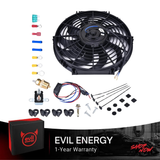
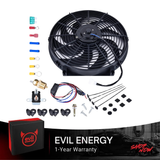
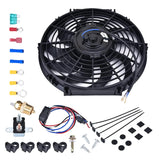
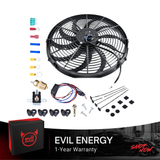



EVIL ENERGY 8/10/12/14/16 Inch Electric Radiator Cooling Fan - Compatible with Automobile Radiators
- $64.99
- $64.99
$63.11- Unit price
- per
SKU:
EVCS21-00125BK-001-L
Product Type:
Cooling Fan

Cooling Fan Comparison
| Cooling Fan | 8 IN | 10 IN | 12 IN | 14 IN | 16 IN |
|---|---|---|---|---|---|
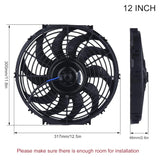
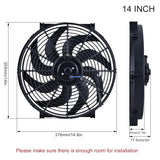
| Size | 8.27″ × 7.87″ × 2.56″ | 11.5″ × 11.0″ × 2.5″ | 11.8″ × 12.5″ × 2.6″ | 14″ × 14.8″ × 3″ | 16.4″ × 15.8″ × 2.9″ |
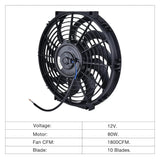
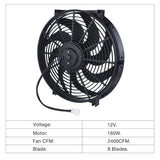
| Voltage | 12V | 12V | 12V | 12V | 12V |
| Motor | 80W | 80W | 80W | 80W | 80W |
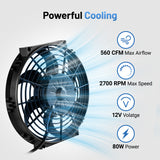
| Fan CFM | 315.87 | 560.6 | 862.35 | 1,320.91 | 1,364.7 |
| Maximum RPM | 2,600 ± 200 | 2,700 ± 200 | 2,265 ± 200 | 2,500 ± 200 | 2,456 ± 200 |
| Blade | 10 Blades | 6 Blades | 10 Blades | 8 Blades | 12 Blades |
| 1 PC Package Included |
1 pc 8-inch radiator fan with mounting kit 1 pc 175–185°F thermostat relay switch kit Installation instructions included |
1 pc 10-inch radiator fan with mounting kit 1 pc 175–185°F thermostat relay switch kit Installation instructions included |
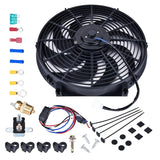
1 pc 12-inch radiator fan with mounting kit 1 pc 175–185°F thermostat relay switch kit Installation instructions included |
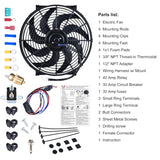
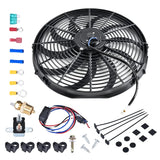
1 pc 14-inch radiator fan with mounting kit 1 pc 175–185°F thermostat relay switch kit Installation instructions included |
1 pc 16-inch radiator fan with mounting kit 1 pc 175–185°F thermostat relay switch kit Installation instructions included |
Complete Installation Kit
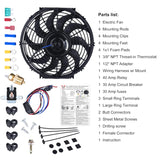
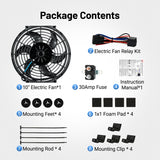
| Fan and Mounting Hardware | 1 × Electric radiator cooling fan 4 × Mounting rods 4 × Mounting clips 4 × Mounting feet 4 × Foam pads (1 × 1 in.) 3 × Sheet-metal screws 1 × Self-drilling screw |
|---|---|
| Electrical Components | 1 × Wiring harness with bracket 1 × 40-amp relay 1 × 30-amp circuit breaker 2 × 30-amp fuses 2 × Butt connectors 1 × Female connector 1 × Large ring terminal 3 × Small ring terminals |
| Temperature-Sensing Components | 1 × 3/8-inch NPT threaded temperature sensor 1 × 1/2-inch NPT adapter |
| Documentation | 1 × Installation manual with wiring diagram |
| Temperature Control and Installation | The included thermostat relay switch activates at 175–185°F and automatically switches the fan on and off to help maintain the engine’s optimal operating temperature. Standardized connectors allow installation without special tools or major vehicle modifications. |
Electric Radiator Cooling Fans for Universal Applications
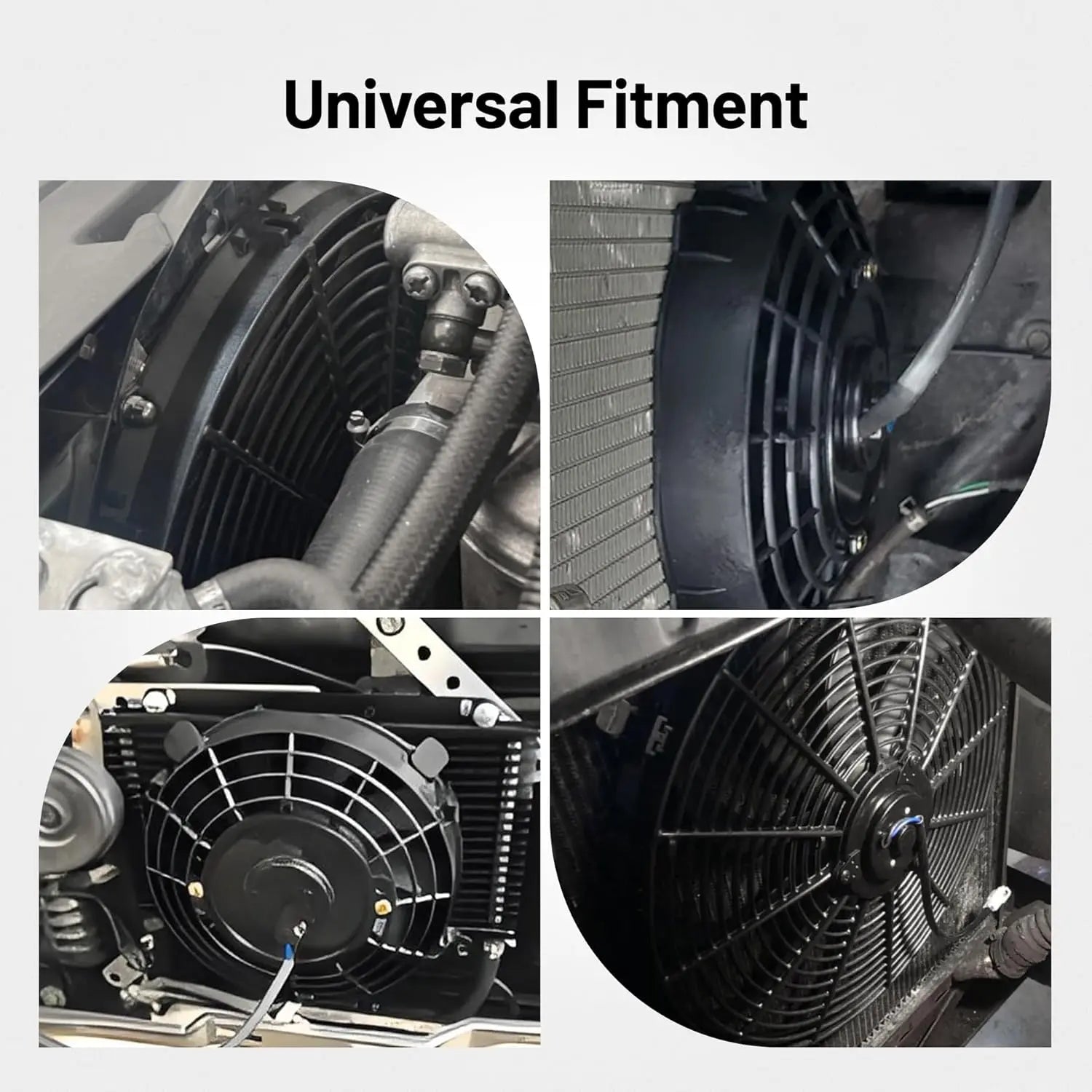
EVIL ENERGY electric radiator cooling fans are available in 8-inch, 10-inch, 12-inch, 14-inch, and 16-inch radiator fan sizes, with both single-fan and two-fan packages available. Each radiator cooling fan features a round protective grille, multiple blades, a compact design, and built-in wiring terminals for convenient installation and removal.
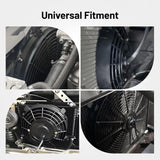
These 12 volt automotive fans can be used for primary radiator cooling, A/C condenser cooling, reducing overall engine-bay temperature, and auxiliary cooling for transmission oil coolers. They are also suitable for light-duty industrial 12V equipment, including HVAC units. Whether you need to replace the factory car radiator fan, upgrade the vehicle’s engine cooling system, or build a custom cooling setup from scratch, our 12 volt electric fans provide a stable, reliable, and durable cooling solution.

Multiple Sizes for Automotive Modification Applications
EVIL ENERGY electric radiator fan products are available in five sizes: 8, 10, 12, 14, and 16 inches. These size options are designed to accommodate different cooling requirements and installation spaces.

- Broader application range: Options are available for small-displacement vehicles, classic off-road vehicles, modified performance cars, and industrial cooling equipment. Buyers can select a size according to radiator dimensions, available engine-bay space, and cooling requirements.
- Flexible installation options: Smaller fans are suitable for confined engine bays, while larger fans can be used with larger car radiators or applications that generate higher heat loads. Single-fan and dual-fan configurations are also supported.
- Options for different cooling loads: Smaller radiator electric fans can provide basic or auxiliary cooling for everyday applications. Larger models provide higher airflow for demanding conditions such as performance driving, towing, heavy-load operation, and off-road use.
- Simplified installation: The different sizes share a similar structural design and installation method. Both pusher and puller configurations are supported, and the wiring arrangement is consistent across the range, helping simplify DIY installation.
| Size | Relative Airflow | Installation-Space Requirement | Typical Vehicles or Equipment | Intended Benefit |
|---|---|---|---|---|
| 8-Inch Radiator Fan | Basic airflow | Very limited installation space | Small motorcycles, microcars, and auxiliary cooling installations | Adds auxiliary airflow where mounting space is limited |
| 10-Inch Radiator Fan | Low-to-moderate airflow | Compact engine bays | ATVs, UTVs, small modified vehicles, and compact industrial radiators | Suitable for replacing a small factory fan or upgrading cooling in restricted spaces |
| 12-Inch Radiator Fan | Standard airflow | Typical engine-bay space | Many passenger vehicles and classic-car restoration projects | Suitable for a car radiator fan replacement or basic cooling upgrade; can be used in single- or dual-fan configurations |
| 14-Inch Radiator Fan | Higher airflow | Adequate mounting space required | Modified performance vehicles, pickup trucks, and vehicles used for towing | Adds radiator cooling capacity during low-speed or higher-load operation |
| 16-Inch Radiator Fan | Highest airflow in this range | Large radiator mounting area required | Large-displacement performance vehicles, heavily modified off-road vehicles, and track vehicles | Supports higher-demand cooling systems and larger radiators |
Across the five sizes, airflow generally increases from the 8-inch model to the 16-inch model. Select the appropriate radiator fan according to measured installation clearance, radiator size, vehicle type, electrical capacity, and expected heat load. When comparing a high CFM radiator fan, review its rated airflow and current requirements rather than selecting by diameter alone.
12V DC Power for Easy and Safe Integration with Vehicle Electrical Systems
This 12 volt radiator cooling fan is designed to operate on a 12V DC power supply, making it compatible with the standard electrical systems used in most passenger vehicles.
- Broad compatibility: Passenger cars, modified vehicles, off-road vehicles, and many classic vehicles use nominal 12V battery systems. This 12 volt automotive fan can therefore be integrated into many existing vehicle circuits without requiring an additional voltage step-up or step-down converter. Always confirm the vehicle’s system voltage before installation.
- Consistent motor operation: The 12V DC motor provides starting torque and is designed to maintain stable fan speed while the engine is idling. This allows the electric radiator fan to continue pulling or pushing air through the radiator. Actual airflow may vary with supply voltage, wiring condition, and electrical load.
- Circuit protection: A 12V automotive circuit presents a relatively low electric-shock risk. When the fan is installed with a correctly rated radiator cooling fan relay, fuse, and wiring, the circuit is better protected against overloads and excessive current. The fuse is designed to interrupt the circuit before an overload causes more extensive wiring damage.
- Straightforward control: A 12V DC auto radiator fan can be paired with a temperature sensor and relay to provide automatic temperature-based operation. This is a widely used control method with a relatively straightforward wiring layout, making it suitable for many DIY cooling-system installations.
- Demand-based power consumption: When controlled by a temperature sensor and relay, radiator electric fans operate only when additional cooling is required. Unlike a continuously driven mechanical fan, an electric fan does not create constant mechanical drag on the engine. This may reduce parasitic engine load and can contribute to lower fuel consumption under some operating conditions.

Reversible Pusher or Puller Installation for Different Engine-Bay Layouts

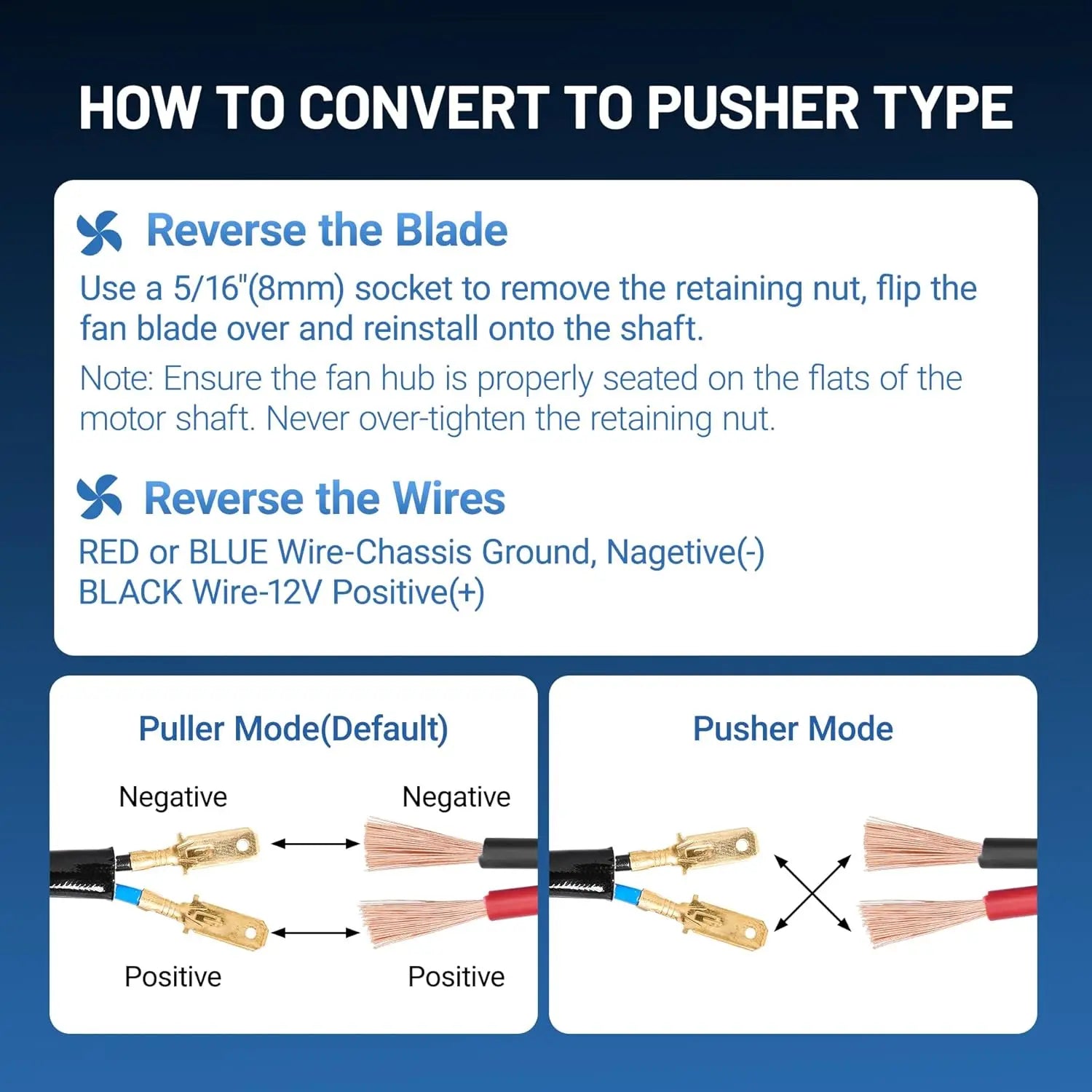
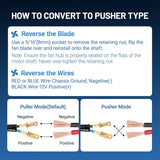
The electric radiator fan supports reverse-polarity wiring, allowing it to operate in either pusher or puller mode. In pusher mode, the radiator cooling fan is mounted on the grille side, or front, of the radiator and pushes air through the radiator core. This configuration is suitable for vehicles with limited space on the engine side of the radiator.
In puller mode, the radiator fan is mounted on the engine side, or rear, of the radiator and pulls air through the radiator core. This is the more common installation method when sufficient clearance is available between the radiator and the engine. Both configurations direct airflow consistently through the radiator core.
Single-Fan Wiring Diagram Guide: Building an Automatic Temperature-Controlled Fan Circuit

-
Power circuit: Run a 10-gauge wire from the positive terminal of the vehicle battery. Route it through an in-line fuse and connect it to the yellow wire for Pin 87 of the radiator cooling fan relay. This circuit supplies power to the complete electric radiator fan system.
-
Control circuit: Connect the ignition “ON” power source to the orange wire for relay Pin 85. Connect the temperature sensor to the gray wire for relay Pin 86. When the coolant reaches the sensor’s preset switching temperature, the sensor completes the control circuit and energizes the relay.
-
Fan power connection: Run a 12-gauge wire from the red wire for relay Pin 30 to the positive terminal of the 12 volt radiator fan. Connect the fan’s negative wire to a suitable vehicle ground.
-
Operating sequence: When the engine coolant temperature is below the sensor’s switching point, the sensor circuit remains open and the radiator fan stays off. When the coolant reaches the preset temperature, the sensor completes the circuit, the relay closes, and the fan begins operating. As the coolant temperature drops, the sensor opens the circuit and the fan switches off.
-
Installation notes: Use wire gauges appropriate for the fan’s electrical load and circuit length. Install the fuse close to the battery to provide overload protection. Attach the ground terminal to a clean, unpainted metal surface on the vehicle body to help prevent poor connections and intermittent operation.
Brand Summary
| Policy | Details |
|---|---|
| Cancellation Policy | Orders can be canceled within 48 hours of placement. Refund processed in 3-5 business days. |
| Returns Policy | Returns accepted within 180 days. Full refund within 90 days; 15% fee for 90-180 days. |
| Non-Returnable Items | Only regular-priced items are eligible for refunds; sale items are non-refundable. |
| Refund Processing | If no refund received, check your bank/credit card. For ongoing issues, contact support@ievilenergy.com. |
Return Reasons
- Quality Issues: Provide photos/videos; we cover return shipping.
- Wrong Item Ordered: Buyer covers return shipping; email within 30 days.
- Change of Mind: Buyer covers return shipping; email within 30 days.
- Shipping Damage: Inspect packages; do not sign for damaged items.
- Incorrect Item Shipped: Contact within 7 days.
Price Protection Policy
Effective from August 25, 2024. Price drops within 7 days of purchase can be claimed.
Disclaimer
EVIL ENERGY reserves the right to interpret, modify, or terminate this policy in accordance with applicable laws and regulations.
If you need further information or assistance, feel free to ask!
Product Videos
No Amazon reviews available for this product.
RELATED PRODUCTS
Example product title
- $55.99
- $55.99
$59.00- Unit price
- per
Example product title
- $55.99
- $55.99
$59.00- Unit price
- per
Example product title
- $55.99
- $55.99
$59.00- Unit price
- per
Example product title
- $55.99
- $55.99
$59.00- Unit price
- per
Example product title
- $55.99
- $55.99
$59.00- Unit price
- per
Example product title
- $55.99
- $55.99
$59.00- Unit price
- per
RECENTLY VIEWED PRODUCTS
- Choosing a selection results in a full page refresh.