EVILENERGY EVIL ENERGY AN10 PTFE Transmission Line for GM Duramax 01-05 6.6L LB7 / LLY | PTFE Inner Tube with 304 Stainless Steel Braid and Nylon Cover, Design for Extreme Heat, Chemical Resistance & Durability

EVIL ENERGY AN10 PTFE Transmission Line for GM Duramax 01-05 6.6L LB7 / LLY | PTFE Inner Tube with 304 Stainless Steel Braid and Nylon Cover, Design for Extreme Heat, Chemical Resistance & Durability

$75.99
$75.99
$75.99
SKU: EVBWG0002001
Product Type: Transmission Oil Cooler Hose Kits

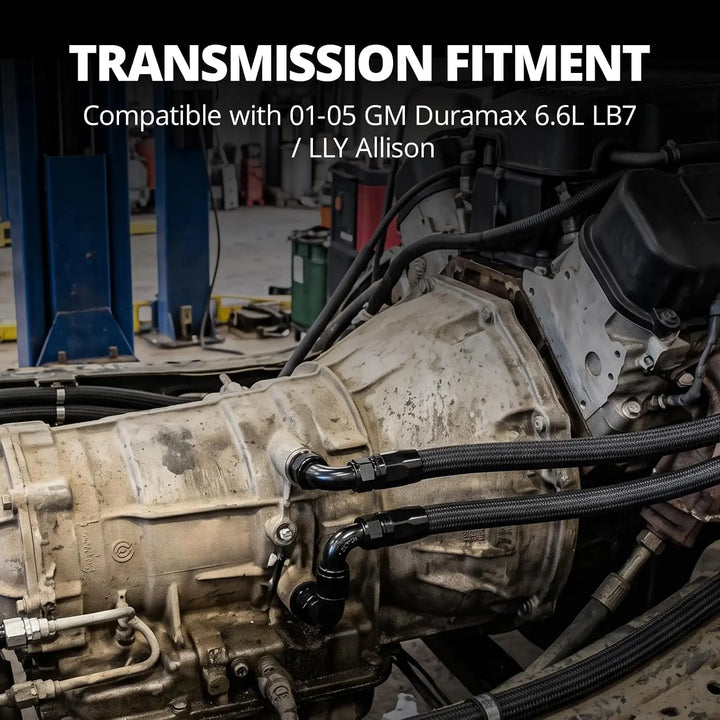
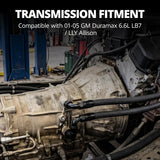
  • Transmission Fitment: This transmission line is compatible with 2001-2005 GM Duramax 6.6L LB7/LLY transmissions, providing reliable fluid transfer between the transmission and cooler for efficient cooling performance. Please verify your transmission model before purchase
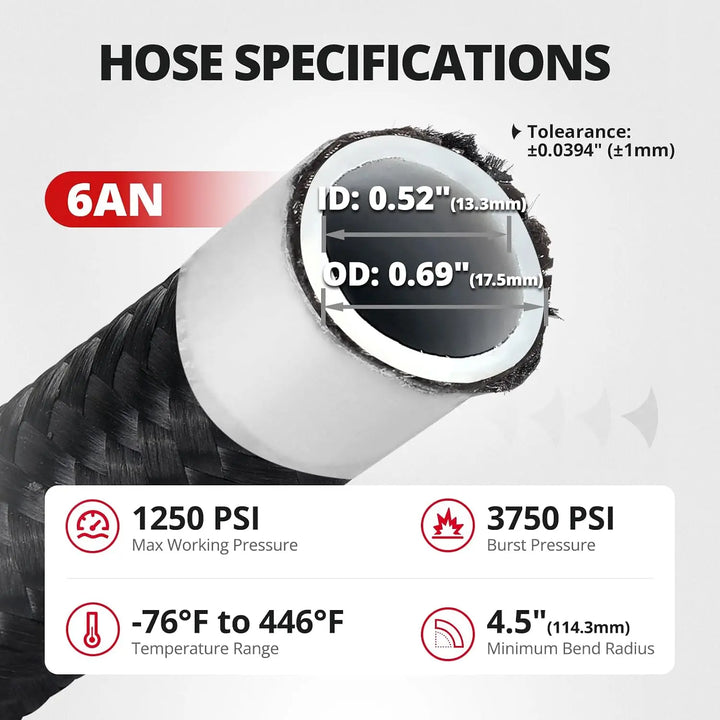
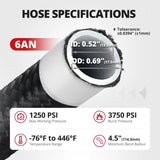
  • Hose Specifications: 10AN, ID: 0.52" (13.3mm), OD: 0.69" (17.5mm), Max Working Pressure: 1250 PSI, Burst Pressure: 3750 PSI, Temperature Range: -76°F to 446°F, Minimum Bend Radius: 4.5" (114.3mm).
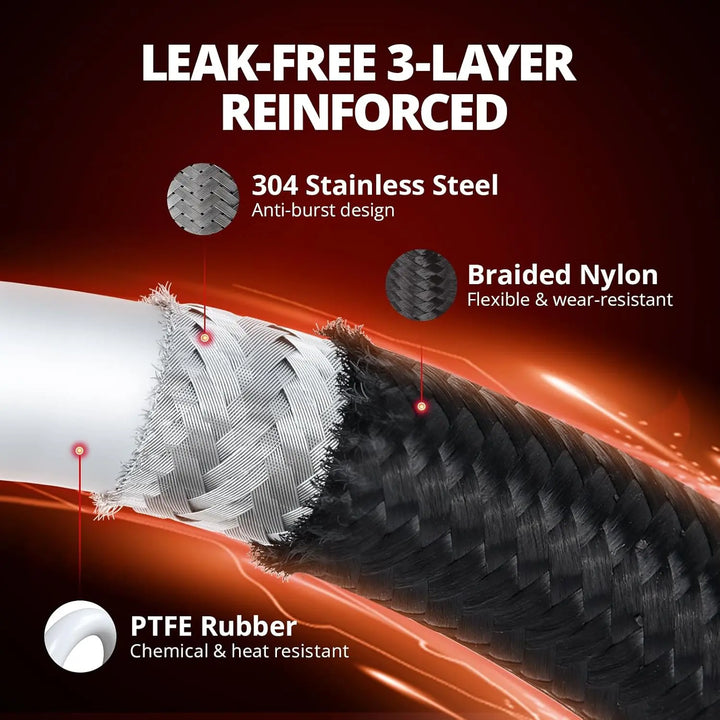
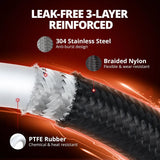
  • 3-Layer Construction: Built with a PTFE inner tube, 304 stainless steel braid, and braided nylon outer cover, this transmission cooler line delivers excellent chemical resistance, heat resistance, flexibility, and long-lasting durability
  • High Pressure Rating: The AN10 transmission line is rated for 1250 PSI working pressure and 3750 PSI burst pressure, with reliable performance from -76°F to 446°F for demanding transmission cooling applications
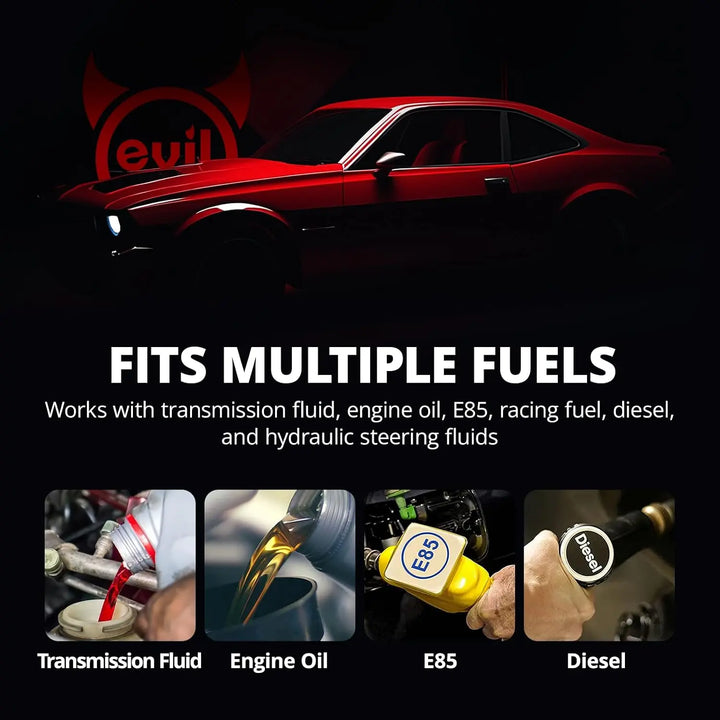
  • Wide Fluid Compatibility: This transmission line supports transmission fluid, engine oil, E85, racing fuel, diesel, and hydraulic steering fluids for versatile fluid transfer applications
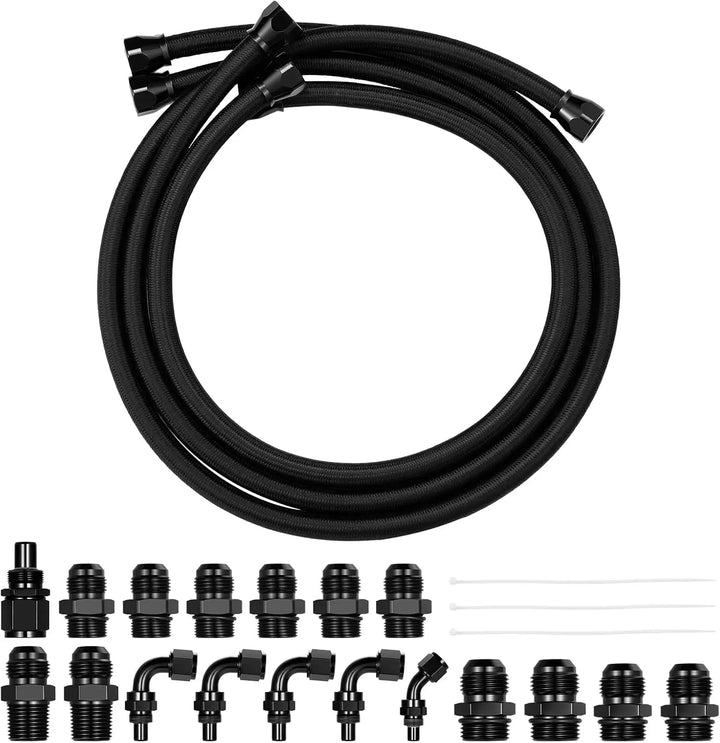
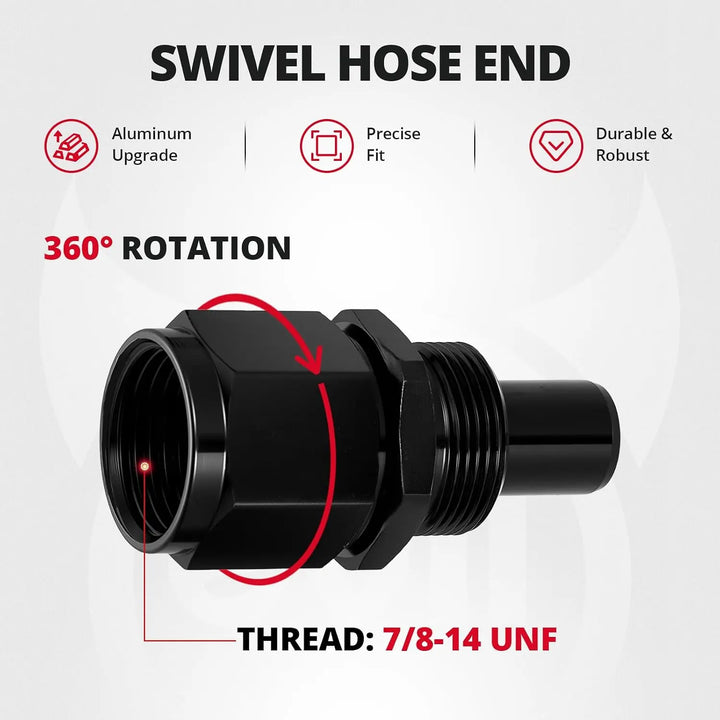
  • Complete Kit Included: The transmission line kit includes hose, swivel hose ends, and adapter fittings for a secure cooling system connection. Precision-machined components ensure reliable installation and performance

EVIL ENERGY checkout payment icons and shopping service
EVILENERGY EVIL ENERGY AN10 PTFE Transmission Line for GM Duramax 01-05 6.6L LB7 / LLY | PTFE Inner Tube with 304 Stainless Steel Braid and Nylon Cover, Design for Extreme Heat, Chemical Resistance & Durability

EVIL ENERGY AN10 PTFE Transmission Line for GM Duramax 01-05 6.6L LB7 / LLY | PTFE Inner Tube with 304 Stainless Steel Braid and Nylon Cover, Design for Extreme Heat, Chemical Resistance & Durability

$75.99
$75.99

EVIL ENERGY AN10 PTFE Transmission Line for GM Duramax 01-05 6.6L LB7 / LLY | PTFE Inner Tube with 304 Stainless Steel Braid and Nylon Cover, Design for Extreme Heat, Chemical Resistance & Durability

$75.99

Transmission Oil Cooler Line Kit Specifications

Specification Details
Brand EVIL ENERGY
Transmission Oil Cooler Kit Contents
  • 1 × 59" AN10 PTFE transmission oil cooler hose (90° ends)
  • 1 × 47" AN10 PTFE transmission oil cooler hose (90° & 45° ends)
  • 1 × 39" AN10 PTFE transmission oil cooler hose (90° & straight ends)
  • 6 × 10AN to 7/8"-14 ORB fittings
  • 2 × 10AN to 3/4"-16 ORB fittings
  • 2 × 10AN to M22 × 1.5 fittings
  • 2 × 10AN to 1/2" NPT fittings
Transmission Oil Cooler Fittings Included 6 × 10AN to 7/8"-14 ORB · 2 × 10AN to 3/4"-16 ORB · 2 × 10AN to M22 × 1.5 (Setrab style) · 2 × 10AN to 1/2" NPT
Transmission Oil Cooler Hose Size AN10 (ID: 0.52" / 13.3mm, OD: 0.69" / 17.5mm)
Assembly Required None — hose ends pre-installed and pressure tested
Transmission Line Working Pressure 1250 PSI
Transmission Line Burst Pressure 3750 PSI
Transmission Line Temperature Range -76 °F to 446 °F (-60 °C to 230 °C)
Transmission Line Min Bend Radius 4.5" (114.3mm)
Transmission Line Material PTFE inner tube + 304 stainless steel braid + braided nylon outer cover
Transmission Line Construction 3-layer reinforced design
Transmission Line Compatible Fluid Primary: Transmission fluid, engine oil, hydraulic steering fluid
Additional compatible fluids: E85, racing fuel, diesel (hose material only, not for fuel system assembly)
Compatible Transmissions GM Duramax 6.6L LB7 / LLY (2001-2005), Allison 1000
Cooler Compatibility Stock radiator cooler, OEM-replacement and aftermarket radiators, auxiliary stacked-plate coolers

About this item

Tired of chasing a leak at the factory crimp? The EVIL ENERGY AN10 PTFE transmission oil cooler line kit replaces the failure-prone OEM lines on 2001-2005 GM Duramax 6.6L LB7/LLY trucks with three pre-assembled, pressure-tested PTFE hoses and a complete set of transmission oil cooler fittings. Rated to 1250 PSI and 446 °F, this transmission oil cooler kit is built for high-heat towing and performance builds — no cutting, no hose assembly, no extra parts to source.

EVIL ENERGY AN10 PTFE transmission oil cooler line kit for 2001-2005 GM Duramax 6.6L LB7 LLY What is in the box: three pre-assembled transmission oil cooler hoses and 12 transmission oil cooler fittings 3-layer PTFE inner tube, 304 stainless braid and nylon cover automatic transmission oil cooler hose construction 10AN swivel hose ends and ORB, NPT and M22 transmission oil cooler fittings close up Transmission oil cooler installation on a Duramax showing routing from transmission to cooler

What is a transmission oil cooler line, and why do the factory ones leak?

A transmission oil cooler is the heat exchanger that pulls heat out of automatic transmission fluid before it returns to the gearbox. The factory lines that feed it use a rubber section crimped onto a steel tube — and on 2001-2005 Duramax trucks that crimp is a known weak point. Heat cycling hardens the rubber, cold weather shrinks it away from the collar, and fluid begins to weep, usually showing up behind the front bumper or along the frame rail. Because the failure is in the crimp itself, replacing like for like just restarts the clock, which is why a full transmission oil cooler hose replacement is the accepted fix on this platform.

Transmission oil cooler line diagram: how these hoses route

The Duramax runs two coolers in series. Fluid leaves the transmission, flows to the cooler built into the radiator end tank, continues to the auxiliary core ahead of the radiator, then returns to the transmission. Each of the three hoses in this kit corresponds to one leg of that loop, with the 90°, 45° and straight ends already oriented for the factory path. Pull up a transmission oil cooler line diagram for your model year before you begin so each hose lands on the correct port. Retain the original transmission oil cooler line clip locations, or add cushioned clamps every 12-18 inches, to keep the hoses clear of the exhaust and steering components.

Why PTFE + 304 stainless + nylon for an auto transmission oil cooler?

Fluid leaving the cooler can run 80-100 °F hotter than sump temperature, so a hose rated only to 250 °F is marginal on a truck that tows. The PTFE inner tube is chemically inert, will not swell or absorb ATF, and does not go brittle with heat cycling the way rubber does. The 304 stainless steel braid carries 1250 PSI working and 3750 PSI burst pressure — ample margin over the 200-260 PSI cold-start spikes an automatic transmission oil cooler circuit produces. The braided nylon outer cover handles abrasion and road debris. Three layers, one job each, working from -76 °F to 446 °F.

Complete transmission oil cooler fittings — nothing else to buy

Most LB7/LLY trucks use 7/8"-14 ORB ports, while some early LB7 trucks use 3/4"-16 ORB. Aftermarket and OEM-replacement radiators often use M22 × 1.5 Setrab-style ports, and many auxiliary cores use 1/2" NPT. All four are included, so this oil cooler for transmission line kit fits a stock truck, a radiator swap, or an added auxiliary cooler without a second order.

Why Choose the EVIL ENERGY AN10 PTFE Transmission Oil Cooler Kit?

  • Direct LB7 / LLY Fitment: Three pre-cut lengths engineered for the factory transmission-to-cooler routing on 2001-2005 GM Duramax 6.6L diesels.
  • No Assembly Required: Hose ends are pre-installed and pressure tested — no PTFE cutting, no olives to seat, no special tools. Most transmission oil cooler installation jobs take two to four hours.
  • Every Fitting Included: 12 transmission oil cooler fittings covering ORB, NPT and Setrab M22 ports, so nothing is sold separately.
  • PTFE + Stainless + Nylon Build: Chemical resistance, 1250 PSI strength and abrasion protection in one 3-layer transmission oil cooler hose.
  • Permanent Fix: Threaded AN connections eliminate the factory crimp, ending repeat transmission oil cooler line repair for good.

Looking for a different application or a larger cooling upgrade? Browse the full range of EVIL ENERGY transmission oil cooler hose kits to find the right size, length and fitting combination for your build.

Brand Summary

Policy Details
Cancellation Policy Orders can be canceled within 48 hours of placement. Refund processed in 3-5 business days.
Returns Policy Returns accepted within 180 days. Full refund within 90 days; 15% fee for 90-180 days.
Non-Returnable Items Only regular-priced items are eligible for refunds; sale items are non-refundable.
Refund Processing If no refund received, check your bank/credit card. For ongoing issues, contact support@ievilenergy.com.

Return Reasons

  1. Quality Issues: Provide photos/videos; we cover return shipping.
  2. Wrong Item Ordered: Buyer covers return shipping; email within 30 days.
  3. Change of Mind: Buyer covers return shipping; email within 30 days.
  4. Shipping Damage: Inspect packages; do not sign for damaged items.
  5. Incorrect Item Shipped: Contact within 7 days.

Price Protection Policy

Effective from August 25, 2024. Price drops within 7 days of purchase can be claimed.

Disclaimer

EVIL ENERGY reserves the right to interpret, modify, or terminate this policy in accordance with applicable laws and regulations.

If you need further information or assistance, feel free to ask!

Q: Why do the factory transmission oil cooler lines leak on a 2001-2005 Duramax?

A: The OEM lines are a steel tube with a short rubber hose section crimped onto each end. Years of ATF exposure and heat cycling harden that rubber, and in cold weather it shrinks slightly away from the crimp collar, so fluid weeps past the joint. Most owners first notice a wet spot behind the front bumper or a film of red fluid running down the passenger-side frame rail, and it gets worse every winter. Because the failure is in the crimp itself, fitting another crimped factory part usually just restarts the clock. Converting to continuous PTFE hose with threaded AN fittings removes the crimp altogether, which is why transmission oil cooler repair on these trucks is normally done as a complete hose swap rather than a patch.

Q: What is a transmission oil cooler, and what do the cooler lines actually do?

A: What is a transmission oil cooler? It is a heat exchanger that pulls heat out of automatic transmission fluid before the fluid returns to the gearbox. On this platform there are two in series: one built into the radiator end tank, plus a separate auxiliary core mounted ahead of the radiator. Following a transmission oil cooler diagram for these trucks, fluid leaves the transmission, flows to the radiator cooler, then through the auxiliary core, then back to the transmission. The lines are simply the plumbing that closes that loop, but they carry the hottest fluid in the system. ATF held above roughly 250°F oxidizes quickly and shortens clutch life, so an automatic transmission oil cooler and its lines are durability parts rather than luxuries.

Q: Is this a repair patch or a full transmission oil cooler hose replacement?

A: This is a full replacement. Splice-type repair kits cut the factory line about half an inch from the crimp and clamp a new rubber section onto the remaining steel tube — cheaper, but it keeps the original tube and adds another joint that can weep later. A transmission oil cooler hose replacement done with AN hose replaces the entire flexible run end to end, so no crimp is left in the circuit. On transmission oil cooler line replacement cost: complete name-brand line sets for this platform typically run about $269-$305 in parts, and shops commonly charge around $200 in labor on top. This transmission oil cooler kit covers the same job at a lower parts cost, with every adapter you might need already in the box.

Q: What comes in the kit, and do I need to buy anything else?

A: The kit ships with three pre-assembled PTFE lines cut to the correct lengths with the hose ends already installed: one 59" hose with 90° ends, one 47" hose with 90° and 45° ends, and one 39" hose with a 90° and a straight end. The adapter set covers every port configuration this platform uses — 6 × 10AN to 7/8"-14 ORB, 2 × 10AN to 3/4"-16 ORB, 2 × 10AN to M22 × 1.5, and 2 × 10AN to 1/2" NPT. You will not need to source transmission oil cooler fittings separately for a stock radiator, an aftermarket radiator, or an added auxiliary core. Beyond the kit you only need basic hand tools, a drain pan, and fresh ATF to top off.

Q: What thread sizes are on my truck, and will these fittings connect?

A: Most 2001-2005 LB7/LLY trucks use 7/8"-14 O-ring boss (ORB) ports, and the six 7/8"-14 adapters cover that configuration completely. Some early LB7 trucks use 3/4"-16 ORB at the transmission instead — the two look similar by eye, so check before you start, and use the two 3/4"-16 adapters if that is what you find. If your truck has an OEM-replacement or aftermarket radiator, the cooler side often uses M22 × 1.5 Setrab-style ports, and many auxiliary cores use 1/2" NPT; both are included. The quickest way to identify a port is to remove one transmission oil cooler line and look at it: ORB ports have a flat sealing face with an O-ring groove, while NPT threads are visibly tapered.

Q: The cooler circuit is low pressure — is a 1250 PSI hose overkill?

A: Under normal driving the circuit sees roughly 20-85 psi, so 1250 PSI sounds like a lot. The number that matters is the cold-start spike: thick cold ATF cannot move through the restrictive cooler cores, and the outbound line can momentarily see 200-260 psi. Those repeated spikes, not steady-state pressure, are what fatigue a factory crimp over a decade. A 1250 PSI working rating with 3750 PSI burst leaves roughly a 5x margin over the worst spike an auto transmission oil cooler circuit produces on this truck. The goal is not running high pressure — it is making sure the hose is never the weak link on a component whose failure can cost a transmission.

Q: Will this transmission oil cooler hose survive Duramax heat while towing?

A: Fluid heading out to the cooler is much hotter than what your pan sensor reports — commonly 80-100°F above sump temperature. A truck showing 200-220°F on the gauge under a heavy trailer can be sending close to 300°F through the outbound line. That is why generic 250°F-rated hose has a poor track record here: it hardens, then weeps at the fitting. This transmission oil cooler hose is rated from -76°F to 446°F, with a PTFE liner that will not swell, absorb fluid, or go brittle from heat cycling, and a 304 stainless braid that holds its shape at temperature. The nylon outer cover adds abrasion protection where the line passes near the exhaust or frame.

Q: Is AN10 larger than the factory line, and will bigger lines lower my transmission temperatures?

A: Yes. AN10 gives a 0.52" inside diameter and holds that bore through the fittings instead of necking down at each crimp, which measurably reduces restriction — most noticeably on cold mornings when fluid is thick. Be realistic about the result, though: on a stock setup the dominant restriction is the cooler cores themselves, not the plumbing, so larger lines alone produce a modest change. A meaningful temperature drop comes when the lines are paired with a larger transmission oil cooler. Treat the bigger bore as removing a bottleneck and creating headroom for a cooling upgrade, not as a temperature fix on its own.

Q: What does the installation involve, and do I have to assemble the hose ends myself?

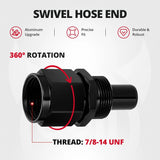
A: No assembly is required. The three hoses arrive complete with their swivel ends already fitted and pressure-tested, so there is no cutting PTFE, no olives or ferrules to seat, and no special hose shears needed. Installation is a matter of draining the system, removing the factory lines, threading the correct adapters into each port, and connecting each hose to its matching run. The 90°, 45°, and straight ends are oriented for the factory routing, and the swivel design lets you clock each fitting for a clean, stress-free path — worth noting because the 4.5" minimum bend radius means PTFE will not fold around a tight corner. Reuse each factory transmission oil cooler line clip or add cushioned clamps every 12-18 inches to keep the hose off the exhaust and steering components; pulling up a transmission oil cooler line diagram for your model year first makes it easy to match each hose to the right port. Most people budget two to four hours to install transmission oil cooler lines. After the first heat cycle, recheck each fitting for weeps to finish the transmission oil cooler installation properly.

Q: Will this work with an aftermarket radiator, a bypassed radiator cooler, or an added auxiliary cooler?

A: Yes — the included M22 × 1.5 and 1/2" NPT adapters exist specifically for those setups, so no extra parts are needed. Keep the factory series routing (transmission, radiator cooler, auxiliary cooler, back to the transmission) unless you have a specific reason to change it. Some builders bypass the radiator cooler and run a single large core, but the radiator cooler also warms fluid on cold starts, so a full bypass trades warm-up behavior for peak cooling and suits hot climates or dedicated tow rigs. Before you start, confirm the port thread on whatever oil and transmission cooler you are running so you know which adapter pair to use.

Q: Can this hose be used for engine oil, power steering, or fuel?

A: The PTFE liner is chemically inert and compatible with transmission fluid, engine oil, and hydraulic power steering fluid, and the material also resists E85, race fuel, and diesel. This kit is configured and sold for transmission oil cooler line repair and replacement, not as a fuel system assembly — fuel lines carry additional requirements around static dissipation, filtration, and routing that fall outside the scope of a cooler line kit. For fuel plumbing, use a purpose-built fuel line kit with a conductive-liner hose. For an engine oil cooler for transmission-style installation or a power steering cooler, the same AN10 hose and fitting approach transfers directly.

No Amazon reviews available for this product.

RELATED PRODUCTS

RECENTLY VIEWED PRODUCTS