


Subscribe now to unlock $9.99 deals
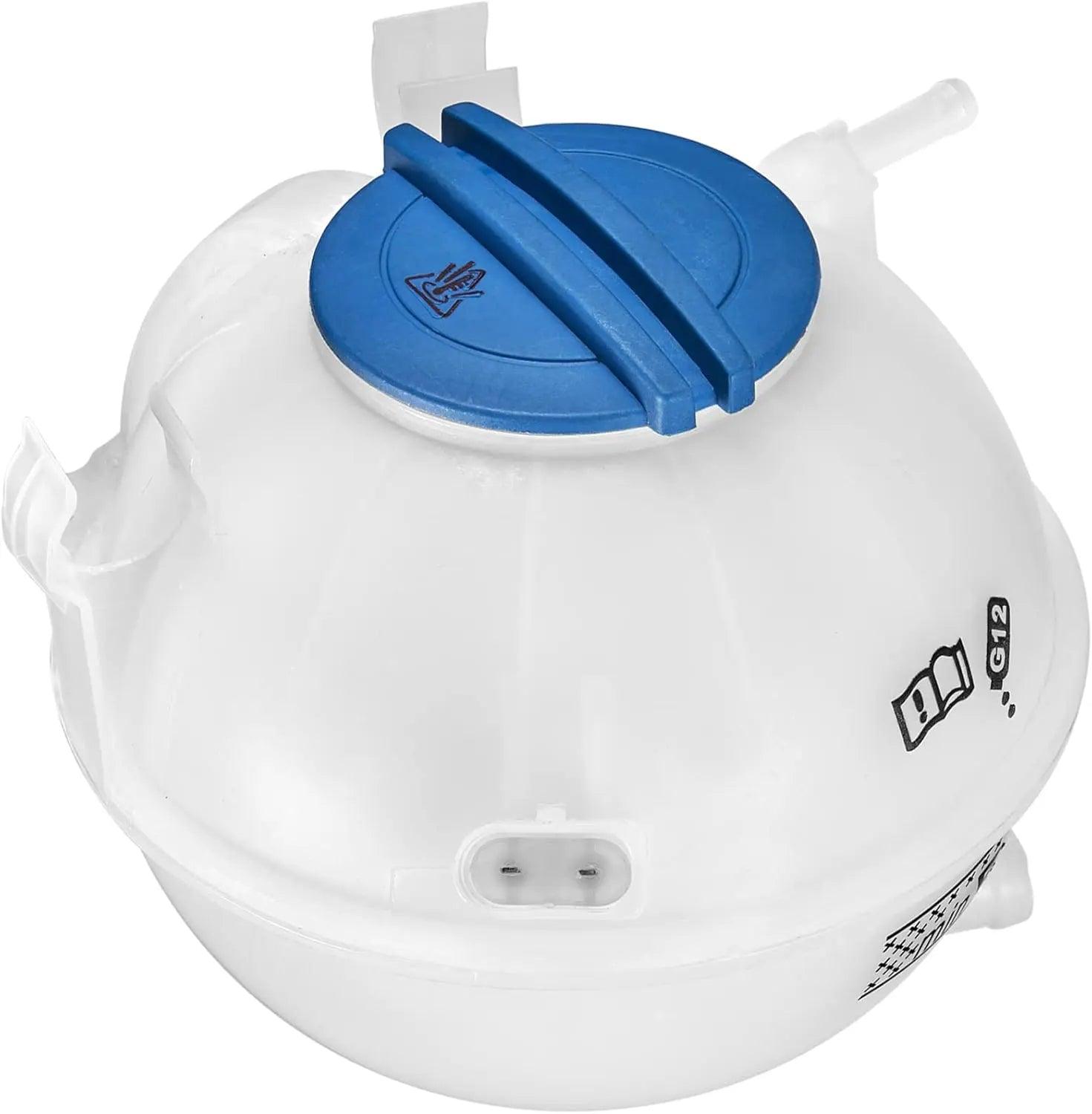



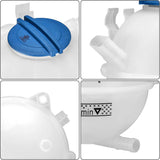
EVIL ENERGY Coolant Reservoir Compatible with Volkswagen Beetle Passat GTI Jetta Golf R Audi A3 Q3 TT Quattro
- $20.89
- $20.89
$20.89- Unit price
- per
SKU:
EVKT07040WT-AMZ1
Product Type:
Coolant Overflow Tank


| Brand | EVIL ENERGY |
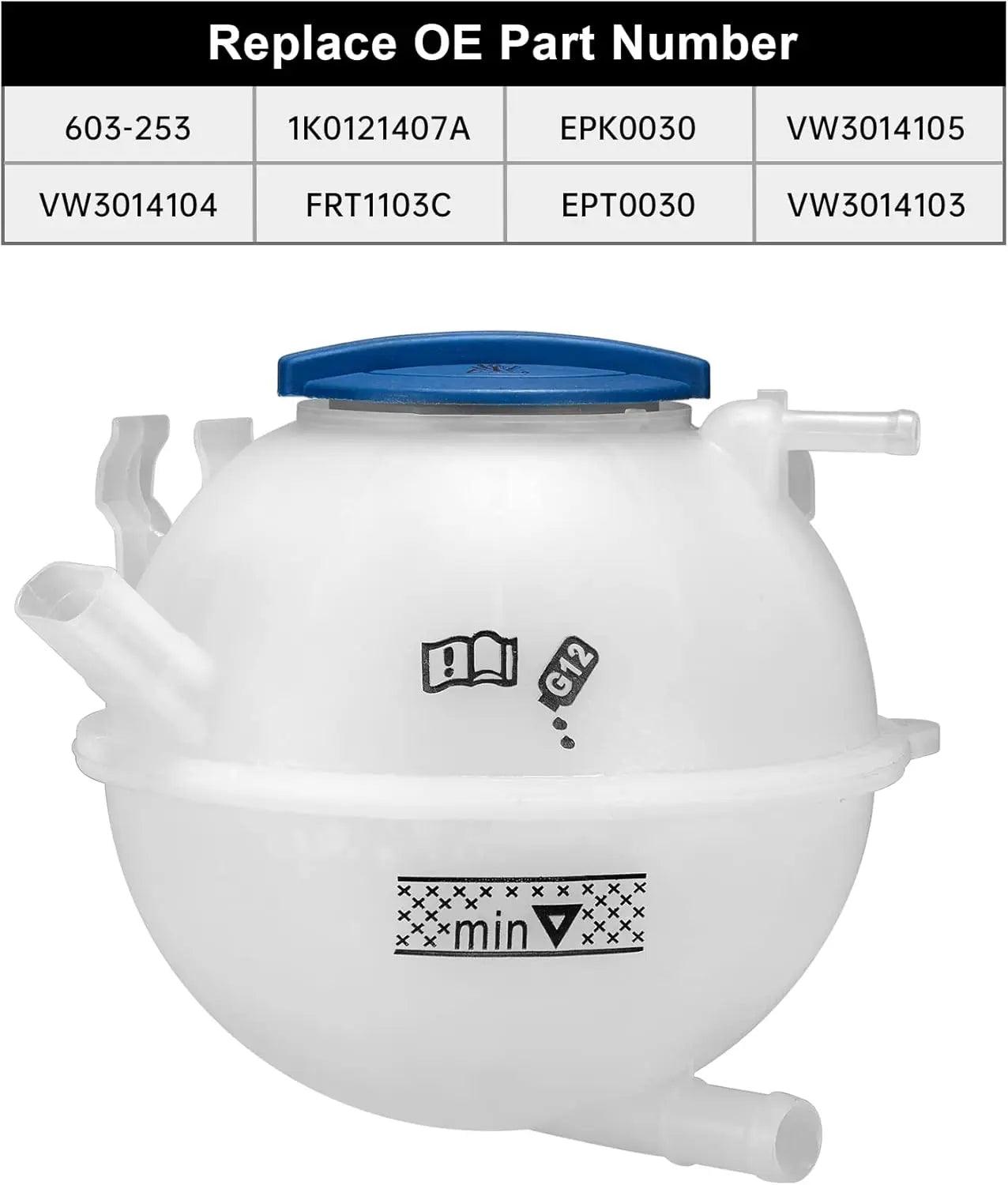
| OE Replacement / Cross-Reference Numbers | 603-253, 1K0121407A, EPK0030, VW3014105, VW3014104, FRT1103C, EPT0030, VW3014103 |
| Product Type | Coolant Reservoir Tank |
| Function Type | Coolant expansion and overflow reservoir that holds excess coolant while hot and allows it to return to the cooling system as it cools |
| Product Grade | Replacement Part |
| Material | Translucent plastic reservoir |
| Color | Translucent white reservoir with blue cap shown |
| Fitment Type | Vehicle-specific direct replacement |
| Compatible Vehicles |
Coolant Reservoir Tank for Volkswagen • 2012–2019 Volkswagen Beetle — 1.8L and 2.0L L4; 2.5L L5 • 2009–2017 Volkswagen CC — 2.0L L4; 3.6L V6 • 2007–2016 Volkswagen Eos — 2.0L L4; 3.2L V6 • 2010–2014 Volkswagen Golf — 2.0L L4; 2.5L L5 • 2012–2013 Volkswagen Golf R — 2.0L L4 • 2006–2014 Volkswagen GTI — 2.0L L4 • 2005–2018 Volkswagen Jetta — 1.4L, 1.8L, 1.9L, and 2.0L L4; 2.5L L5 • 2006–2019 Volkswagen Passat — 1.8L and 2.0L L4; 2.5L L5; 3.6L V6 • 2008 Volkswagen R32 — 3.2L V6 • 2006–2009 Volkswagen Rabbit — 2.5L L5 Coolant Reservoir Tank for Audi • 2006–2013 Audi A3 — 2.0L L4 • 2006–2013 Audi A3 Quattro — 2.0L L4; 3.2L V6 • 2015–2018 Audi Q3 — 2.0L L4 • 2015–2018 Audi Q3 Quattro — 2.0L L4 • 2008–2009 Audi TT — 2.0L L4 • 2008–2015 Audi TT Quattro — 2.0L L4; 3.2L V6 • 2009–2015 Audi TTS Quattro — 2.0L L4 |
1K0121407A Coolant Reservoir Tank for Volkswagen and Audi

The EVIL ENERGY 1K0121407A Coolant Reservoir Tank is a vehicle-specific replacement for the factory expansion tank used across a wide range of Volkswagen and Audi models.
Fitment covers the Volkswagen Jetta (2005–2018), GTI (2006–2014), Golf (2010–2014), Golf R (2012–2013), Passat (2006–2019), Beetle (2012–2019), CC, Eos, Rabbit and R32, plus the Audi A3, A3 Quattro, Q3, Q3 Quattro, TT, TT Quattro and TTS Quattro. The replacement Coolant Reservoir Tank also cross-references 603-253, VW3014103, VW3014104, VW3014105, FRT1103C, EPK0030 and EPT0030, so matching the number molded on the original tank is the quickest way to confirm the Volkswagen Coolant Reservoir Tank or Audi Coolant Reservoir Tank is the correct one for the car.
Translucent Coolant Reservoir Tank for Quick MIN/MAX Level Checks

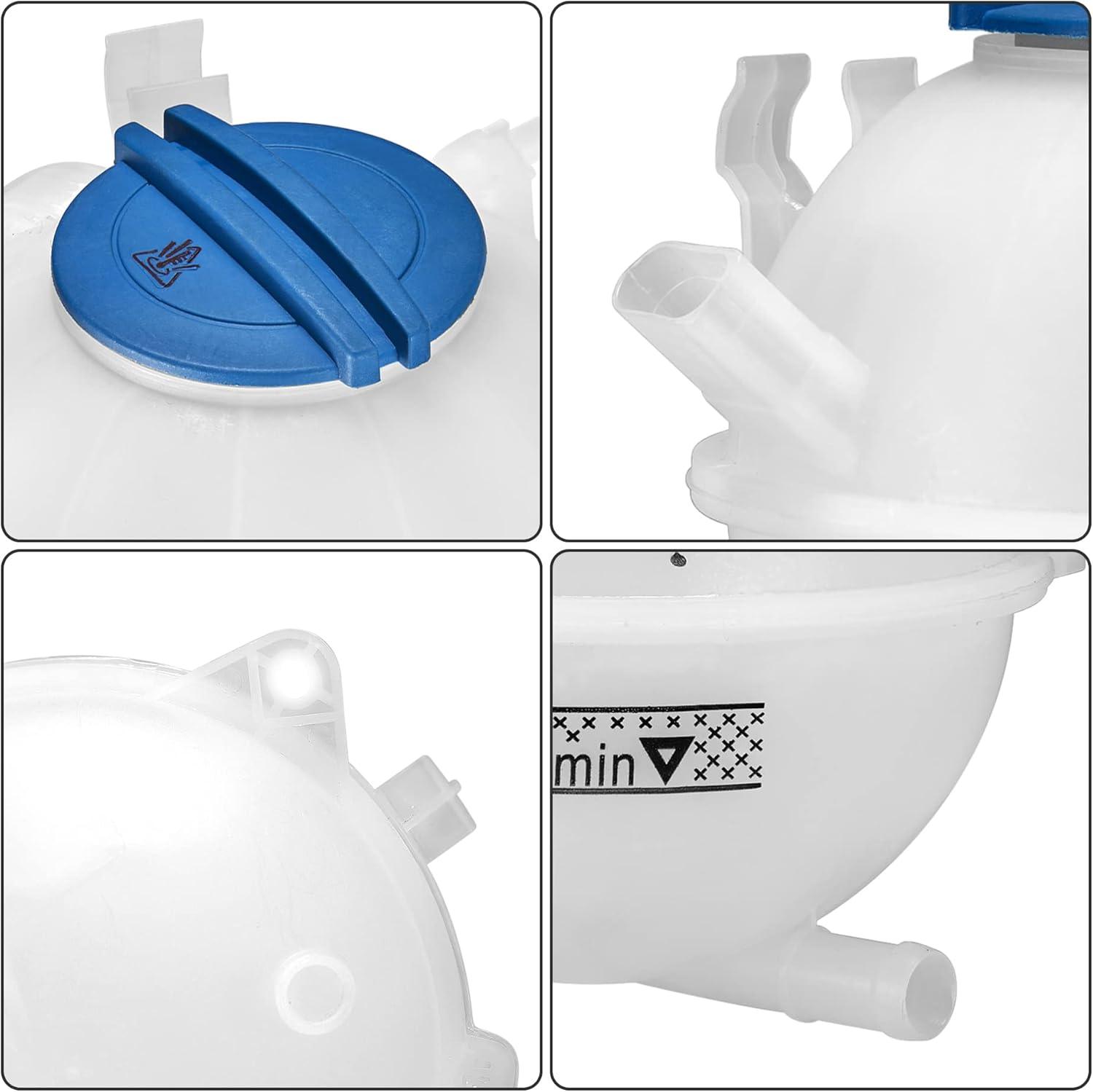
Factory VW expansion tanks gradually turn yellow and opaque from years of heat cycling, which makes reading the coolant level difficult. The translucent white Coolant Reservoir Tank restores a clear view of the coolant line against the MIN and MAX marks, so a Jetta, Golf or Passat owner can check the level with the hood open and the engine cold, without removing the cap. A clear Coolant Reservoir Tank for routine inspections also makes coolant color easier to judge, helping owners spot contaminated or diluted G12 and G13 coolant before a larger cooling-system problem develops.
Pressure-Rated Coolant Reservoir Tank for Sealed VW Cooling Systems

On these Volkswagen and Audi applications, the expansion tank is part of the pressurized cooling circuit rather than a vented overflow bottle. Hot coolant expands into the Coolant Reservoir Tank while the 2.0T TSI, 2.0T FSI, 2.5L five-cylinder or VR6 engine warms up, and the coolant is drawn back into the system as the engine cools. The heat-resistant plastic body, sealed seams and molded cap neck are built for repeated pressure and temperature swings, which makes the replacement a dependable Coolant Reservoir Tank for daily commuting, highway driving and summer heat. Pair the tank with a correctly rated pressure cap so the system holds pressure without pushing coolant out of the cap.
OE-Style Coolant Reservoir Tank Ports for VW GTI, Jetta and Passat

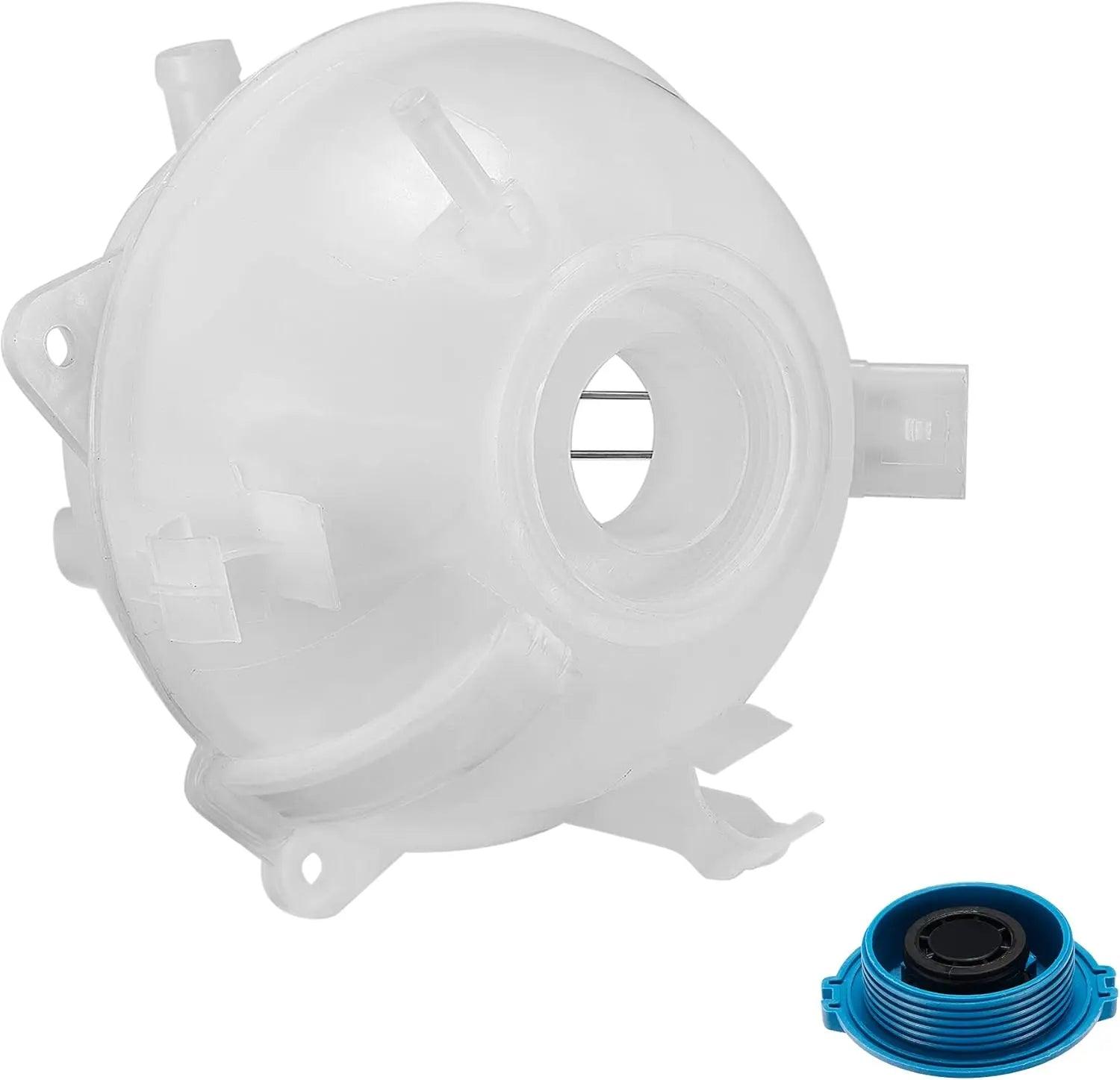
The direct-fit Coolant Reservoir Tank follows the factory layout, with hose nipples positioned to meet the original supply and return lines, a molded socket for the low-coolant level sensor connector, and mounting points that line up with the original bracket location. No drilling, adapters or hose rerouting are required on a VW GTI Coolant Reservoir Tank or Jetta Coolant Reservoir Tank replacement: transfer the hoses and spring clamps, plug in the level sensor connector until it clicks, secure the tank, then refill and bleed the system. Keeping the original port positions also prevents strained hoses and kinks that can cause slow coolant leaks at the connections.
Coolant Reservoir Tank for Low Coolant Warnings and Cracked Tank Leaks

Common reasons Volkswagen and Audi owners replace the expansion tank include a flashing low-coolant warning, a sweet coolant smell after driving, pink or purple crust along a seam or around the sensor base, and a coolant level that keeps dropping with no puddle under the car. An aged factory tank can develop hairline cracks that only weep under pressure, and residue buildup at the internal level sensor can trigger a low-coolant light even when the level is correct, a known condition on the Audi A3 and TT. A new Coolant Reservoir Tank for low coolant warnings and seam leaks addresses both problems in one repair, helping the cooling system stay sealed and the engine stay within its normal operating temperature.
What are the applications of the 1K0121407A Coolant Reservoir Tank?
 The 1K0121407A Coolant Reservoir Tank is a pressurized expansion tank for Volkswagen and Audi cooling systems, and the main applications follow how each vehicle is driven:
- High-mileage commuter cars: 2005–2018 Volkswagen Jetta, 2010–2014 Golf, 2006–2009 Rabbit and 2012–2019 Beetle owners replace a yellowed, cracked factory tank that causes slow coolant loss and repeated top-offs on daily drives.
- Turbocharged 2.0T performance models: 2006–2014 VW GTI, 2012–2013 Golf R, Jetta GLI and Audi TTS Quattro run high underhood temperatures, especially with tuning or spirited driving, so a sealed Coolant Reservoir Tank for turbo engines helps the system hold pressure under heat.
- Family sedans and highway drivers: 2006–2019 Volkswagen Passat and 2009–2017 CC, including 3.6L V6 versions, need a dependable Coolant Reservoir Tank for long highway trips and hot-weather driving with a full load. Diesel Jetta TDI models: 1.9L and 2.0L TDI Jettas covering high annual mileage use the same expansion tank layout, so the replacement suits long-distance diesel commuters.
- Convertibles and V6 specialty models: 2007–2016 Volkswagen Eos and 2008 R32 owners use the Coolant Reservoir Tank to restore OE-style fit in tightly packaged engine bays.
- Audi compact cars and crossovers: 2006–2013 Audi A3, 2008–2015 TT and 2015–2018 Q3 owners use a new Audi Coolant Reservoir Tank to fix seam leaks and false low-coolant warnings caused by residue on the internal level sensor.
- Preventive cooling-system service: Shops and DIY owners install the tank during water pump, thermostat or coolant flush work on these models, so an aged reservoir does not become the next leak point.
Brand Summary
| Policy | Details |
|---|---|
| Cancellation Policy | Orders can be canceled within 48 hours of placement. Refund processed in 3-5 business days. |
| Returns Policy | Returns accepted within 180 days. Full refund within 90 days; 15% fee for 90-180 days. |
| Non-Returnable Items | Only regular-priced items are eligible for refunds; sale items are non-refundable. |
| Refund Processing | If no refund received, check your bank/credit card. For ongoing issues, contact support@ievilenergy.com. |
Return Reasons
- Quality Issues: Provide photos/videos; we cover return shipping.
- Wrong Item Ordered: Buyer covers return shipping; email within 30 days.
- Change of Mind: Buyer covers return shipping; email within 30 days.
- Shipping Damage: Inspect packages; do not sign for damaged items.
- Incorrect Item Shipped: Contact within 7 days.
Price Protection Policy
Effective from August 25, 2024. Price drops within 7 days of purchase can be claimed.
Disclaimer
EVIL ENERGY reserves the right to interpret, modify, or terminate this policy in accordance with applicable laws and regulations.
If you need further information or assistance, feel free to ask!
RELATED PRODUCTS
Example product title
- $20.89
- $20.89
$20.89- Unit price
- per
Example product title
- $20.89
- $20.89
$20.89- Unit price
- per
Example product title
- $20.89
- $20.89
$20.89- Unit price
- per
Example product title
- $20.89
- $20.89
$20.89- Unit price
- per
Example product title
- $20.89
- $20.89
$20.89- Unit price
- per
Example product title
- $20.89
- $20.89
$20.89- Unit price
- per
RECENTLY VIEWED PRODUCTS
- Choosing a selection results in a full page refresh.