




Subscribe now to unlock $9.99 deals
| Brand | EVIL ENERGY |
| Product Type | PTFE Fuel Line, Nylon Braided (hose only) |
| Material | Nylon, Polytetrafluoroethylene (PTFE) |
| Hose Construction | PTFE inner liner • Stainless steel wire mesh reinforcement • Black nylon braided outer cover |
| Size | 10AN (-10 AN) |
| Length Options | 10 FT (3.05 m) / 20 FT (6.10 m) |
| Hose ID | 0.51" (12.9 mm) |
| Hose OD | 0.68" (17.3 mm) |
| Nominal Wall Thickness | Approx. 0.09" (2.3 mm) |
| Color | Black |
| Max Working Pressure | 2000 PSI |
| Bursting Pressure | 6000 PSI |
| Temperature Range | -76°F to 446°F (-60°C to 230°C) |
| Min Bending Radius | 4.5" (114.3 mm) |
| Fuel Compatibility | Gasoline • E85 and ethanol blends • Methanol / race fuel • Diesel |
| Other Compatible Fluids | Engine oil, transmission fluid, lubricants, coolant |
| Recommended Hose Ends | 10AN PTFE hose end fittings with ferrule (0°, 45°, 90°) |
| Not Compatible With | Push-lock, CPE or rubber-hose style AN hose ends |
| Typical Uses | EFI fuel feed line • Fuel return / vapor return line • Carburetor fuel line • LS swap fuel system • Boost / oil feed line |
| Package Includes | 1 × 10AN PTFE fuel hose (10 FT or 20 FT); fittings sold separately |
Product Details
| Brand | EVIL ENERGY |
| Product Type | PTFE Fuel Line, Nylon Braided (hose only) |
| Material | Nylon, Polytetrafluoroethylene (PTFE) |
| Hose Construction | PTFE inner liner • Stainless steel wire mesh reinforcement • Black nylon braided outer cover |
| Size | 10AN (-10 AN) |
| Length Options | 10 FT (3.05 m) / 20 FT (6.10 m) |
| Hose ID | 1/2" (12.7 mm) |
| Hose OD | 0.68" (17.3 mm) |
| Nominal Wall Thickness | Approx. 0.09" (2.3 mm) |
| Color | Black |
| Max Working Pressure | 2000 PSI |
| Bursting Pressure | 6000 PSI |
| Temperature Range | -76°F to 446°F (-60°C to 230°C) |
| Min Bending Radius | 4.5" (114.3 mm) |
| Fuel Compatibility | Gasoline • E85 and ethanol blends • Methanol / race fuel • Diesel |
| Other Compatible Fluids | Engine oil, transmission fluid, lubricants, coolant |
| Recommended Hose Ends | 10AN PTFE hose end fittings with ferrule (0°, 45°, 90°) |
| Not Compatible With | Push-lock, CPE or rubber-hose style AN hose ends |
| Typical Uses | EFI fuel feed line • Fuel return / vapor return line • Carburetor fuel line • LS swap fuel system • Boost / oil feed line |
| Package Includes | 1 × 10AN PTFE fuel hose (10 FT or 20 FT); fittings sold separately |
About this item
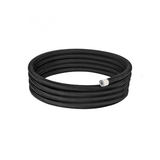
The EVIL ENERGY 10AN PTFE fuel line is a -10 AN braided hose built for fuel systems that have outgrown rubber line: high-flow E85 feeds, turbo and supercharged EFI builds, LS swaps and big carbureted engines. A 1/2" ID PTFE liner carries the fuel, a stainless steel wire mesh holds it at 2000 PSI working pressure, and a black nylon braid keeps the outside clean and quiet in the engine bay. Pick 10 FT for a front-mounted pump or a single feed run, or 20 FT for a full tank-to-rail feed plus return.
Wide Application Range
This PTFE fuel line can be used as a fuel injection hose, boost line, carb fuel line, LS engine swap fuel line, fuel return line, vapor return line, fuel supply line and more.
Applicable Medium
All automotive fuels, lubricants and coolants, including gasoline, E85, ethanol blends, methanol and diesel.
Installation Notice
PTFE hose is relatively stiff. It can't be bent tighter than its 4.5" minimum bending radius and must never be folded in half. Professional installation is highly recommended.
10AN PTFE Fuel Line Hose for E85 and High-Flow Fuel Systems

Ethanol fuels attack ordinary rubber hose from the inside, and big-horsepower builds need more volume than a -6 or -8 line can move. This 10AN nylon braided PTFE hose solves both: the PTFE-lined fuel line is unaffected by E85, and the 1/2" bore gives an E85 feed line enough room for serious fuel demand. Shown here plumbed into a fuel pressure regulator with black 10AN PTFE hose ends.

Three-Layer Construction: PTFE Liner, Steel Mesh, Nylon Braid
The white PTFE inner tube resists fuels, oils and chemicals and keeps gasoline odor from permeating into the garage. Around it, a stainless steel wire mesh reinforces the -10 AN fuel hose to a 2000 PSI working pressure and 6000 PSI burst pressure. The outer nylon braid protects the hose where it rubs against the engine, frame or other parts, and won't scratch paint the way bare stainless braid can. The rated temperature range of -76°F to 446°F covers routing near the block, turbo plumbing and winter cold starts.

Use 10AN PTFE Hose Ends: Straight, 45° and 90°
A PTFE liner is too hard to grip with push-lock or rubber-hose AN ends, so this braided PTFE fuel line seals with PTFE hose end fittings that clamp the liner between a ferrule (olive) and the fitting nipple. Plan each run with 10AN PTFE hose end fittings in straight, 45° and 90° angles; using elbows at the pump, filter and regulator keeps the hose itself out of tight bends. Assemble with an AN wrench so the anodized fittings don't get chewed up.

Cutting a PTFE Fuel Line Without Leaks
PTFE hose can go slightly oval after cutting. Before installing the hose end, push a round mandrel tool into the cut end to restore the liner to a true circle, so the ferrule seats evenly all the way around. Wrap the cut point with tape, cut square with a fine-tooth blade or hose cutter, trim stray braid wires, then deburr. A round, clean liner end is the difference between a dry joint and a slow E85 weep.

Where a 10AN Braided PTFE Fuel Hose Fits
This high-pressure, high-temperature PTFE fuel hose works as a regulator feed, fuel rail supply, return line or vapor line, and also as an oil or boost reference line. Common builds include E85 conversions, twin-pump and surge tank systems, LS swap fuel systems and big-block carb setups. Put an inline fuel filter with 10AN adapters ahead of the rail, and run the return to a matching fuel pressure regulator.
10 FT or 20 FT: How Much 10AN PTFE Hose Do You Need?
Measure along the real routing path, not straight-line distance, and add about 10% for bends and trimming. A front-mounted pump or surge tank feeding the rail usually needs one 10 FT length. A rear-tank car or truck running a 10AN feed from the tank to the engine bay generally needs 20 FT, and a feed plus a full-length return can need more than one roll. Secure every run away from exhaust and moving parts with hose separators and clamps.
10AN PTFE FUEL LINE
10 FT / 3.05 m
Usable routing length after the 10% allowance: about 9 FT
Best for
• Front-mounted pump or surge tank to fuel rail
• Regulator to rail and short return runs
• Engine-bay replumbing on an LS swap
• Carburetor feed from a mid-mounted pump
Typical layout
One continuous engine-bay run, or several short sections joined by 10AN PTFE hose ends.
10AN PTFE FUEL LINE
20 FT / 6.10 m
Usable routing length after the 10% allowance: about 18 FT
Best for
• Rear tank or fuel cell to the engine bay
• Full-length 10AN E85 feed under a car or truck
• Feed line plus short engine-bay return
• Builds that need spare hose for future changes
Typical layout
One continuous chassis-length run with no mid-span joints, leaving offcuts for the engine-bay connections.
Quick sizing formula
Measured route length × 1.1 = hose to order
Up to about 9 FT of routing → 10 FT • Up to about 18 FT → 20 FT • Feed plus a full-length return → add both runs together, then order enough 20 FT lengths to cover the total
Moderate
Estimated Time: 0.5-1 hour
Tools Required
- AN wrench set
- Bench vise
- Hose cutter or fine-tooth hacksaw
- Deburring tool
- Marker
- Assembly lubricant
- Safety glasses
- Fuel-resistant gloves
Pre-Installation Checklist
- Confirm whether the supplied hose is CPE, PTFE, or antistatic PTFE and use the matching assembly method.
- Plan the routing path away from exhaust heat, moving parts, sharp edges, and abrasion points.
- Confirm the correct hose ends and AN fittings are available.
- Wear safety glasses and fuel-resistant gloves and work away from ignition sources.
Installation Steps
- Measure the hose along the intended routing path and allow enough length for bends without kinks or tension.
- Wrap the cutting area with tape, make a square cut, then deburr and clean the hose end.
- For CPE hose, secure the socket in a vise, thread the hose into it until snug, leave a 1-1.5 mm gap, and mark the hose position.
- For PTFE hose, slide on the socket, flare back the outer braid, seat the ferrule fully on the PTFE liner with no gap, and push the assembly onto the nipple.
- Apply assembly lubricant to the fitting threads, hold the socket securely, and tighten the fitting body until fully seated.
- Clean and pressure-test the completed hose assembly before installing it.
- Install the hose according to the system flow diagram and secure it away from heat, sharp edges, and moving parts.
Post-Installation Verification
- Verify all hose ends are fully seated and fittings are secure without overtightening.
- Confirm no hose is kinked, twisted, under tension, or exposed to abrasion or excessive heat.
- Pressure-test the assembly and inspect every connection for leaks before starting the engine.
- Reinspect after the road test and after 50-100 km.
Troubleshooting
- Fuel leak: turn the ignition OFF immediately and replace damaged hose or fittings before operation.
- Restricted flow or low pressure: inspect for kinks, incorrect routing, debris, or an incomplete hose-end assembly.
- Air entering the system or fluctuating pressure: check all hose ends and fittings for loose connections or leaks.
Maintenance
- Inspect hose routing, abrasion protection, and fittings periodically.
- Replace any hose that is damaged, leaking, kinked, or heat-affected before operating the vehicle.
Brand Summary
| Policy | Details |
|---|---|
| Cancellation Policy | Orders can be canceled within 48 hours of placement. Refund processed in 3-5 business days. |
| Returns Policy | Returns accepted within 180 days. Full refund within 90 days; 15% fee for 90-180 days. |
| Non-Returnable Items | Only regular-priced items are eligible for refunds; sale items are non-refundable. |
| Refund Processing | If no refund received, check your bank/credit card. For ongoing issues, contact support@ievilenergy.com. |
Return Reasons
- Quality Issues: Provide photos/videos; we cover return shipping.
- Wrong Item Ordered: Buyer covers return shipping; email within 30 days.
- Change of Mind: Buyer covers return shipping; email within 30 days.
- Shipping Damage: Inspect packages; do not sign for damaged items.
- Incorrect Item Shipped: Contact within 7 days.
Price Protection Policy
Effective from August 25, 2024. Price drops within 7 days of purchase can be claimed.
Disclaimer
EVIL ENERGY reserves the right to interpret, modify, or terminate this policy in accordance with applicable laws and regulations.
If you need further information or assistance, feel free to ask!
Product Videos
No Amazon reviews available for this product.
RELATED PRODUCTS
Example product title
- $38.99
- $38.99
- Unit price
- per
Example product title
- $38.99
- $38.99
- Unit price
- per
Example product title
- $38.99
- $38.99
- Unit price
- per
Example product title
- $38.99
- $38.99
- Unit price
- per
Example product title
- $38.99
- $38.99
- Unit price
- per
Example product title
- $38.99
- $38.99
- Unit price
- per
RECENTLY VIEWED PRODUCTS
- Choosing a selection results in a full page refresh.