Q: What does an electric exhaust cutout do?
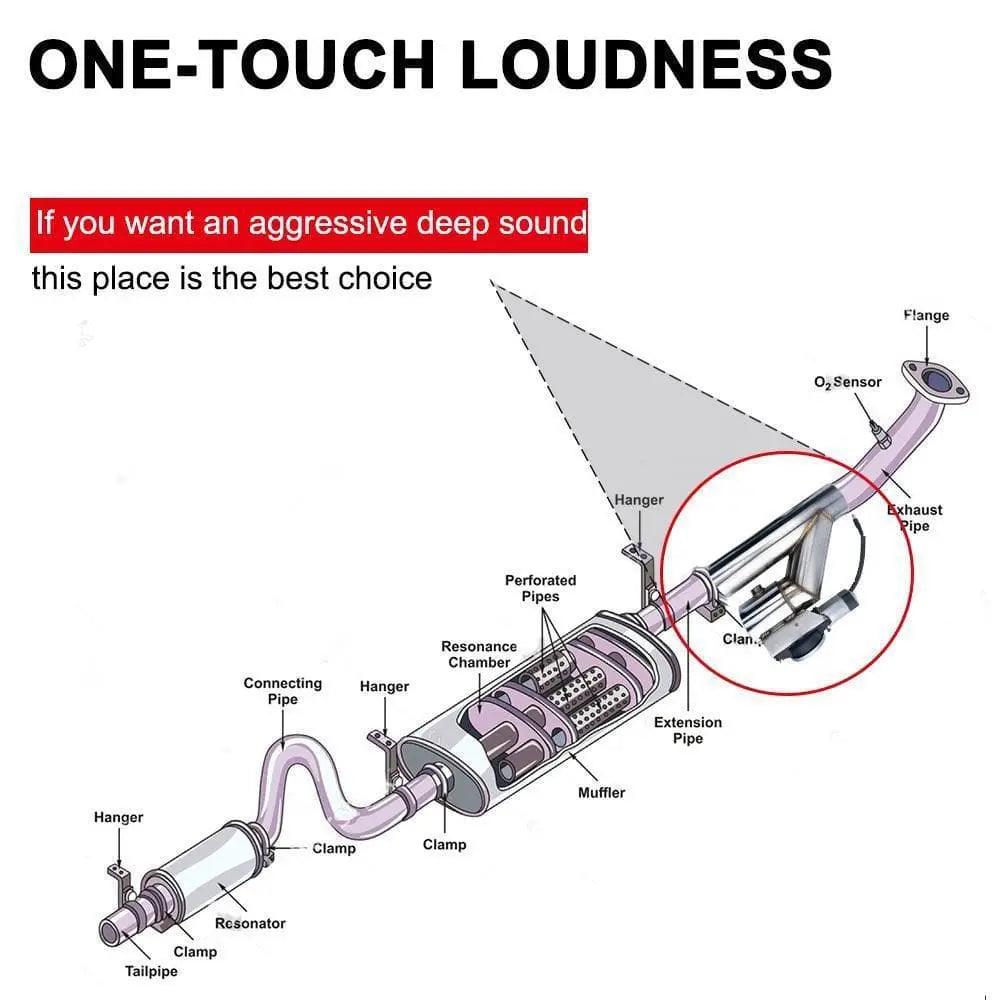
A: An electric exhaust cutout uses a 12V motor to open or close an alternate exhaust path. When open, it produces a deeper, more aggressive exhaust sound. When closed, exhaust continues through the vehicle’s normal exhaust system. Sound and performance results vary by vehicle and exhaust configuration.
Q: Is this electric exhaust cutout kit designed for a dual exhaust system?
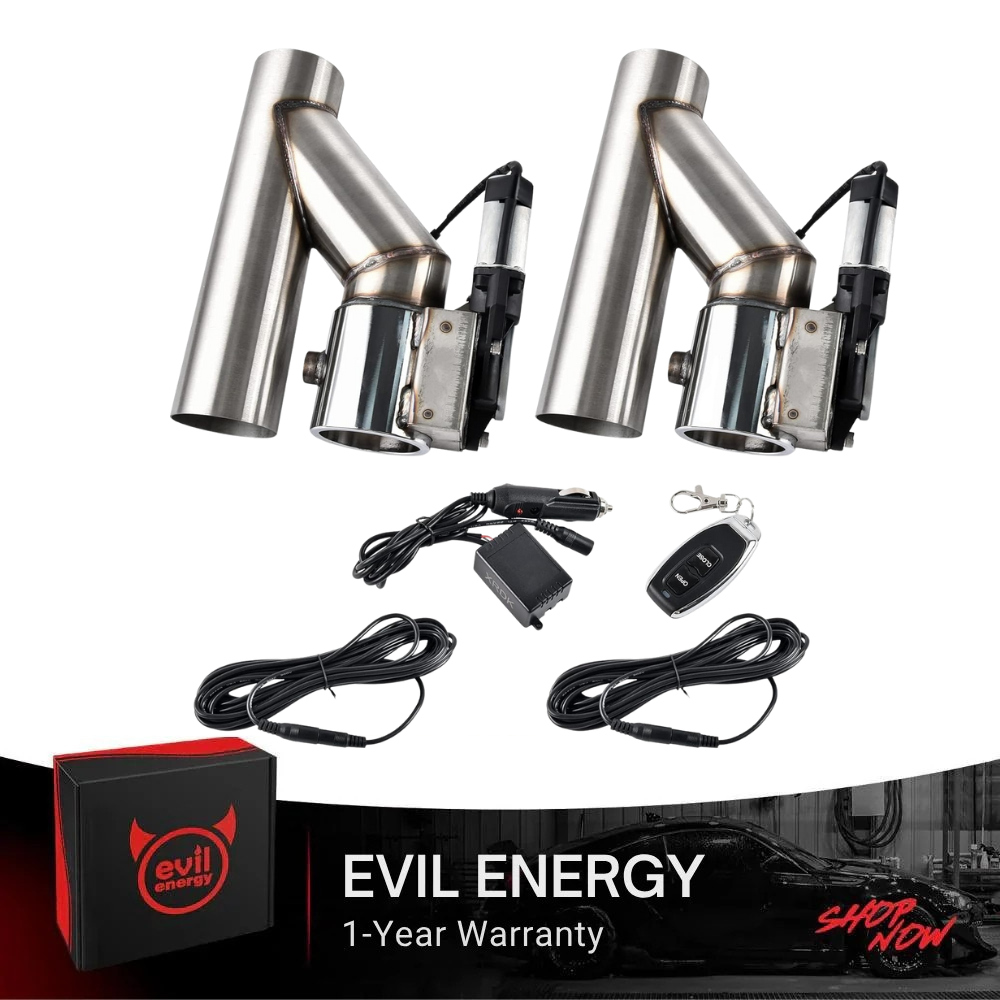
A: Yes. This dual kit uses two electric cutout pipes with motors. Both valves can be operated using one remote key fob through the included splitter cable.
Q: What is included in the dual electric exhaust cutout kit?
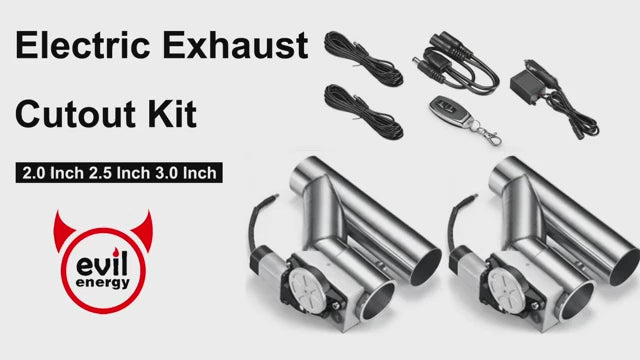
This dual electric exhaust cutout kit includes two E-pipes with motors, one remote key fob, two wiring harnesses, and one splitter cable. Check the selected size and current package details before ordering.
Q: Which EVIL ENERGY Electric Exhaust Cutout Size Should I Choose: 2.0, 2.5, or 3.0 Inches?
A: Electric Exhaust cutout size is the outside diameter of the exhaust tube, not the exhaust-tip diameter. EVIL ENERGY offers 2.0-inch, 2.5-inch, and 3.0-inch valves. Each valve belongs with the matching 2.0-inch, 2.5-inch, or 3.0-inch pipe. Engine displacement and vehicle model do not determine cutout diameter.
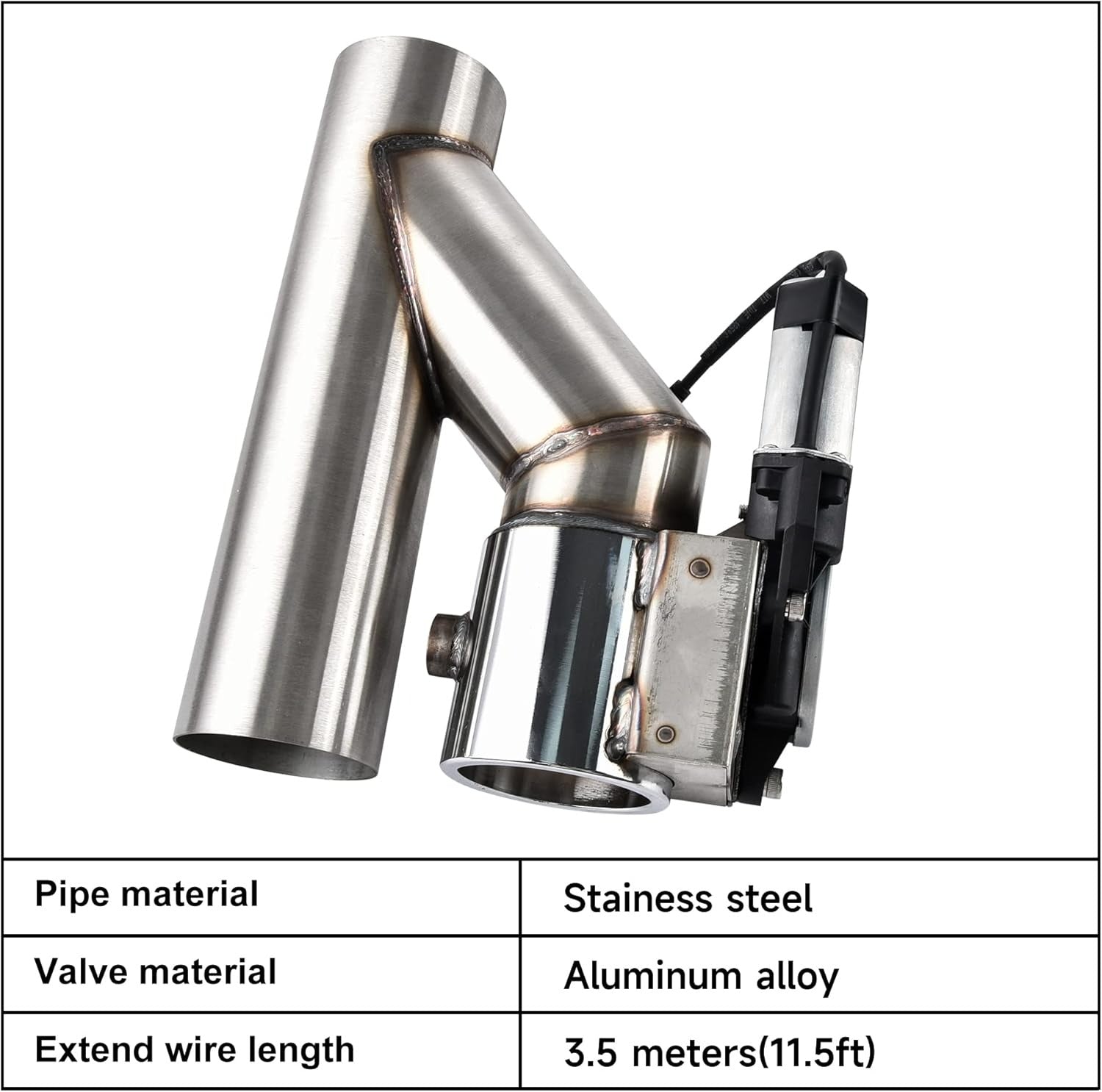
Confirm 9.76 inches of straight length, motor clearance, and ground clearance. The 12V system supplies 3.5 meters (11.5 feet) of extension wire. The valve is aluminum alloy; the E-pipe is 304 stainless steel. Professional exhaust-shop measurement is recommended when limited access prevents accuracy.
Q: Will the EVIL ENERGY Dual Electric Exhaust Cutout Kit Fit a Car or Motorcycle?
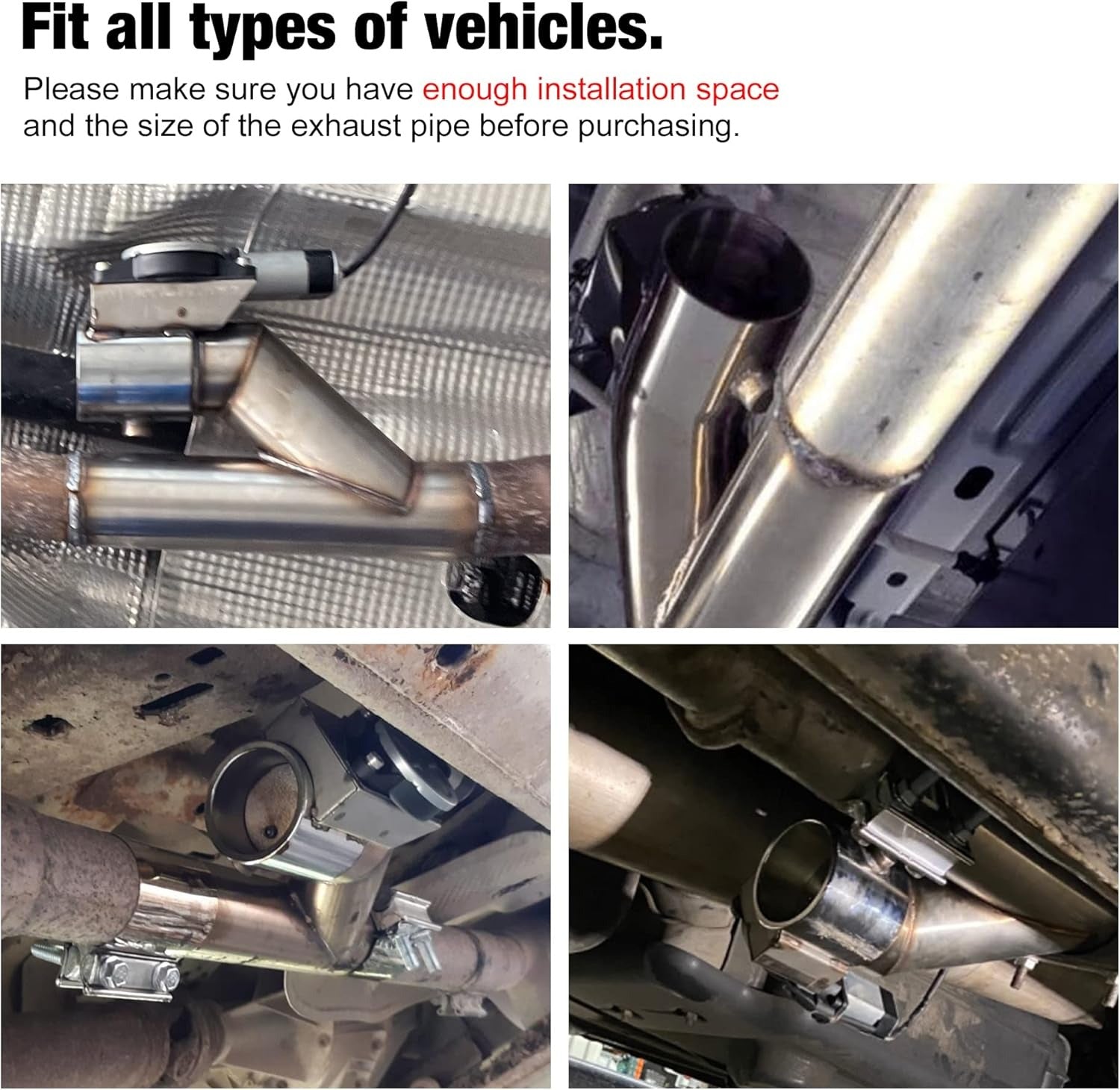
The EVIL ENERGY Dual Electric Exhaust Cutout Kit is a universal-size exhaust component, not a vehicle-specific bolt-on kit. Verified installation requires a 2.0-inch, 2.5-inch, or 3.0-inch exhaust outside diameter, a 12V power source, approximately 9.76 inches of straight pipe per side, adequate motor clearance, adequate ground clearance, and safe harness routing.
The dual kit belongs to dual-exhaust layouts and includes two E-pipes, two wiring harnesses, one remote key fob, and one splitter cable. Motorcycle installation may work only when pipe diameter, 12V power, straight length, and ground clearance satisfy the same requirements; many motorcycles have smaller pipes and tighter clearance than passenger cars.A qualified exhaust shop should verify placement after catalytic converters and downstream of oxygen sensors. The installation manual prohibits placement before catalytic converters or upstream of oxygen sensors. Local emissions and noise regulations require confirmation before road use.
Q: How is the electric exhaust cutout installed?
A: The cutout replaces approximately 9.76 inches of straight exhaust pipe. The manual recommends installing it at least 18 inches from the collectors, never before the catalytic converters, and never upstream of oxygen sensors. Professional installation by an exhaust shop is strongly recommended.
Q: Does an Electric Exhaust Cutout Make a Vehicle Louder or Increase Horsepower?
A: Yes. Opening an electric exhaust cutout typically makes a vehicle noticeably louder because some of the exhaust gases bypass the muffled exhaust system. However, it does not guarantee an increase in horsepower.
In one back-to-back chassis-dyno test, opening a similar electric cutout increased rear-wheel horsepower from 291 to 297 hp and torque from 309 to 318 lb-ft without any tuning changes. Actual results depend on the engine, tuning, cutout location, pipe diameter, and how restrictive the original exhaust system is. Unless your specific vehicle has been dyno-tested, consider an electric exhaust cutout primarily a sound-control upgrade—not a modification that guarantees additional horsepower.
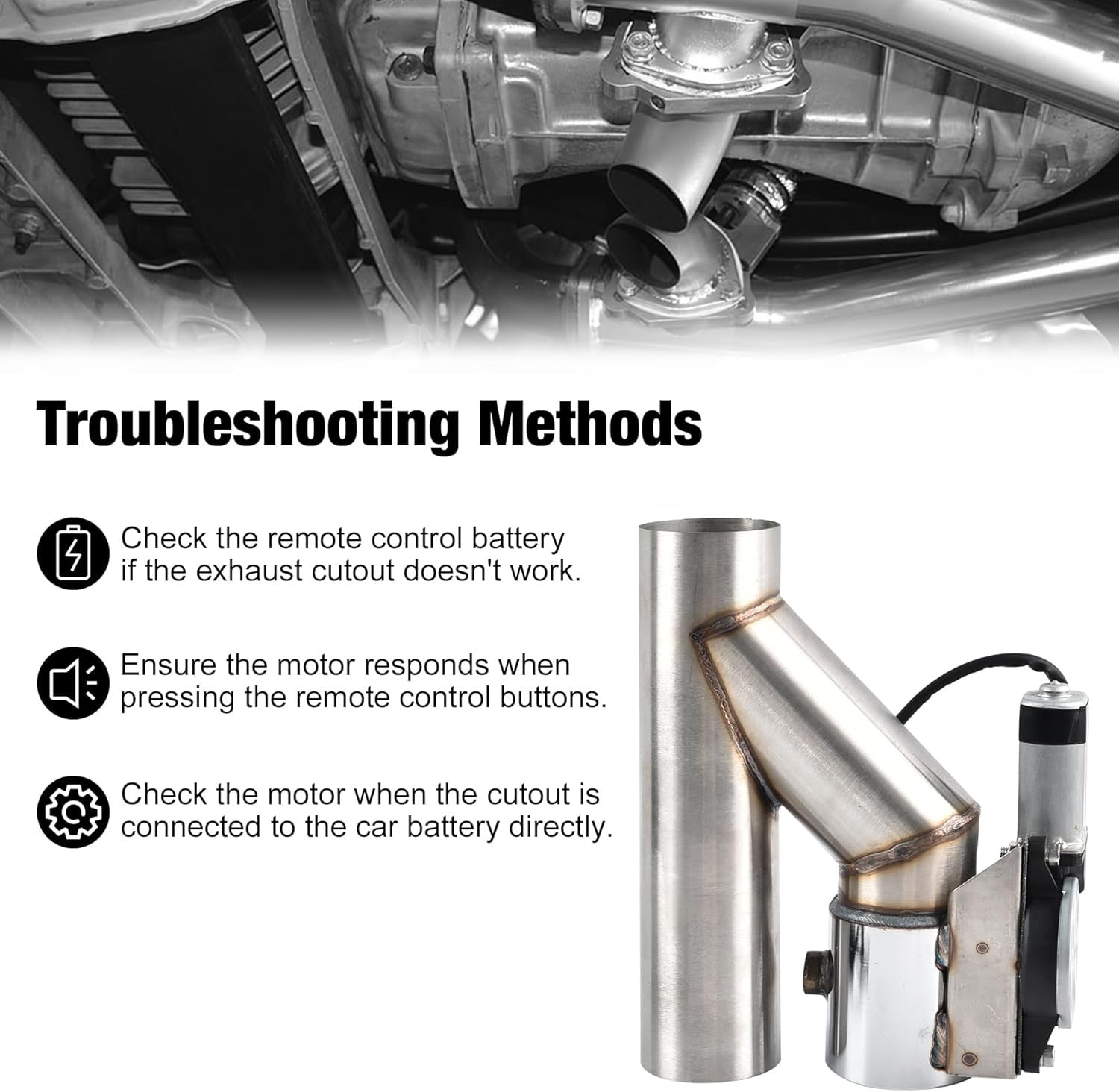
Q: What Should I Check When the Remote Key Fob or Electric Exhaust Cutout Motor Stops Working?
A: An electric exhaust cutout fault belongs to five diagnostic categories: power, remote control, wiring, motor, or valve movement. The EVIL ENERGY dual kit contains 1 remote key fob, 1 splitter cable, 2 wiring harnesses, 2 motors, and a 12V connection.
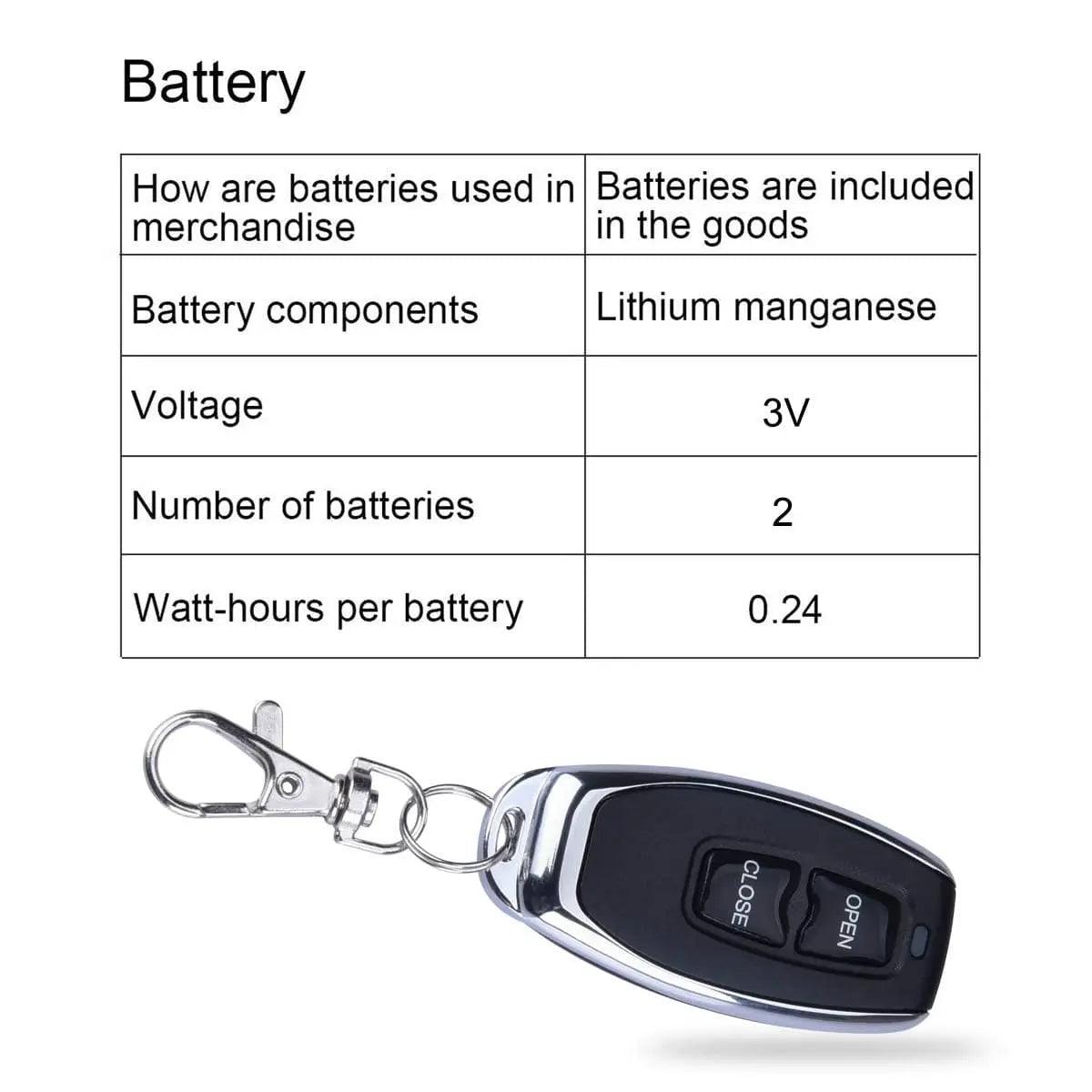
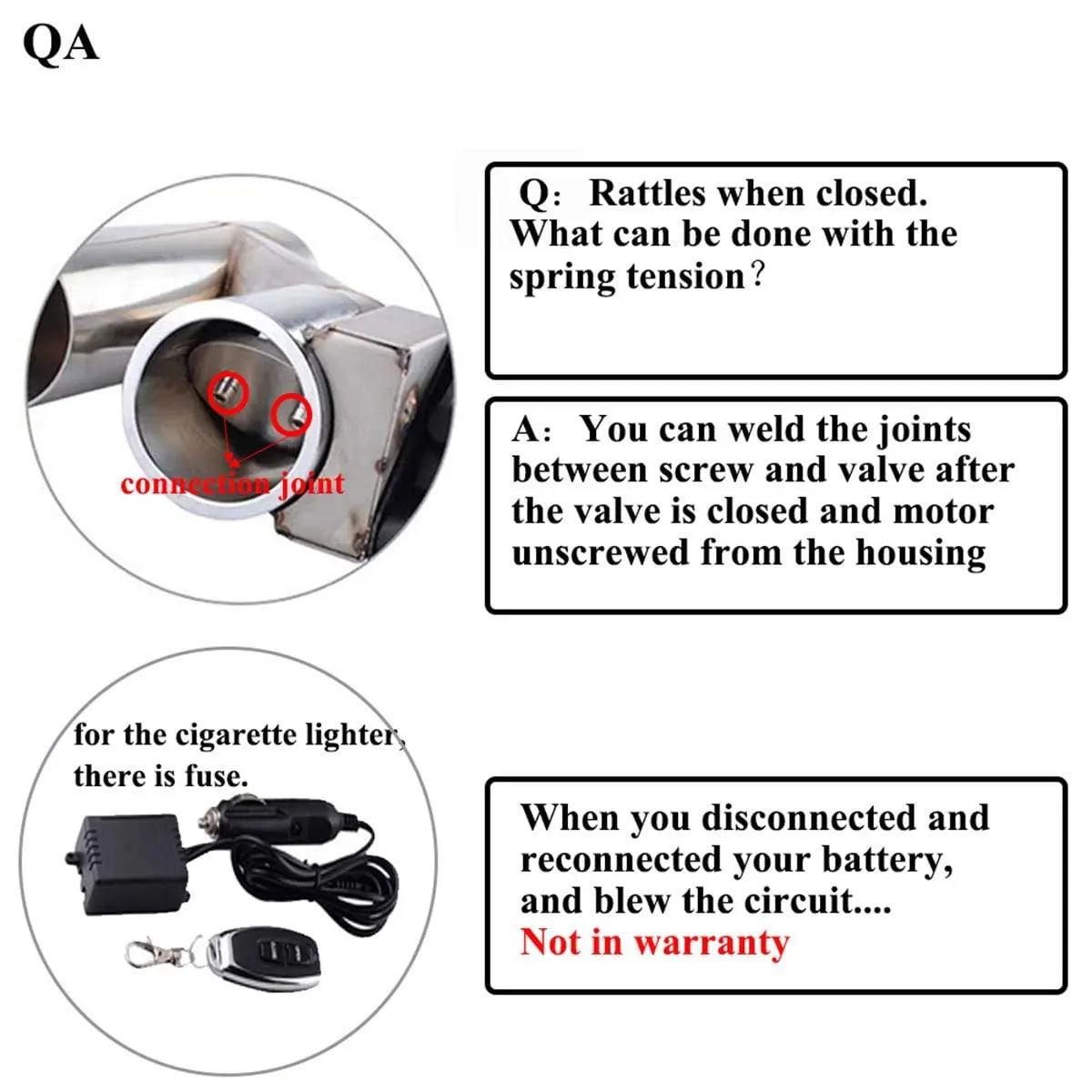
Disconnect the vehicle battery before electrical service. Replace the remote-keyfob battery when the signal is absent or intermittent. Verify 12V at the power connector and inspect the fuse.
A two-valve failure is a shared-circuit fault; a one-valve failure is a branch-circuit fault. Inspect the shared supply, remote key fob, fuse, and splitter for a shared-circuit fault. Inspect the corresponding harness, motor, and valve for a branch-circuit fault.
Motor sound without valve travel is a mechanical fault; silence with verified 12V is an electrical or motor fault. Inspect the 3.5-meter (11.5-foot) extension wire for heat damage, chafing, loose connectors, exhaust-pipe contact, or driveshaft contact.
Release the control at the fully open or fully closed position; continued actuation can overload the motor or blow the fuse. Avoid heavy rain and extremely cold operation. A qualified exhaust shop should inspect persistent faults.


![[2.5 inch]](http://www.ievilenergy.com/cdn/shop/files/2_71EUf6QQOuL._AC_SL1500.jpg?v=1765346723)
![[2.0 inch]](http://www.ievilenergy.com/cdn/shop/files/6_71RdiXJCBQL._AC_SL1500.jpg?v=1765346723)
![[3.0 inch]](http://www.ievilenergy.com/cdn/shop/files/7_71Hffg7sk-L._AC_SL1500.jpg?v=1765346723)