![[20FT] EVIL ENERGY PTFE Fuel Line Kit, complete black hose & fittings set, 180-day return](http://www.ievilenergy.com/cdn/shop/files/Test-2025-Evilenergy-125598065_940x.png?v=1742144807)
![[16FT] EVIL ENERGY PTFE Fuel Line Kit, black braided hose, fittings, free shipping & return](http://www.ievilenergy.com/cdn/shop/files/Test-2025-Evilenergy-125598171_940x.png?v=1742144807)
![CPE Fuel Line[25FT]](http://www.ievilenergy.com/cdn/shop/files/25FTCPE_FuelLine_940x.png?v=1735220649)
![CPE Fuel Line[20FT]](http://www.ievilenergy.com/cdn/shop/files/20FTCPE_FuelLine_940x.png?v=1735220649)





How to Build and Choose the Best Off-Road Fuel Cell

🎁 A Personal Gift For My Readers
To support your project, I've secured an exclusive 8% OFF for you.
Simply paste the code at checkout.
💡 Use the savings to grab your extra fittings, oil lines, or connectors for free!
Have you ever felt your engine sputter or 'cough' just as you’re conquering a steep dune or bouncing through a rock crawl? It’s a frustrating moment that usually isn’t a mechanical failure—it’s your factory tank failing to handle fuel slosh. When hitting the trails or pushing your vehicle in extreme conditions, a standard tank often falls short of delivering a reliable fuel supply.
To ensure peak engine performance and driver protection, an off-road fuel cell is an essential upgrade. This guide explains why a baffled fuel cell outperforms standard tanks, how to execute a custom off-road fuel system build, and how to maintain your setup for long-term reliability.
Why is an Off-Road Fuel Cell Essential for Extreme Terrain?
Factory fuel tanks prioritize cost and everyday road use over rugged reliability. In rough environments, they are prone to fuel starvation—a condition where the fuel pump sucks in air instead of liquid fuel due to extreme vehicle angles or high-speed vibrations.
Unlike stock units, an off-road fuel cell is specially designed to maintain consistent fuel delivery during desert racing or UTV trail riding. The primary advantage of a baffled fuel cell lies in its internal construction, which uses foam or walls to control fuel slosh.
Beyond performance, aluminum fuel tank safety is a major factor. These cells feature crash-resistant bladders and sturdier outer shells, drastically reducing the risk of leaks or explosions during a rollover. For many professional racing bodies, a certified off-road fuel cell is not just an upgrade; it’s a mandatory safety requirement.
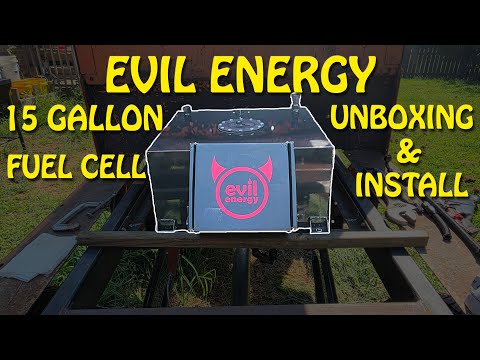
Pro Tip: For match race, drift, or street applications, the EVIL ENERGY 5/10/15 Gallon Fuel Cell Tank Kit offers an upgraded aluminum design with universal fittings, making it a 'plug-and-play' foundation for your custom off-road fuel system build.

What are the Essential Components of a Performance Off-Road Fuel Cell?
Building a reliable custom off-road fuel system requires understanding how each part fights fuel starvation.
- Safety Bladder: A flexible, durable liner (often FIA-FT3 or SFI 28.1 certified) that holds the fuel and resists punctures.
- Aluminum Container: The outer shell provides aluminum fuel tank safety, offering high strength-to-weight ratios and mounting points.
- Baffle Walls & Foam: These internal components are the heart of a baffled fuel cell, compartmentalizing fuel to stop it from rushing away from the pickup during hard turns.
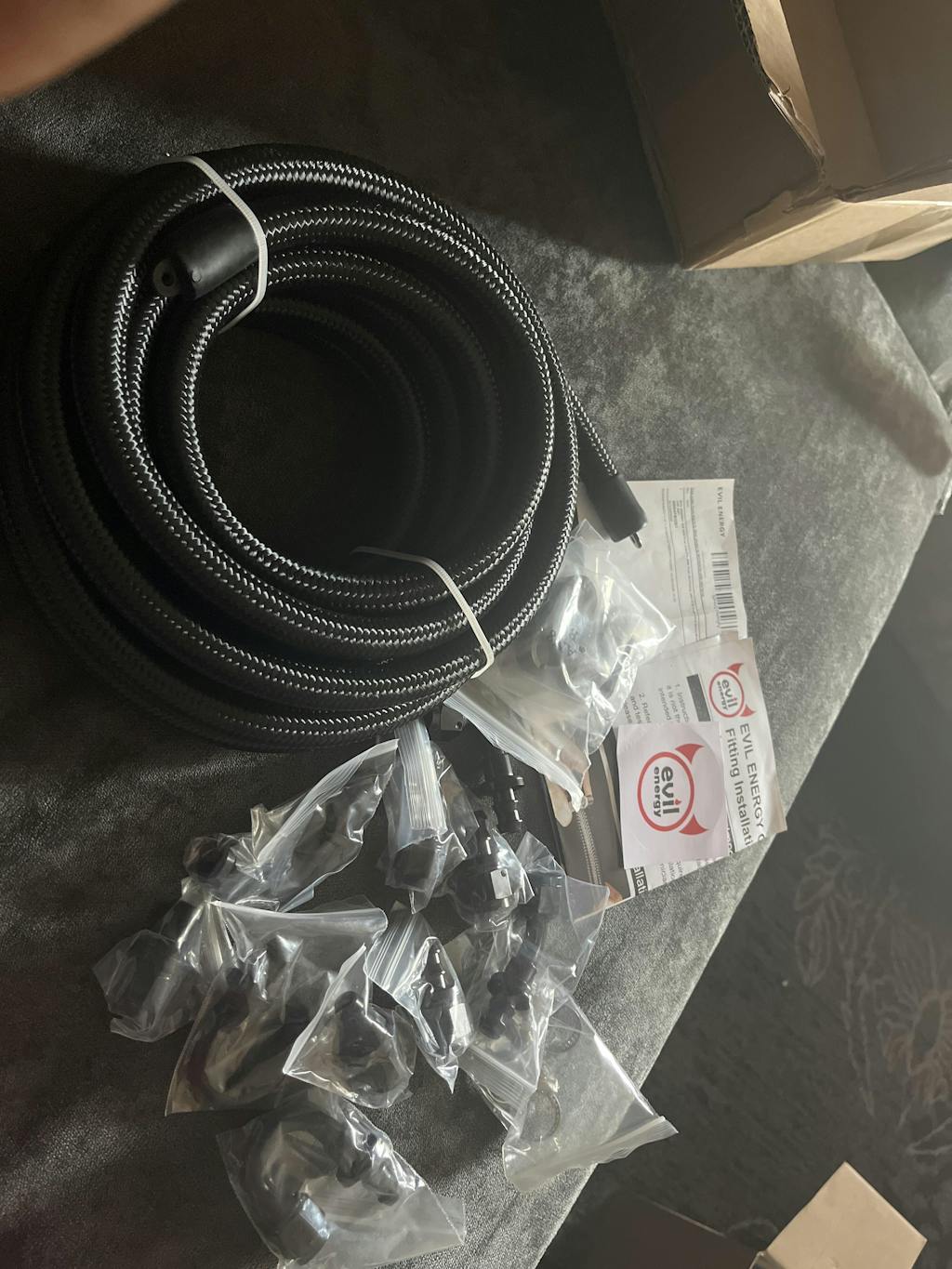
- PTFE Fuel Line Kit: High-pressure lines with a PTFE inner core and nylon braided exterior ensure your system is compatible with gasoline, E85, and diesel without permeation (gas smell).
- Fuel Pumps & Filters: Often set up in redundant pairs to ensure the engine never starves, protected by high-micron inline filters.
The choice of materials impacts system endurance. Aluminum tanks resist corrosion and weigh less than steel, while the bladder material must endure chemical exposure and impacts. These components collectively maintain stable fuel flow and consistent pressure, preventing performance loss during high-demand off-road riding.

Understanding Fuel Slosh and Baffle Walls
Fuel slosh is the movement of fuel inside the tank, especially problematic during sudden acceleration, braking, or uneven terrain. In off-road racing, fuel slosh can cause momentary fuel starvation, leading to engine hesitation or failure. The risk is further increased when fuel is low or the vehicle is operating at extreme tilt angles.
Baffle walls and foam baffling inside an off-road fuel cell control fuel slosh by compartmentalizing the fuel volume. They slow the movement of fuel, providing a steady supply to the fuel pump pickup regardless of vehicle motion. Without a proper baffled fuel cell, fuel pumps may intermittently draw air, harming engine performance and potentially damaging internal components.
In practical terms, a high-quality baffled fuel cell features several internal walls or specialized foam shapes that absorb motion. Visual aids, such as exploded views of baffled tanks, can clarify these functions to newcomers planning a custom off-road fuel system build.
Fuel Cell Safety Features and Certifications
Safety is paramount when dealing with fuel delivery, especially off-road where crashes are more frequent. To ensure aluminum fuel tank safety, modern fuel cells employ reinforced containers and certified bladders to withstand impacts.
Certified bladders complying with FIA-FT3 or SFI 28.1 standards undergo rigorous testing for puncture resistance and fire retardancy. Additional features include:
- Vent Valves: Prevent over-pressurization.
- Rollover Valves: Stop fuel escape if the vehicle flips.
- Discriminator Valves: Maintain correct fuel pressure and venting.
Factory fuel tanks often lack this comprehensive engineering, failing in severe crashes due to rigid designs. Using certified off-road fuel cell components methodically addresses these failures while enhancing driver confidence.
How to Build a Custom Off-Road Fuel Cell System
If you’re ready to upgrade, follow this logic to ensure your custom off-road fuel system build is future-proof:
- Step 1: Size and Capacity. Balance your range needs with weight. A larger off-road fuel cell extends your trail time but can affect vehicle balance.
- Step 2: Plumb with Precision. Use a dedicated PTFE fuel line kit with stainless steel reinforcement. PTFE is the 'gold standard' for aluminum fuel tank safety because it prevents fuel vapors from leaking into the garage or cabin.
- Step 3: Redundant Fuel Delivery. Consider a dual-pump setup. If one pump fails in the middle of the desert, the second pump ensures you aren't stranded.
- Step 4: Secure Mounting. Use custom trays with vibration isolation. Off-road racing is brutal on hardware; a loose off-road fuel cell is a major fire hazard.
For detailed fabrication and installation guidance, including welding and wiring tips, consult expert resources such as Build and Install a Demolition Derby Car Fuel Tank.
How to Maintain and Troubleshoot Your Off-Road Fuel Cell
A high-performance off-road fuel cell is the heart of your vehicle's endurance. To ensure your custom off-road fuel system build remains reliable under brutal racing conditions, routine inspection and proactive maintenance are non-negotiable. Even a minor leak or a loose fitting can lead to catastrophic failure in the middle of a trail.
1. Routine Inspection Checklist
- Bladder Integrity: Regularly check the internal bladder for signs of cracking, drying, or brittleness. A compromised bladder is a major risk to aluminum fuel tank safety.
- Fitting Tightness: Off-road vibrations are relentless. Ensure all connections on your baffled fuel cell are torqued correctly to prevent pressure drops.
- Hose Abrasion: Inspect your PTFE fuel line kit for any signs of rubbing against the chassis or heat damage. Replace any compromised lines immediately to avoid fire hazards.
2. Identifying Common Issues and Symptoms
Most performance problems in a custom off-road fuel system build manifest as fuel starvation. If you experience engine hesitation or erratic fuel pressure readings, investigate the following:
- Clogged Filters: Sediment or debris can restrict flow, leading to immediate fuel starvation during high-RPM runs.
- Pump Failure: Failing pumps or worn seals often cause a loss of prime.
- Foam Degradation: The foam inside a baffled fuel cell can deteriorate over time. If you see black particles in your fuel filters, the foam is breaking down and must be replaced to maintain proper control of fuel slosh.
3. Proactive Maintenance Tips
- Drain the Cell: Periodically drain your off-road fuel cell to prevent water or sediment buildup, which can corrode internal components.
- Foam Replacement: To effectively manage fuel slosh, plan to service or replace the internal baffling foam every 2–3 years, depending on the fuel type used (such as E85).
- Electrical Security: Keep all electrical connections for your fuel pumps clean, dry, and secure to ensure consistent delivery throughout your custom off-road fuel system build.
Comparing Off-Road Fuel Cells to Other Fuel Systems
Compared to standard factory fuel tanks, an off-road fuel cell provides superior aluminum fuel tank safety, durability, and consistent fuel delivery in harsh environments. Factory tanks often lack the internal structure of a baffled fuel cell and do not feature robust safety bladders, making them prone to dangerous fuel slosh and structural damage during impacts.
Upgrading to a custom off-road fuel system build offers critical advantages for demanding applications:
- Multi-Fuel Flexibility: By integrating a PTFE fuel line kit, these systems provide extra reliability and compatibility with various fuels, including E85 and diesel, without risk of corrosion.
- Redundant Reliability: High-end custom off-road fuel system build projects often include redundant pumps and reserve tanks. These systems help avoid fuel starvation during extreme maneuvers or sudden pump failure scenarios.
- Superior Slosh Control: Unlike stock units, a baffled fuel cell uses internal walls and foam to eliminate fuel slosh, ensuring the engine receives a steady supply of fuel regardless of vehicle tilt or vibration.
| Feature | Factory Fuel Tank | Off-Road Fuel Cell |
|---|---|---|
| Construction Material | Often plastic or thin steel | Aluminum alloy or reinforced steel with a bladder |
| Fuel Slosh Control | Minimal | Internal baffle walls and foam baffling |
| Safety Features | Basic, no certification | Certified bladders (FIA-FT3, SFI 28.1), rollover valves |
| Fuel Delivery | Single pump, limited scavenge | Redundant pumps, scavenge systems |
| Customization | Limited | Highly customizable with fittings, sizes, and accessories |
Some misconceptions involve assuming fuel cells are only for racing or expensive builds. In fact, modern fuel cell systems offer practical benefits and can be designed for any off-road enthusiast seeking better fuel system performance and safety.
Addressing Common Questions about Fuel Cells and Related Technologies
In the automotive world, the term 'fuel cell' can refer to two very different technologies. While this guide focuses on the mechanical off-road fuel cell used for liquid fuel storage, understanding the distinctions helps you focus on the right components for your custom off-road fuel system build.
1. Electrochemical Fuel Cells vs. Liquid Fuel Storage
Electrochemical fuel cells are devices that convert chemical energy into electricity. The four major types include Proton Exchange Membrane Fuel Cells (PEMFC), Solid Oxide Fuel Cells (SOFC), Molten Carbonate Fuel Cells (MCFC), and Phosphoric Acid Fuel Cells (PAFC).
PEMFCs are popular in electric propulsion but face disadvantages like high catalyst costs and sensitivity to fuel impurities. These are entirely different from the baffled fuel cell units used in racing to prevent fuel starvation. For a high-performance custom off-road fuel system build, your priority is physical liquid management to combat fuel slosh rather than chemical energy conversion.
2. Hydrogen Fuel Cells and Industry Perspectives
Regarding hydrogen fuel cells, industry influencers like Elon Musk have expressed skepticism over their efficiency and infrastructure challenges compared to battery electric vehicles. This has kept the focus of the off-road community on internal combustion engines paired with an off-road fuel cell.
By utilizing a high-quality PTFE fuel line kit and a certified baffled fuel cell, drivers can achieve superior reliability today. Awareness of these broader technologies helps off-road enthusiasts separate concepts and focus on practical, mechanical solutions that maximize aluminum fuel tank safety. Ultimately, the goal is to prevent fuel starvation during extreme maneuvers, a task that current hydrogen infrastructure is not yet rugged enough to handle in off-road environments.
Optimizing Your Off-Road Fuel Cell Setup for 2026 and Beyond
As technology advances, the off-road fuel cell of 2026 is achieving performance breakthroughs through advanced bladder materials and ultra-lightweight aluminum alloys. The integration of modern electronic control modules and high-efficiency fuel pumps now allows for smarter fuel management and real-time diagnostics.
When planning a custom off-road fuel system build, the latest industry trends favor modular tanks with quick-connect fittings and enhanced baffled fuel cell technology. These advancements are specifically designed to minimize fuel slosh during extreme traction events, ensuring your engine remains powered through every jump and turn.
1. Core Directions for Future Optimization
- Material Upgrades: Using high-temperature and corrosion-resistant stainless steel or lightweight alloys significantly enhances overall aluminum fuel tank safety.
- Compliance Planning: When executing a custom off-road fuel system build, ensure your setup meets evolving regulatory standards and race sanctioning body requirements (such as SFI/FIA) to keep your vehicle both reliable and legal.
- Integrated Plumbing: Pair your cell with a high-performance PTFE fuel line kit. The superior durability of PTFE is essential for harsh environments, eliminating fuel delivery instability caused by high temperatures or intense vibrations.
2. Building a Long-Lasting, Future-Proof System
By implementing these technical solutions, you can maintain a future-proof off-road fuel cell system optimized for safety, performance, and ease of maintenance. This setup not only effectively prevents fuel starvation but also significantly boosts your vehicle's survivability in extreme competitive racing.
If you are seeking high-performance hardware, the EVIL ENERGY Fuel Cell Gas Tank series offers complete solutions with universal fittings and customized pump kits, specifically engineered for the modern custom off-road fuel system build.

Off-Road Fuel Cells: Top 10 FAQs
Q1: What is an off-road fuel cell, and how does it differ from a stock tank?
A: An off-road fuel cell is a specialized high-performance fuel storage system. Unlike factory tanks, it focuses on aluminum fuel tank safety by using reinforced shells and internal bladders. Its primary purpose is to eliminate fuel starvation during high-speed jumps or steep crawls by keeping fuel concentrated at the pickup point.
Q2: Why should I choose a baffled fuel cell for my build?
A: A baffled fuel cell uses internal walls or foam to compartmentalize the liquid. This design is critical for controlling fuel slosh, ensuring that even when the tank is low or the vehicle is at an extreme angle, the fuel pump always has a steady supply of liquid to prevent engine hesitation.
Q3: How do I know if the foam inside my off-road fuel cell needs replacing?
A: You should inspect the foam every 6–12 months. If you notice black particles in your filters or if the foam feels brittle when squeezed, it has degraded. In a custom off-road fuel system build, especially those using E85, we recommend replacing the foam every 2–3 years to maintain optimal control over fuel slosh.
Q4: What are FIA-FT3 and SFI 28.1 safety certifications?
A: These are racing safety standards. An off-road fuel cell with FIA-FT3 or SFI 28.1 certification has passed rigorous drop, puncture, and fire-retardant tests. While mandatory for professional racing, they are highly recommended for any enthusiast prioritizing aluminum fuel tank safety.
Q5: Why is a PTFE fuel line kit recommended for fuel cell installations?
A: A PTFE fuel line kit is the gold standard for durability. Standard rubber hoses can degrade and leak 'gas smells' due to ethanol in modern fuels. For a long-lasting custom off-road fuel system build, PTFE lines offer superior chemical resistance and high-pressure ratings.
Q6: What is the role of a rollover valve in a fuel cell system?
A: A rollover valve is a vital safety component. In the event of a flip, a gravity-weighted ball seals the vent, preventing fuel from escaping. This feature is a massive upgrade for aluminum fuel tank safety compared to unprotected factory vent lines.
Q7: Can I run E85 or alcohol-based fuels in my off-road fuel cell?
A: Yes, provided your bladder and foam are alcohol-compatible. You must also pair the setup with a PTFE fuel line kit, as alcohol fuels quickly corrode traditional rubber hoses and can lead to mid-race fuel starvation.
Q8: Where is the safest place to mount a fuel cell in an off-road vehicle?
A: For a balanced custom off-road fuel system build, mount the cell within the frame rails, ideally above the rear axle or centered. Ensure it is shielded from heat sources like exhaust and separated from the cabin by a firewall to maximize aluminum fuel tank safety.
Q9: How can I stop fuel starvation when climbing steep inclines?
A: Besides using a baffled fuel cell, you can install a surge tank or a multi-pickup scavenge system. This ensures that no matter the vehicle's tilt, at least one pickup is submerged in fuel, preventing the pump from sucking air.
Q10: Are universal kits like the EVIL ENERGY Fuel Cell Gas Tank right for my vehicle?
A: Yes. The EVIL ENERGY Fuel Cell Gas Tank series is designed with universal fitment in mind. They offer various capacities (5/10/15 Gallon) and modular pump kits, making them the perfect foundation for any custom off-road fuel system build.