![[20FT] EVIL ENERGY PTFE Fuel Line Kit, complete black hose & fittings set, 180-day return](http://www.ievilenergy.com/cdn/shop/files/Test-2025-Evilenergy-125598065_940x.png?v=1742144807)
![[16FT] EVIL ENERGY PTFE Fuel Line Kit, black braided hose, fittings, free shipping & return](http://www.ievilenergy.com/cdn/shop/files/Test-2025-Evilenergy-125598171_940x.png?v=1742144807)
![CPE Fuel Line[25FT]](http://www.ievilenergy.com/cdn/shop/files/25FTCPE_FuelLine_940x.png?v=1735220649)
![CPE Fuel Line[20FT]](http://www.ievilenergy.com/cdn/shop/files/20FTCPE_FuelLine_940x.png?v=1735220649)





What is a PTFE Fuel Line? From Material Properties to Industrial Applications

🎁 A Personal Gift For My Readers
To support your project, I've secured an exclusive 8% OFF for you.
Simply paste the code at checkout.
💡 Use the savings to grab your extra fittings, oil lines, or connectors for free!
A PTFE fuel line kit (also known as a Teflon fuel line) is a high-performance Braided Fuel Line system designed for modern Fuel Injection and E85 fuel line applications. Unlike rubber hoses, it offers superior Corrosion Resistance, zero permeation, and a wide temperature range (-60°C to +260°C). This guide analyzes the chemical structure, pressure ratings (up to 2500+ PSI), and industrial advantages of PTFE in automotive and aerospace systems.
What is a PTFE Fuel Line?
A PTFE fuel line, commonly referred to as a Teflon fuel line, is a high-performance fluid transfer solution utilizing Polytetrafluoroethylene as the inner core. Unlike standard rubber hoses, a PTFE fuel line kit is engineered to withstand the aggressive nature of modern synthetic fuels and extreme pressure environments.
The Chemical Essence of PTFE
The secret to PTFE lies in its Carbon-Fluorine (C-F) bonds, which are among the strongest single bonds in chemistry. This structure provides unparalleled Corrosion Resistance, earning it the nickname 'The King of Plastics.' Its low friction coefficient and chemical inertness ensure that it does not degrade during high-pressure Fuel Injection cycles.
Anatomy of a Braided Fuel Line
A high-quality Braided Fuel Line typically consists of three layers:
-
Inner Core: Pure or conductive carbon-lined PTFE.
-
Reinforcement Layer: Braided Fuel Line designs use Stainless Steel (SS304/316) or high-tensile Nylon to handle immense pressure.
-
Outer Cover: Optional PVC or TPU coatings for added abrasion resistance and aesthetics.

Core Performance Advantages of PTFE Fuel Lines
Extreme Chemical and Corrosion Resistance
Because of its inherent Corrosion Resistance, PTFE is the definitive choice for an E85 fuel line. It is 100% immune to the corrosive effects of ethanol, methanol, and nitro-methane, which typically dry out and crack standard rubber lines.
Zero Permeation
Traditional rubber-based Braided Fuel Line options suffer from 'fuel weeping,' where fuel vapors permeate through the hose, leaving a gasoline smell in your garage. A Teflon fuel line features zero permeation, sealing in all vapors—a critical upgrade for any modern Fuel Injection system.
Massive Temperature and Pressure Range
A standard PTFE fuel line kit operates reliably from -60°C to +260°C. With working pressures often exceeding 2500 PSI, it far outperforms rubber alternatives in high-demand Fuel Injection applications.
Anti-Static Design (Conductive Liner)
In high-flow E85 fuel line systems, fuel friction can build up static electricity. Conductive Teflon fuel line options feature a carbon lining to safely discharge static to the fittings, preventing 'pinhole' leaks caused by electrical arcs.

Choosing the Right PTFE Solution for Your Project
Selecting the correct PTFE fuel line kit depends on your vehicle's horsepower and the type of fuel used. High-pressure Fuel Injection systems require precision-engineered components to ensure safety and performance.
-
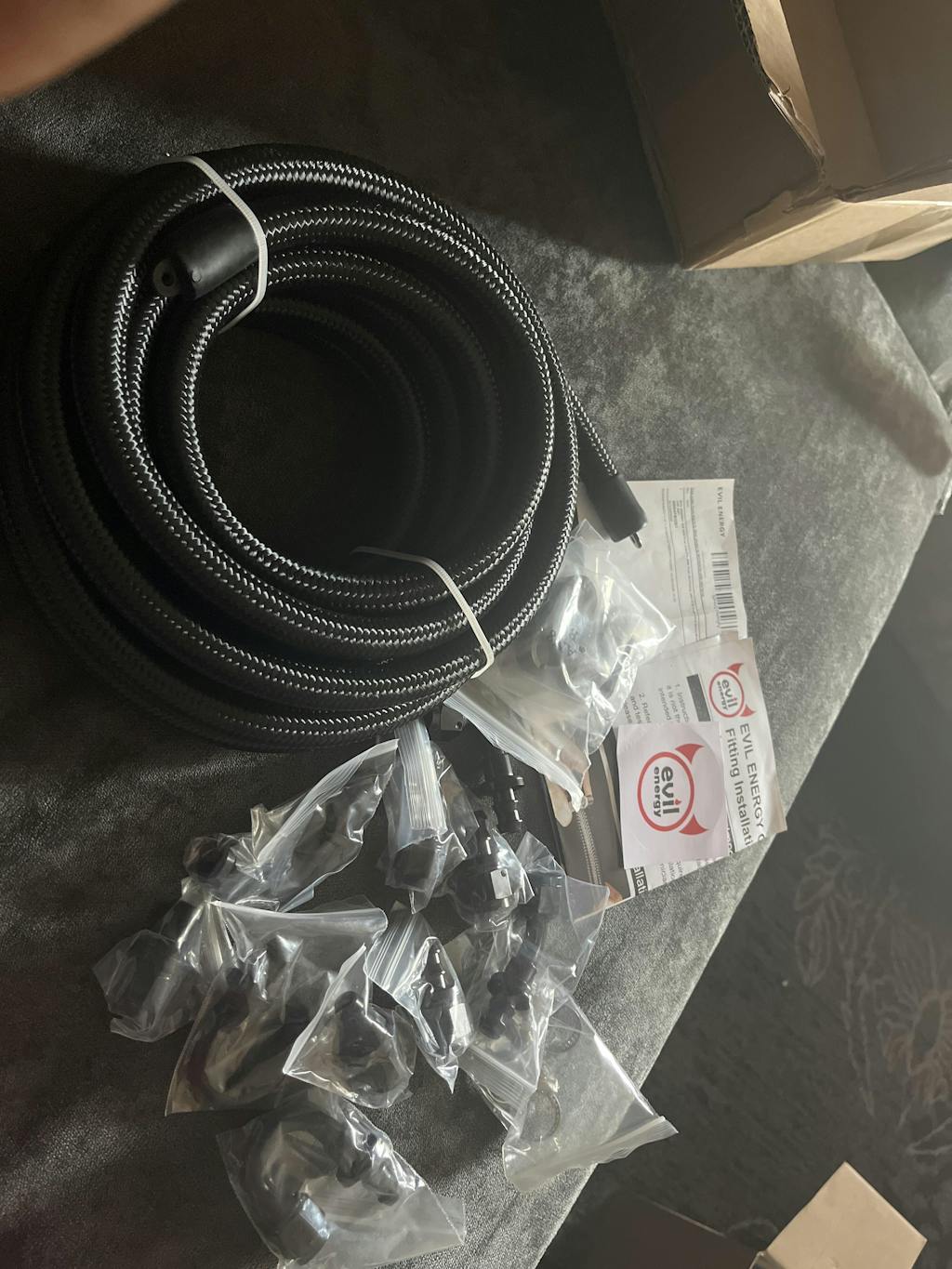
For Complete System Overhauls: If you are building a fuel system from scratch, using a comprehensive PTFE Fuel Line Kit is highly recommended. These kits include the necessary Braided Fuel Line and matching fittings designed for leak-free operation.

-
Custom Lengths & Specific Applications: For custom routing in race cars or industrial machinery, high-quality Bulk PTFE Fuel Lines provide the flexibility needed. Ensure you select a line with Corrosion Resistance ratings that exceed your fuel's chemical aggressiveness, especially for E85 or Methanol.

PTFE vs. Traditional Rubber & Nylon Hoses
Longevity: Permanent vs. Perishable
In a Fuel Injection environment, rubber hoses may need replacement every 2–3 years due to oxidation. In contrast, a PTFE fuel line kit is often a 'lifetime' component because of its superior Corrosion Resistance.
Tip: If you are running E85, Methanol, or high-ethanol fuels, we strictly recommend a PTFE fuel line kit. E85 is highly corrosive and will eventually dry out and crack Traditional Rubber & Nylon Hoses, leading to dangerous leaks and clogged injectors. However, if your project uses standard pump gasoline or diesel and requires maximum flexibility for tight routing, Traditional Rubber & Nylon Hoses offer a more cost-effective and supple solution that better fits a budget-friendly build.
Performance Comparison Table
| Feature | PTFE (Teflon fuel line) | Rubber (CPE/NBR) |
| E85 Compatibility | Excellent (No Degradation) | Poor (Hardens/Cracks) |
| Corrosion Resistance | Superior | Moderate |
| Vapor Permeation | Zero (No Smell) | High (Fuel Odor) |
| Max Pressure | Up to 2500+ PSI | Typically < 1000 PSI |
Key Industrial Applications
Automotive Performance & Aftermarket
For enthusiasts building an E85 fuel line system, PTFE is the industry gold standard. Its Corrosion Resistance ensures reliability in turbocharged and high-horsepower Fuel Injection setups where fuel stability is non-negotiable.
Aerospace and Defense
Aerospace Fuel Injection systems require absolute reliability. The lightweight nature and chemical stability of the Braided Fuel Line make PTFE indispensable for mission-critical fluid transfer.

How to Choose and Install a PTFE Fuel Line Kit
Selecting the Right AN Size
Match your Fuel Injection flow requirements to the correct AN size:
-
AN6: Most street performance cars (up to $600$ HP).
-
AN8/AN10: High-power race cars or high-volume E85 fuel line systems.
Mandatory Specialized Fittings
A Teflon fuel line cannot use standard 'push-lock' fittings. You must use specific PTFE fittings featuring an Olive or Ferrule design to compress the PTFE tube against the fitting body for a leak-proof seal.
Conclusion
In short, switching to a PTFE fuel line kit is the most effective way to ensure Corrosion Resistance in high-pressure Fuel Injection environments. When building an E85 fuel line, utilizing a Teflon fuel line with a conductive carbon liner prevents static discharge and fuel vapor permeation. Compared to standard Braided Fuel Line options, PTFE provides a permanent, maintenance-free solution for any professional-grade fuel system. For high-performance components, explore the PTFE fuel line collection to find the right fit for your application.
FAQs: Professional Guide to PTFE Fuel Systems
Q1: Is PTFE good for fuel lines?
A: Yes, PTFE is considered the gold standard for high-performance fuel systems. Its chemical inertness and high heat resistance make it far superior to traditional rubber or nitrile hoses, especially in modern engines.
Q2: Can you use PTFE on fuel lines?
A: Absolutely. In fact, for systems using high-pressure Fuel Injection or corrosive racing fuels, using a Teflon fuel line is highly recommended to prevent degradation and ensure long-term reliability.
Q3: Is PTFE safe for E85?
A: Yes, it is the safest choice. Unlike rubber (CPE/NBR), which swells and cracks when exposed to ethanol, a PTFE fuel line kit is 100% E85 compatible and will not break down over time.
Q4: What is the pressure rating for the PTFE fuel line?
A: Depending on the size (AN-6 to AN-12), most Braided Fuel Line options with a PTFE core have a working pressure of 1000 to 2500 PSI, with burst pressures exceeding 6000 to 10,000 PSI.
Q5: Why do I smell gas even with a braided fuel line?
A: If you are using standard rubber-lined hoses, fuel vapors can permeate through the material. To eliminate the smell, you must switch to a Teflon fuel line, which has near-zero permeation properties.
Q6: Do I need a special fitting for PTFE fuel lines?
A: Yes. You cannot use standard 'push-lock' or 'cutter' style fittings. You must use specific PTFE fittings that include an Olive (Ferrule) to properly compress and seal the PTFE tube.
Q6: Do I need a special fitting for PTFE fuel lines?
A: Yes. You cannot use standard 'push-lock' or 'cutter' style fittings. You must use specific PTFE fittings that include an Olive (Ferrule) to properly compress and seal the PTFE tube.
Q8: Can PTFE fuel lines be used for brake or clutch fluid?
A: Yes. Due to its extreme Corrosion Resistance, PTFE is excellent for brake systems. It does not expand under pressure, providing a firmer and more consistent pedal feel than rubber.
Q9: What is the minimum bend radius for a PTFE fuel line?
A: PTFE is stiffer than rubber. While it varies by diameter, a general rule is to avoid sharp bends. If the line 'kinks,' the inner core is permanently damaged and must be replaced.
Q10: Where can I buy a reliable PTFE fuel line kit?
A: You should purchase from specialized performance brands. For guaranteed compatibility and professional-grade performance, you can find high-quality PTFE fuel line kits and bulk PTFE lines at Evil Energy.